
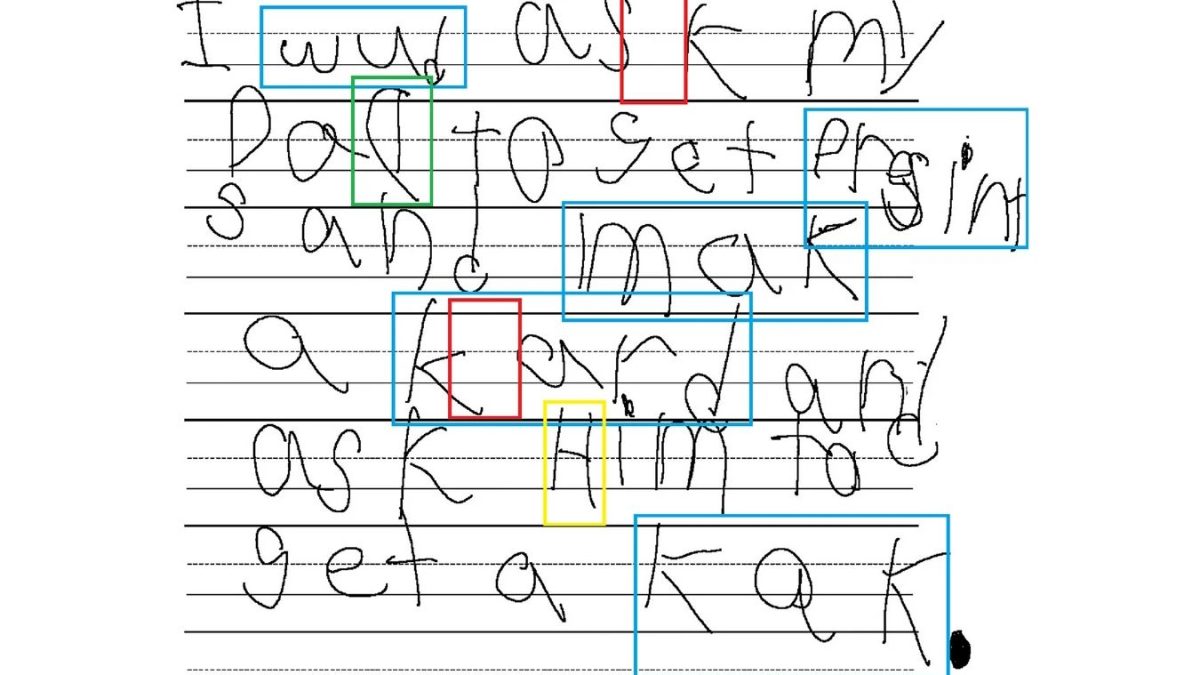
This study highlights a method of analyzing handwriting, on paper or tablet, in order to identify early signs of this type of disorders. Its objective is to be able to complete the current, often expensive, time -consuming and centered detection tools at a time.
To get there, researchers have developed an AI capable of analyzing various aspects of the handwriting of children, from the training of letters to the general organization of writing, including spelling, syntax and even the use of margins. For the moment, the team has been able to collect only student writing samples educated until the 5th grade (the equivalent of CM2 in France) in an elementary school in Reno, in Nevada. The first results are encouraging, with screening for almost 90% of writing irregularities. By considerably expanding the data provided to cause its AI model, this approach could very well revolutionize the early screening of these writing disorders and thus allow rapid intervention to support the educational development of the children concerned.
This model was designed to be used by teachers, as a class screening tool, by speech therapists to facilitate rapid interventions and of course for parents, to monitor their children’s progress. Currently, two intelligent tools are under development, one to identify children requiring a formal evaluation of their needs and the other to serve as a virtual and personalized assistant based on the capacities of each child.