
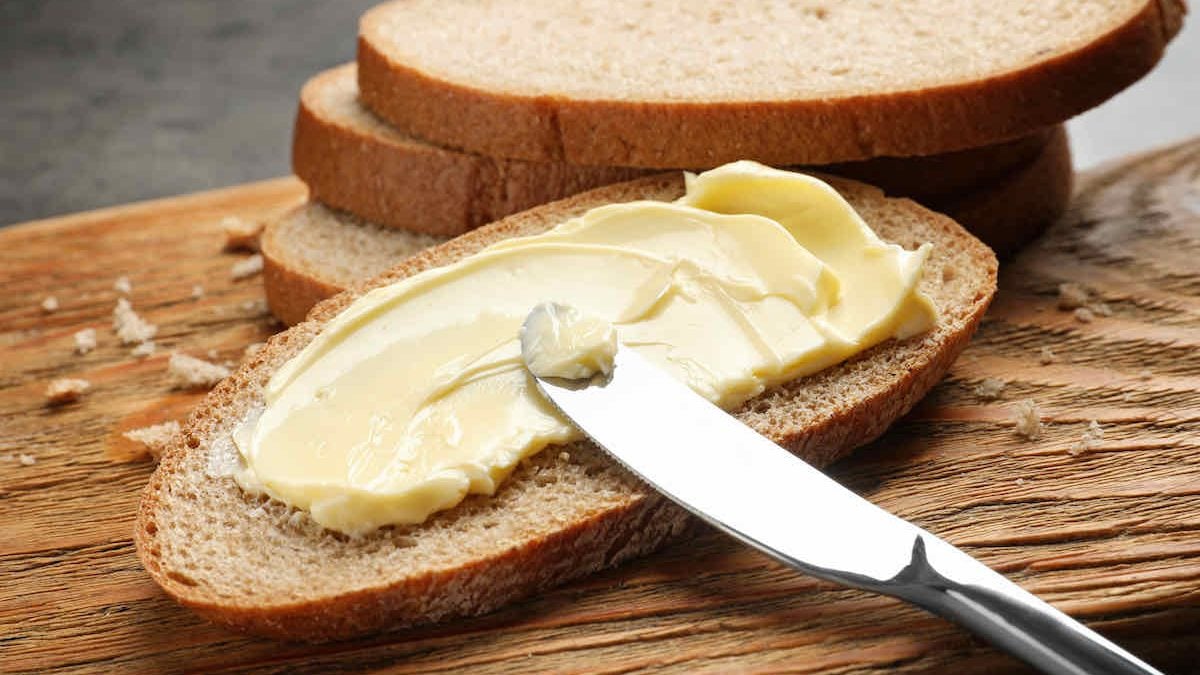
Recently, they have occupied a place of choice on the shelves of supermarkets. They are the butters and margarines enriched with vitamins (B1, K, E) and minerals (magnesium, calcium …). Labeled “cardio”, “anti-cholesterol” or “Health of the heart”, these products surf on the wave of preventive medicine. Their promise? Contribute to better cardiovascular health, while easily integrated into daily diet. But should these “supplemented” fats replace our traditional sweet beure? Here is what Julie Boët, dietitian-nutritionist, thinks.
Butter and margarine: what difference (s)?
Before tackling at the heart of the subject, let us recall the existing differences between these two fats. Indeed, if margarine contains as many fats as butter, it distinguishes itself, on many points.
“Butter is a product of animal origin, obtained from the cream of milk. It contains about 82 % of fat, mainly saturated, and of course a little vitamin A and D. Conversely, margarine is a mixture of vegetable oils (sunflower, rapeseed, linen, etc.), sometimes partially hydrogenated, to which we add emulsifiers, aromas, vitamins And sometimes additives, “says Julie Boët.
Other capital information: “lightened” margarines or “reduced in fat” contain less lipids, but more water. Rather, they are reserved for raw use, in the form of sandwiches for example. Which one then favor?
“It all depends on your state of health and your nutritional goals. For occasional consumption and for taste, butter can find its place, especially raw (on bread or for pastries)”, says the dietician. However, in the event of a “preventive” objective or in the event of hypercholesterolemia, different things.
What to think of “enriched” butters and margarines?
Some margarines proudly display mentions such as “helps reduce cholesterol “ Or “Rich in omega-3 “. Still others claim to be enriched with vitamins (B1, K, E) and minerals (magnesium, calcium …), such as primary margarines or proactiv gold fruit. “Bonus” ingredients, which do good to our organization? Yes, confirms Julie Boët.
“Their composition indeed includes plant sterols, recognized for their ability to reduce the absorption of intestinal cholesterol, as well as magnesium or vitamins of group B, beneficial to the proper functioning of the heart and energy metabolism. But beware: if these enrichments can seem interesting on paper, they do not transform margarine into a miracle”. are observed in the context of a balanced diet, poor in saturated fats, and not in addition to an unbalanced diet “, she notes.
If you nevertheless set your sights on one of them, “Favor non-hydrogenated margarines (in order to avoid trans fatty acids), based on omega-3 oils (such as rapeseed or linen), with a short list of ingredients and without superfluous additives. Also pay attention to health allegations: they should not make the essentials forget: Margarine remains a fatty product, and ultra-soFormed, to consume in moderation”, recalls the expert.
For cooking, olive or linen oil remains “a better option“Concludes the dietician.