
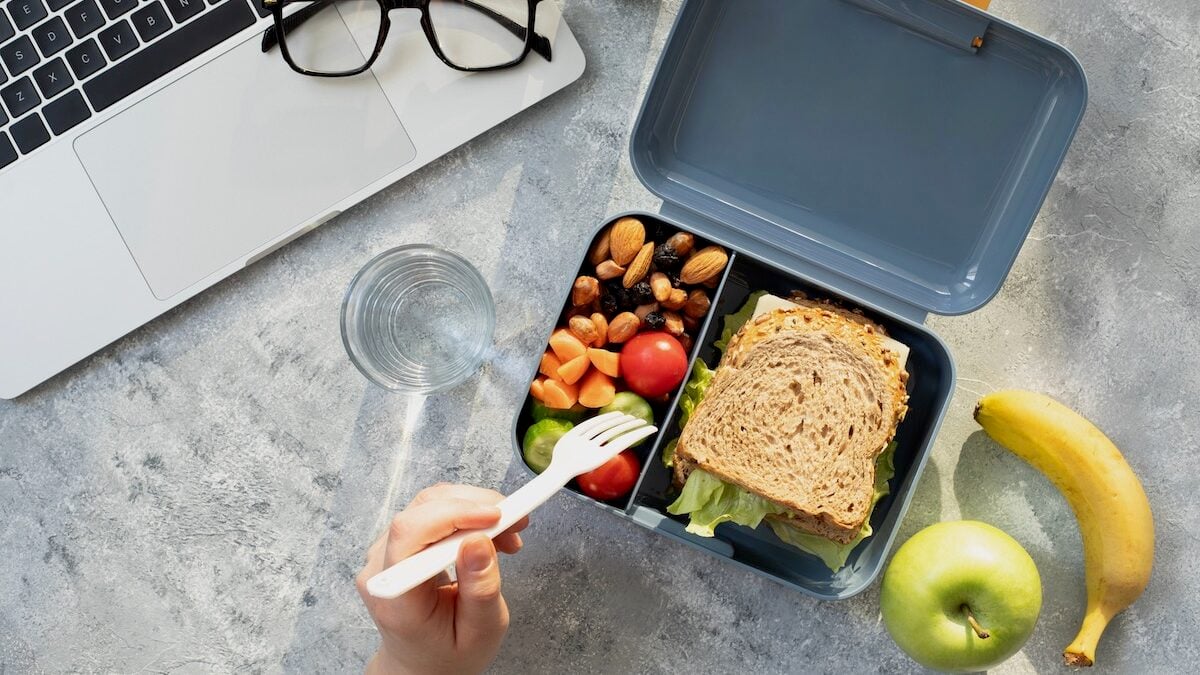
At the start of the school year, you have (finally) decided to opt for the “homemade“? To you the healthy and balanced lunch boxes! Except that if these meals prove good for your health, they can also contaminate you in the event of bad conservation. Julie Boët, dietician-nutritionist, sheds light on the good practices to adopt.
Apart from the refrigerator, the “countdown” starts
Preparing your lunch box is a practical, economical and above all ideal solution to better control your daily diet. By taking your meal, you can balance your plate, avoid excess of fast food and save time for lunch. “But you still have to know how to keep this famous lunch box well … because a poorly stored meal can quickly become a favorable land for bacteria”, warns the dietician.
And for good reason: cooked or raw foods are very sensitive to room temperature.
“As soon as they leave the refrigerator, the” countdown “starts. On average, a dish should not remain more than two hours out of the cold. Beyond, bacterial proliferation accelerates, especially if the meal contains animal proteins like meat, fish, eggs, dairy products”, assures the expert.
With a small cooler or an isothermal bag equipped with ice creams, this period can be extended up to 4 to 5 hours safely. It is therefore an ideal solution when you do not have access quickly to a fridge. “”Without this system, on the other hand, lunch box should not spend the whole morning in a bag or office, especially in summer when heat promotes even more microbial growth “, she alerts.
It all also depends on the prepared dish …
In addition, there are some differences depending on the type of meal transported.
“A salad composed with raw vegetables, cheese and ham is much more perishable than a dry bread sandwich with a few grilled vegetables. In the same way, a hot soup placed in a quality thermos can remain at the right temperature for several hours, which reduces the risks. But a hot dish left to warm in a conventional box quickly becomes conducive to contamination”, still specifies the specialist.
What if you don’t have access to a refrigerator quickly?
If you do not have access to a refrigerated bac, it is better to favor more “safe” recipes, confirms the nutritionist.
“Legume salads, vegetarian quiches, hummus sandwiches, whole fresh fruit … less fragile meals that better support a conservation of a few hours at room temperature”, she underlines.
It is also important to think of hygiene: a poorly washed lunch box can house residues and bacteria. “”Washing in soapy hot water, then complete drying, is essential after each use. The container must be airtight, not only to avoid leaks, but also to limit external contamination “, says Julie Boët.
In summary, lunch box is an excellent habit for health and the wallet, but it requires some precautions.
“Ideally, the meal should be transported in a cooler or placed quickly in the refrigerator. Without that, it is better to limit the time out of cold to two hours maximum and adapt the type of food chosen. A small simple gesture like sliding a ice cream in your bag can really make the difference between a tasty lunch and a risky meal for health”, concludes the expert.