
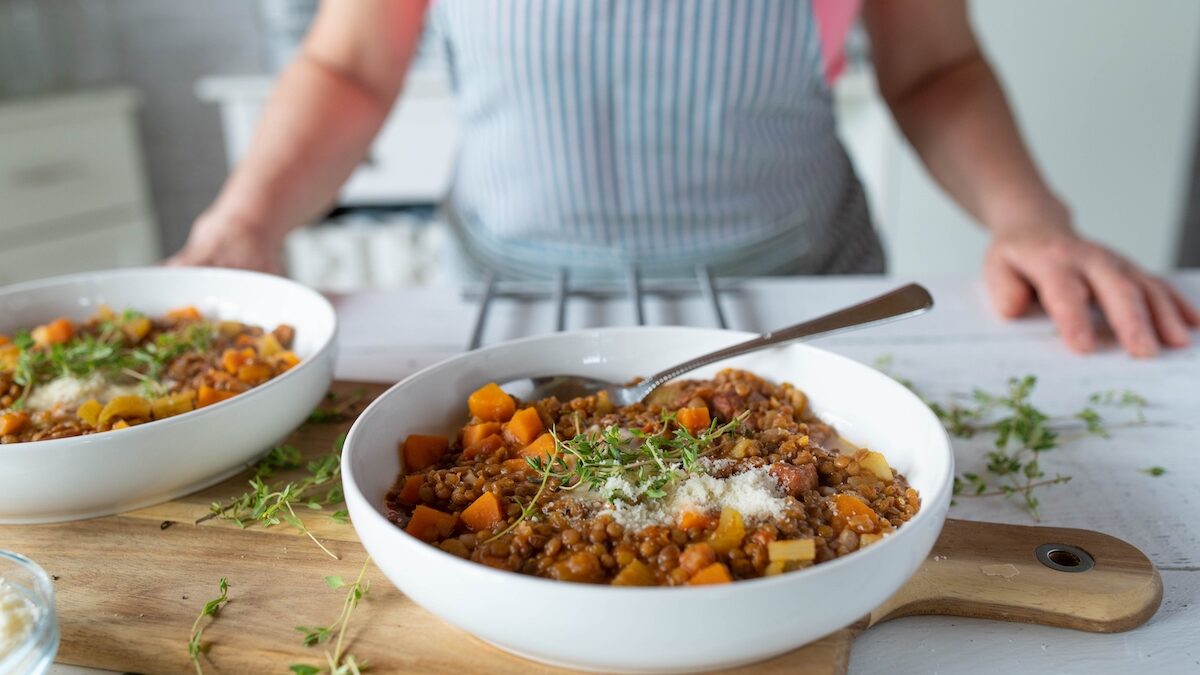
Eat less meat, yes, but without a deficiency. When we switch to a vegetarian or flexitarian diet, a question often arises: how to meet your protein needs? The answer is in one word: legumes.
The best ally to adopt
Beans, lentils, chickpeas or split peas… behind their apparent simplicity, these foods combine nutritional benefits. According to Julie Boët, dietitian-nutritionist, “Nutritionally, legumes are an excellent alternative to meat, particularly thanks to their protein content (around 20 to 25 g per 100 g of dry product). Furthermore, they contain no cholesterol or saturated fats, but they fit as easily as meat into a wide variety of dishes.“.
Powerful and balanced plant proteins
Not all legumes are equal, especially when it comes to amino acids. “This is why it is important to combine them with a cereal during the day: rice, semolina, quinoa, wholemeal bread, etc.“. This complementarity makes it possible to replenish all the essential amino acids, making these meals as complete as a meat dish.
But their strength doesn’t stop there: legumes are also a mine of fiber. A single cup contains around 15 g, or almost half of the recommended daily intake. “They are very filling, which makes them a valuable asset for avoiding snacking and maintaining stable blood sugar levels.“.
A natural source of iron and minerals
Other good news: they often compensate for iron deficiencies, feared among vegetarians. A serving of lentils can even provide more than a steak. “But the vegetable iron they contain is less well absorbed than that of animal origin.“, reminds the expert. To promote its assimilation, she advises adding a source of vitamin C to the same meal, “like a squeeze of lemon, fresh fruit, parsley or raw vegetables“.
Legumes are also full of magnesium, potassium and zinc. “Legumes are also a good source of zinc, an often overlooked trace element.“. Their complete nutritional profile therefore makes them a winning choice for health, the wallet and the planet.
How to easily incorporate them into your meals
To vary the pleasures and never get tired, here are some simple ideas to adopt:
- In soups or stews: add lentils, split peas or beans;
- In salads: roasted chickpeas or red beans offer crunch and protein;
- In complete dishes: lentil curry, chili sin carne or dahl;
- In sauces: mix white beans or lentils in a tomato sauce;
- As a snack: hummus, spreads or grilled peas.
One last point: legumes do not contain vitamin B12, essential for the nervous system. “In case of a strict vegetarian diet, B12 supplementation is essential“.