
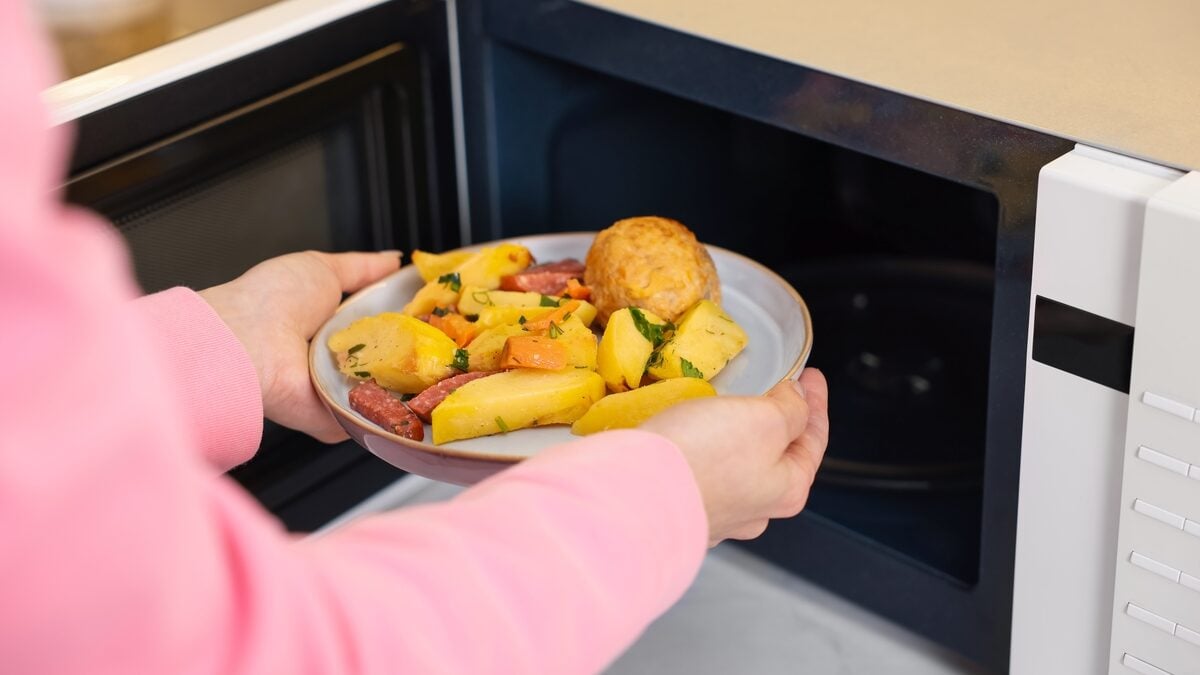
The microwave is an essential part of our modern kitchens. But when you want to cook some starchy foods in it to save time, certain rules must be respected.
The microwave: a risky everyday object?
Although it is very practical on a daily basis (who has never reheated soup in the microwave on a weekday evening?), this appliance is not suitable for cooking all foods. Thus, eggs, in particular hard-boiled eggs, sausages, stone fruits, meat, marshmallows or even blue cheese cannot be used in it. On the other hand, other foodstuffs, once placed in the microwave, do not pose any particular problem.
“Microwave cooking, if used correctly, does not present any particular danger,” confirms Julie Boët, dietitian-nutritionist. “In fact, the heat produced is not “irradiated” into the food, but simply generated by the vibration of the water molecules. Result: rapid cooking can even protect certain sensitive nutrients, such as vitamin C, precisely because they are exposed for less time. she continues.
On the other hand, this express cooking can sometimes modify the texture of certain products, especially when it comes to foods rich in starch such as potatoes or sweet potatoes.
“The taste generally remains intact, but it sometimes loses “depth” compared to slow cooking, which allows the aromas to develop. The homogeneity of cooking can also sometimes cause problems depending on the performance of the appliance (cooked and uncooked parts)”, warns the nutritionist.
The flesh of starchy foods (squash, sweet potatoes, potatoes, etc.) can finally become a little drier. To avoid missing out on your cooking, remember to follow our expert’s simple advice.
How (better) to cook these starchy foods in the microwave?
If you love potato dishes in winter, and the microwave is your number 1 ally in the kitchen, these few cooking tips can help you.
- Pierce the skin of the starchy foods several times with the tip of a knife, or cut the food in two, to avoid the accumulation of steam and therefore any risk of bursting;
- If you leave the skin on (a great idea to preserve fiber and nutrients!), wash the potato beforehand;
- Then place it in a container suitable for the microwave, without closing it tightly: the steam must be able to escape;
- Finally add a teaspoon of water to the bottom of the dish to create a humid environment. The texture will only be better!
“Cooking is usually done in 3-5 minute increments, depending on the size of the food, checking for tenderness with a knife and stirring or turning halfway through cooking for more even heat,” further specifies the expert.
Also pay attention to the type of potato chosen: floury varieties cook quickly but require increased monitoring to prevent them from drying out, while firmer varieties retain their texture better. Once cooked, let the potatoes sit for a minute or two to allow the heat to distribute.
What about squash and sweet potatoes?
Again, the process is similar, with the only difference being that you will need to bring baking paper.
“For squash, remove the seeds and cut them into regular-sized pieces to promote even cooking. For sweet potatoes, cooking them whole in their skins gives a very soft result, especially if you wrap them lightly in baking paper (never foil in the microwave)”,
recommends the specialist.
Alternate cooking: the right reflex for your health
Although using the microwave occasionally is not a problem and can be useful when you are short of time, for regular use, alternating with steam cooking is preferable.
“This method preserves nutrients particularly well, especially water-soluble vitamins, and guarantees a tenderer, softer and more uniform texture,” concludes Julie Boët, dietitian-nutritionist.