
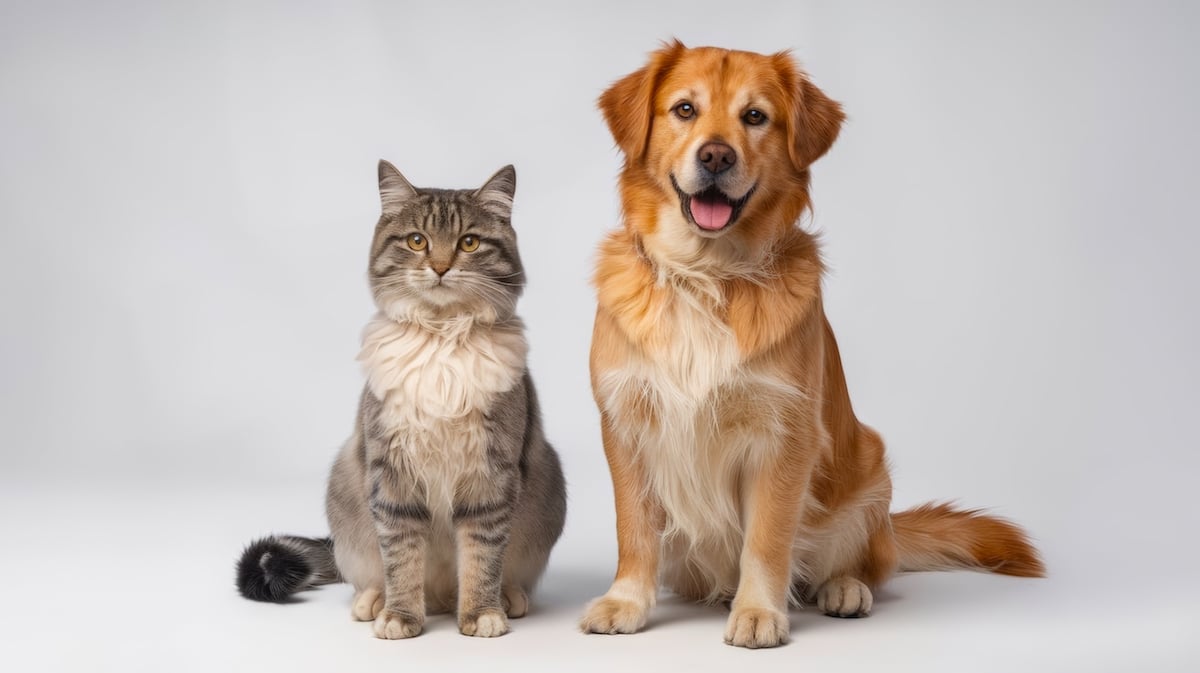
In France, animals mean a lot: according to an Ipsos survey for Santé Vet, 69% of French people consider their companion to be a member of the family. Saying whether you are a cat person or a dog person seems trivial; behind this reflex, however, lies our way of interacting, of planning our days, and even of approaching emotional bonds. Several studies have compared the profile of cat lovers and that of dog fans to understand what this preference says about our personality.
Introvert or extrovert?
“Several research suggests that our choice between cats and dogs may be influenced by a mixture of psychological, social and cultural factors, shaping our personality traits and social behaviors.” Patricia Dixon, a clinical psychologist and author in Tampa Bay, Florida, told Verywell Mind.
And our preferences in terms of little companions would reveal another part of your personality: “Studies show that those who identify as ‘dog people’ score higher on extroversion, as well as agreeableness and conscientiousness (a trait of being thorough, careful, and vigilant with a desire to do a task well). ‘Cat people’ are more open to experience and score higher on introversion“, indicated psychologist Michael Kane.
Very specific personality traits
A study conducted by Andrea Gustello extended the analysis with the questionnaire of 16 personality factors on 418 students. Their summary is telling: “Taken together, these findings describe the average cat-loving person’s personality as shy, solitary, impersonal, serious, and nonconformist, but also creative, sentimental, independent, and self-reliant. Conversely, these findings describe people who love dogs as down-to-earth, pragmatic, and respectful, but also warm, open, sociable, expressive, and group-oriented.“.
For its part, a study conducted among students at Carrol University noted that 60% call themselves “dogs”, 11% “cats”, 23% both and 7% neither; cat fans appeared more reserved, sensitive, non-conformist and displayed better intelligence scores.
A preference representing daily habits
Daily life often reflects preference. Dog owners are more likely to follow a routine and set schedules, with a life structured by outings, training and social interactions. Cat owners are more comfortable with spontaneity and flexible rhythms, as the animal requires less management.
All this is found in personality tests, where planning and self-discipline come out more in the former, flexibility in the latter.
Attachment styles deciphered
Reading through attachment styles provides additional insight. “Dog lovers may enjoy close, reciprocal relationships with dogs because they resemble secure, dependent bonds that provide emotional comfort, stability, and security“, Michael Kane said. “Cat enthusiasts, on the other hand, appreciate the less demanding, more independent companionship provided by cats. Feline lovers prefer meaningful bonds but not as demanding“, explained Michael Kane.
In short, different ways of loving which do not oppose the quality of the bond and the need for autonomy.
Very different relationships with your pet
Beyond the stereotypes, clues often recur. A Mexican study even observed more frequent interactions with cats and a relationship perceived as less costly and less restrictive than that with dogs: “Participants spent more time petting, brushing and cuddling their cats than their dogs and, in turn, felt that the relationship with their cats was less costly, required less responsibility and involved fewer restrictions on their daily activities“, details the study.
On the dog side, the bond is reported to be more intense and demonstrative, with more outdoor activities. And in
Psychology TodayStanley Coren noted that cat owners were three times more likely to live alone and twice as likely to live in an apartment, while dog owners were more likely to be married and in a home with children.
These correlations remain descriptive and do not dictate who you are, of course. Moreover, if you do not have a clear preference, the Mexican study sees a more balanced profile, appreciating the spontaneity of the dog as much as the subtlety of the cat.