
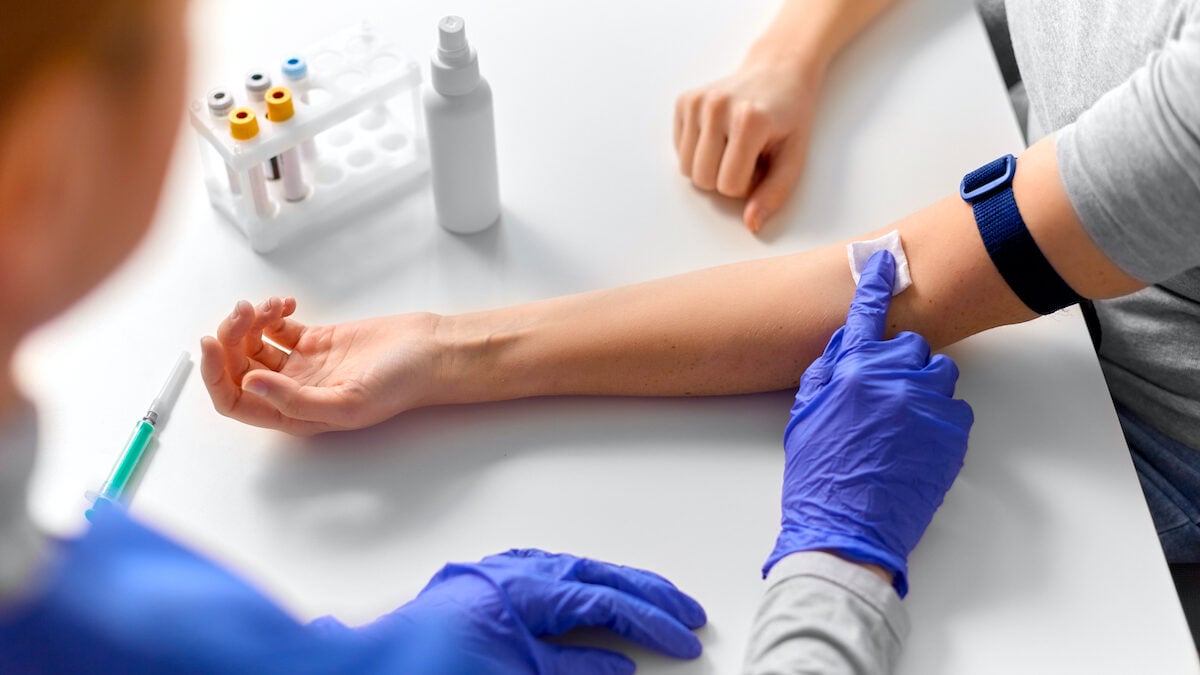
It was one of the exams that millions of French people know without really knowing what it is for. The sedimentation rate, or ESR, was the favorite reflex of doctors when it came to tracking inflammation. But its necessity is now being called into question.
The announced end of a historic test
The principle of this test, simple and almost artisanal, dates back to the 19th century: we observe how quickly the red blood cells fall to the bottom of a tube of blood. The faster the descent, the more inflammation is suspected.
But in 2025, the High Authority of Health (HAS) considers that this test suffers from numerous defects even though it is prescribed massively, sometimes without real justification. And the figures speak for themselves: 16 million VS reimbursed in 2023, for a total cost of 12 million euros.
Why is VS no longer reliable?
In its opinion, the HAS points out three major defects which indicate the obsolescence of the test. And Dr Gérald Kierzek, medical director of True Medical, confirms them bluntly:
- It varies from one laboratory to another. According to the HAS, VS lacks reproducibility: we can obtain very different results depending on the techniques or even within the same laboratory. Variations can reach… 30%. “Such variability is really problematic for monitoring a patient”explains Dr. Kierzek;
- It is influenced by too many factors. Age, sex, pregnancy, anemia, and even certain treatments: ESR gets out of control or stagnates for reasons that have nothing to do with inflammation. “This is one of its main faults: the VS lacks specificity”recalls the emergency doctor.
- She reacts too slowly. Another problem: the VS rises slowly. Very gently. “It can remain normal even though inflammation is already underway“, emphasizes Dr. Kierzek. And conversely, it can remain high for a long time after recovery.
In short: in 2025, VS no longer provides the precision that modern medicine requires.
CRP: the new standard for detecting inflammation
Fortunately, the abandonment of the VS does not leave a void. For several years now, another marker has taken the lead: CRP, or C-reactive protein.
And for Dr Gérald Kierzek, there is no doubt that it is this examination that must now be prioritized:
- It increases very quickly in the event of inflammation or acute infection;
- It goes down just as quickly when the situation improves;
- It is much more specific, therefore more reliable;
- It is already reimbursed and available everywhere.
“CRP is today the best marker for assessing acute inflammation. It has largely replaced ESR”summarizes the doctor.
Is there still a use for VS?
So, heading to oblivion for VS? Not completely, but almost. The HAS recommends stopping VS in all common clinical situations. However, as Dr Kierzek points out, a few special cases persist:
- Chronic infections;
- Certain autoimmune diseases;
- Complex assessments where the VS + CRP association can provide additional information.
But he insists: “These are exceptions. For the vast majority of patients, CRP is more than sufficient.”