
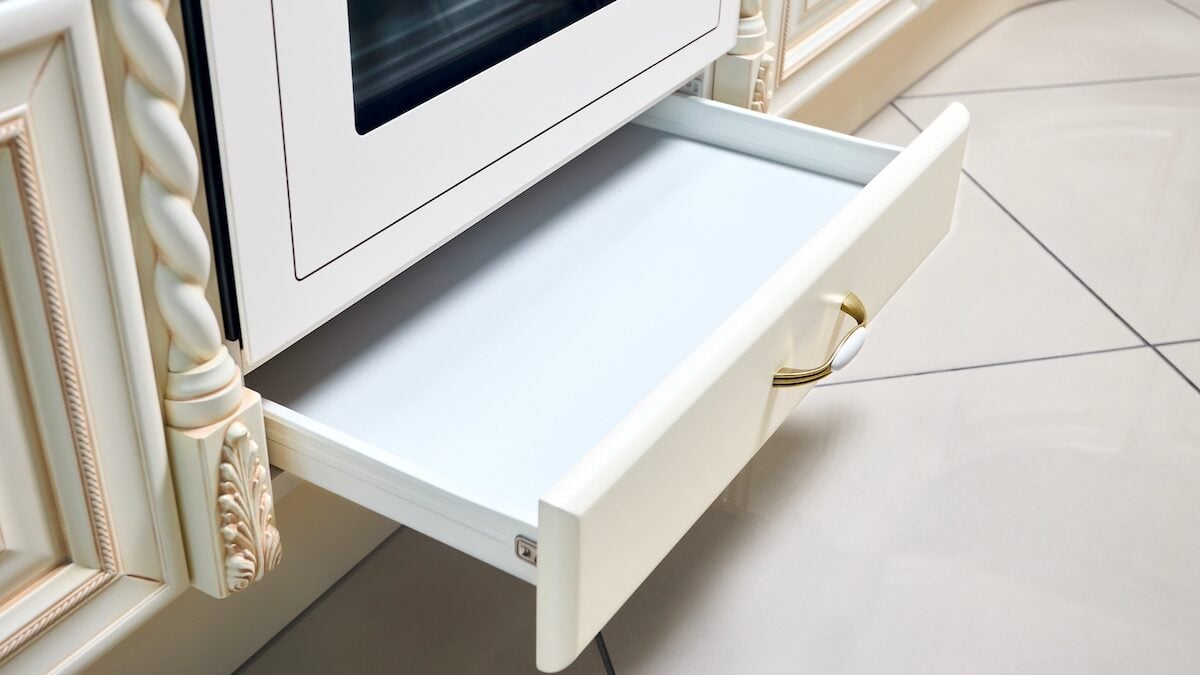
This large drawer that hides at ground level under your oven is not just a makeshift cupboard. Many pile plates and molds into it without asking too many questions, then are surprised when it heats up, or even smells hot. What if this compartment had a real function, more useful than we imagine? Depending on the model, this drawer does not have the same role. It can be used for storage, keeping warm, or grilling. Improper use, and you risk damaged dishes, stubborn odors, or worse, a fire. The answer is in the details.
Drawer under the oven: storage, food warmer or grill?
On many appliances, the bottom of the oven is a simple storage drawer. It looks like a large metal bin, without resistance or dedicated control. It can get warm when the oven is working, so avoid plastic and anything flammable. For the rest, it accommodates plates, grills, molds and all-metal casserole dishes very well. It’s basic, but it helps in a small kitchen where every corner is essential.
Another configuration, common on stoves and gas cookers: the warming drawer. Its aim is to
keep dishes warmuseful for chain cooking or serving everyone at the same time. It limits drying out thanks to better controlled humidity and can save energy. It is often identified by a dedicated button or dial;
Finally, some ovens, especially gas ovens, integrate a grill drawer at the bottom, often narrower, made for browning and browning at very high heat. There, total vigilance: it burns quickly, it is neither for heating nor for storing. And on some appliances, the grill option is located in the main cavity, with the bottom remaining for keeping warm or storing.
Identify the right functionality
The easiest way is to look at the facade. A “Warming” or other mention may indicate a heating compartment. A very narrow bottom drawer, sometimes delivered with a dedicated drip pan, faces towards the grill drawer. The absence of specific command and visible resistance suggests a storage drawer which can still heat up a little by radiation. When in doubt, check the oven instructions or the model’s product sheet.
In terms of use, adapt to the type. With a warming drawerslide an already cooked dish to keep it at temperature, reheat plates, keep a garnish ready while the roast finishes in the cavity. On many classic models, residual heat is sufficient without leaving the main oven on; on more recent models, the drawer has its own resistance and is adjusted separately. With a grill draweruse it for gratinating, toasting, finishing cooking, monitoring closely. And if it’s just storage, stick to all-metal equipment and remove it before using a very hot function.
Safety Mistakes to Avoid and Oven Drawer Care
The lower compartment may become very hot depending on the device. The temperature in an oven drawer can, depending on the manufacturer, fluctuate between 20 and 70°C. Certain objects become dangerous or deteriorate there. Keep this list of products to never store there in mind, it saves time and avoids fears.
- Cleaning products, solvents and aerosols, as they are often flammable;
- Edible oils, for fire risk and quality degradation;
- Tin cans, sensitive to repeated temperature variations;
- Tea towels and towels, especially if they have touched grease;
- Cutting boards made of wood or plastic, risk of ignition or deformation;
- Stretch film and plastic bags, which melt quickly; Baking paper and aluminum, on the other hand, resist;
- Airtight plastic containers, which can become deformed, and be careful with glass jars.
Also think about hygiene. Crumbs and grease accumulate on the upper part of the drawer and quickly become clogged, especially in mode
keep warm. Regular cleaning with white vinegar works wonders. You can alternate with hot water, lemon juice or a little baking soda to remove persistent odors. And, on a daily basis, leave the compartment dry, clean, and suitable for its actual use.