
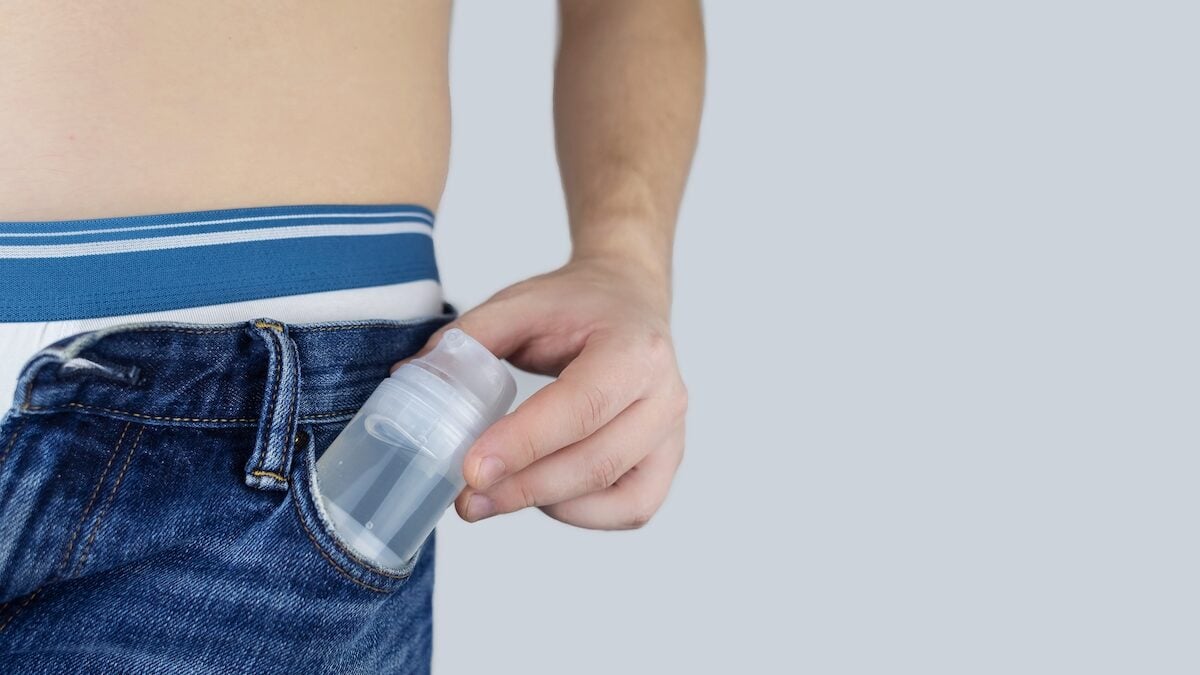
Long surrounded by innuendo, prostate pleasure is entering the public conversation. In the middle of Movember, the question no longer only opposes fantasies and fears but questions what men actually experience in bed, far from virilist stereotypes. An Ifop survey for the LELO brand, carried out at the end of August 2025 among 2,000 people as part of the LELO Observatory of French sexuality, documents a clear evolution: a majority of men in France say they have already experienced anal penetration.
Amazing figures that defy taboos
According to the study, 52% of men say they have already been anally penetrated in their lives. In detail, digital penetration concerns 40% of men compared to 46% of women. Rimming and the use of a sex toy are practiced almost equally among women and men. In heterosexual couples, sodomy is stabilizing, with 49% of women aged 18 to 69 having already practiced it. However, the sign of an evolving interchangeability of roles: 30% of women say they have already penetrated a partner, double the number in 2017.
According to Gianpaolo Furgiuele, sexologist, this transformation is part of a broader context: “The removal of guilt from pleasure, the influence of digital technology which exposes a wider erotic palette, and more open communication between couples now make practices formerly perceived as transgressive possible. Today, partners have the opportunity to naturally expand their intimate repertoire“.
The taboo still remains
But despite these figures, the taboo persists. Thus, 37% of men consider that being penetrated anally is incompatible with their identity. Received ideas persist: 28% believe that anal sex is reserved for homosexual men. And for good reason, as the sexologist explains: “Many men fear that being interested in it blurs their identity or refers to a sexual orientation, when it is simply an erogenous zone rich in nerve endings.“.
Nearly a quarter of the men surveyed (24%) think that a “real man” should not accept the insertion of a finger into the anus, even if it can give him pleasure. “Male anal stimulation remains taboo because it still clashes with a very old collective imagination, that is to say one which associates the anus with the feminine, with the passive, therefore in this logic, with a loss of a supposed ‘virility’. This myth persists even though it has no basis“, specifies the expert.
Received ideas and their impact on health
These representations are intertwined with public health. Only 51% of men say they are ready to be screened for colorectal cancer: among those who have never been screened, only 32%, compared to 69% among those who have already been screened.
On this point, Furgiuele insists: “On a physiological level, pleasure comes mainly from the area where the prostate is located. It is surrounded by many nerve endings. When stimulated, directly anally or indirectly by the muscles of the perineum, it sends an intense signal to the nervous system.. For him, this stimulation can be “deeper, more enveloping, which completes penile stimulation“.
A practice for pleasure or consent, not out of spite
In terms of consent, anal initiation is very contrasting: 74% of men say they really wanted it the first time, compared to 45% of women, while 39% of the latter say they agreed to please their partner.
Gianpaolo Furgiuele pleads for a respectful and progressive approach: “We avoid discomfort by simply starting to talk about it. Addressing these practices upstream allows you to express your desires without pressure and to give the other person real space to say yes… or no. Consent arises from this honest conversation. In fact, we are moving forward step by step. First, dialogue, then light explorations and only if both partners feel good about it, a more engaged practice“.