
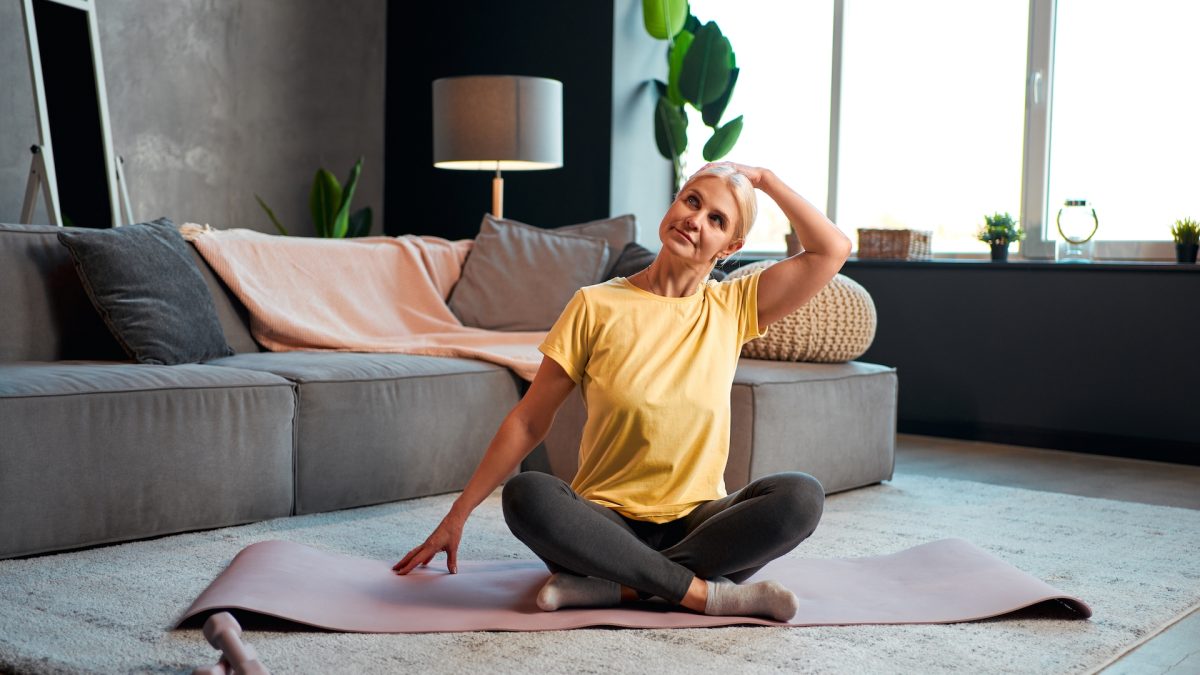
In winter, the cold and humidity do not motivate us to practice physical activity. And this period could prove less beneficial for the perineum and pelvic floor, as revealed by a recent survey of 3,001 women aged 30 to 55 in the United Kingdom, France and Italy,
Sport and perineum: the risks of winter inactivity
According to the results of this survey:
- More than a third of the women surveyed (40%) do less sport in winter, which has repercussions on the strength of the perineum;
- More than half (54%) struggle to stay motivated to exercise, making it difficult to maintain a pelvic floor program regularly;
- 69% of women noticed that they had to urinate more frequently when it was cold;
- 52% experience pelvic floor discomfort or urine leakage during flu and cold season (especially when coughing or sneezing).
Dr. Susanna Unsworth, gynecologist, teamed up with Intimina to talk about this issue explains: “The pelvic floor is made up of muscles and like all muscles, they need training to stay strong. If you reduce your physical activity in winter, this can negatively impact the health of the perineum. I recommend that women do targeted exercises for this set of muscles to counteract the negative effects of seasonal inactivity – knowing that this routine can easily be performed indoors.”.
A sports session dedicated to the perineum
Often forgotten, the pelvic floor is nevertheless made up entirely of muscles. It is important to create a sports routine dedicated to this area, to be carried out outside as well as at home. This can be by using specialized objects for this perineal training, such as Kegel exercises using geisha balls. If you’re afraid of not keeping up, don’t hesitate to give yourself reminders, or ask those close to you to motivate you. To perform exercises simply at home, you have three alternatives:
-
Kegel exercises
: these are short and rapid contraction exercises, we squeeze and release the perineum to work the “fast” fibers; strong contractions maintained for 6 seconds, to work on maintaining the contraction; gentle contractions, held for around ten seconds, with a rest phase of ten seconds as well. This exercise allows you to work the “slow” or “tonic” fibers; -
Geisha balls
: Geisha balls help to tone the pelvic floor muscles. The geisha ball is hollow. Inside, there is a metal ball which “taps” against the walls with each movement, thus generating a “vibration” that is more or less felt. The muscles of the perineum are then called upon to hold the geisha ball by a reflex phenomenon. It is this reflex action which acts on the muscular fiber of the perineum. This is a very effective exercise; - Of the
exercises to strengthen your perineum with very little material: just a cushion for some of them, and otherwise simply.
Dr. Unsworth judges as follows: “The sooner women start incorporating pelvic floor exercises into their routine, the better the results will be. Winter shouldn’t leave pelvic health behind. On the contrary, it is an opportunity to acquire habits that will last a lifetime“.
Good reflexes to preserve your perineum
If you want to take care of your perineum, you can establish other habits:
- Try to have limited alcohol and coffee consumption;
- Drink plenty of water;
- Avoid foods that irritate your pelvic floor such as spices;
- Listen to your body: don’t go urinating if you don’t want to, just as a precaution: this will disrupt the natural functioning of your bladder.
If you have recurring and disabling discomfort, consult a doctor.