
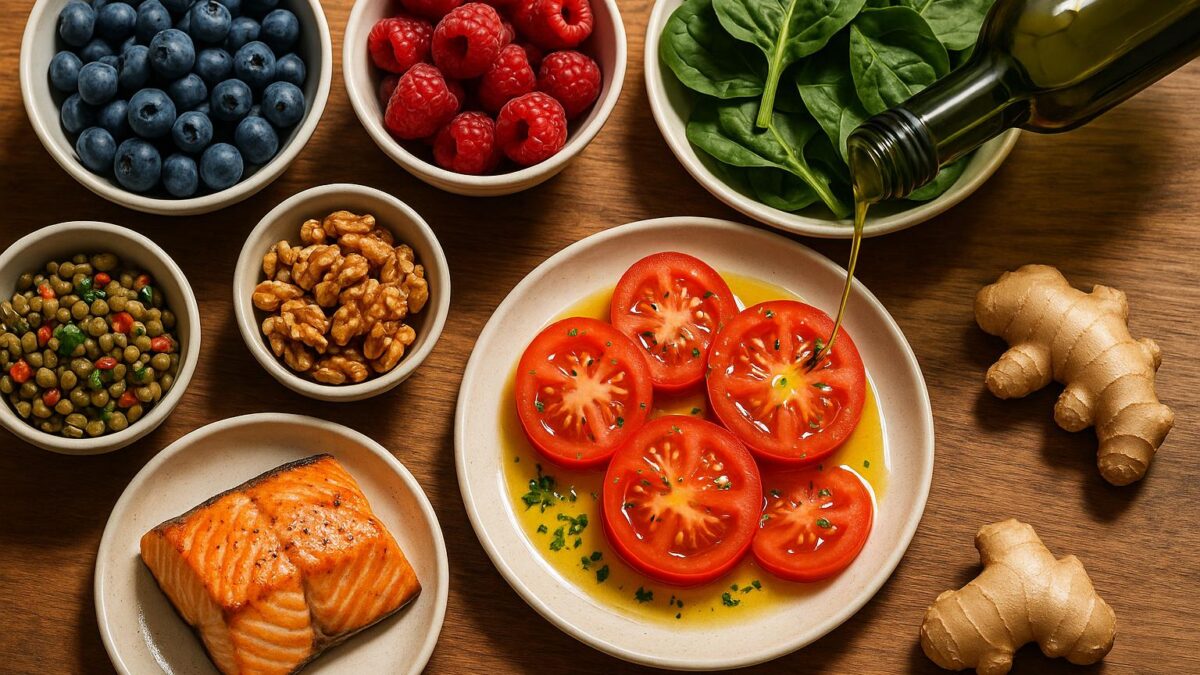
Joints that pull, a swollen stomach, skin that becomes inflamed without warning: many discreet signals betray an inflammatory state in the body. Faced with these symptoms, many turn to herbal teas or ginger shots, promoted as a miracle painkiller on social networks. But these remedies are not always enough to calm well-established chronic inflammation. Here are 8 foods to include on your plate to relieve yourself.
Ginger is not the only ally against chronic inflammation
When it persists at a low level, we speak of chronic inflammation; it is then associated with digestive disorders, joint pain or a higher risk of cardiovascular diseases and diabetes. Studies show that an anti-inflammatory diet, rich in fresh foods, fiber, antioxidants and omega 3 fatty acids, helps reduce this inflammatory area, while a diet dominated by ultra-processed products and sugars makes it worse.
Ginger has been proven to relieve nausea and it has an anti-inflammatory action thanks to gingerol. Work has shown that this compound can reduce some blood markers such as CRP or TNF-α, but its effects remain less constant on other inflammatory molecules, such as IL-6. And as it is consumed in small quantities, often as an infusion, its impact remains limited compared to other often neglected foods.
Turmeric
Turmeric contains curcuminoids, including curcumin, which can block several inflammatory signaling pathways; clinical trials report a drop in many markers in people taking curcumin. When it is included in simmered dishes, soups or sauces, especially accompanied by a little black pepper and fat, the absorption of curcumin is improved.
Olive oil
Extra-virgin olive oil contains oleocanthal, an antioxidant with a mode of action similar to that of a non-steroidal anti-inflammatory, as well as many other protective compounds. As a seasoning, extra-virgin olive oil advantageously replaces butter or certain oils rich in omega 6, and, used every day on salads, vegetables or legumes, it provides a regular dose of anti-inflammatory compounds.
Nuts
They are composed of omega 3 and antioxidants, the perfect components to fight inflammation. Additionally, they are rich in fiber, vitamin E and polyphenols, known to reduce the risk of inflammatory diseases. They can also help fight bad cholesterol.
Tomatoes
Tomatoes are rich in lycopene and other bioactive molecules that help limit oxidative stress and the production of pro-inflammatory signals. Whether raw or cooked, their lycopene is better assimilated when cooked gently with olive oil.
Oily fish
Oily fish such as salmon or sardines provide omega 3 EPA and DHA, the consumption of which is associated with reduced inflammation and a lower risk of cardiovascular disease.
Red fruits
Berries and other red fruits, such as blueberries or raspberries, are rich in anthocyanins and their consumption is linked to a measurable reduction in several blood markers of inflammation.
Leafy green vegetables
Green leafy vegetables, such as spinach, kale or chard, and nuts, particularly walnuts, concentrate vitamins, antioxidants, fiber and good fats which help reduce general inflammation.
Legumes
Finally, beans and other legumes such as lentils or chickpeas, very rich in fiber, nourish the good bacteria of the intestinal microbiota and are associated, in dietary studies, with lower levels of inflammation.
Typical anti-inflammatory dishes
To really benefit from these effects, the important thing is regularity. In the morning, a bowl of oatmeal with berries and a few nuts, accompanied by green tea, already sets the scene. At lunch, a large salad of green vegetables, tomatoes and beans drizzled with olive oil, then a fatty fish with vegetables in the evening, is enough to fit several of these key foods into the same day.
This plate will be all the more effective if you limit sugars, sugary drinks, fried foods, red meats, cold meats and ultra-processed products, and if you take care of your sleep, your physical activity and your stress management.