
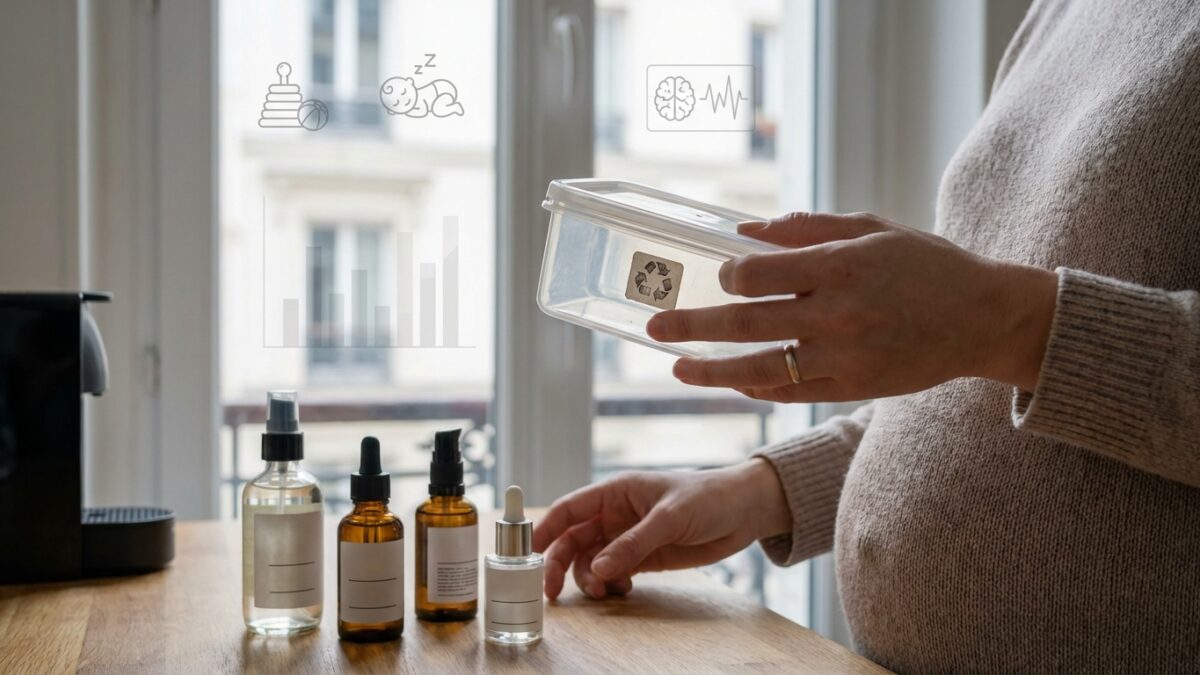
Moisturizing creams, toothpastes, plastic bottles for the microwave or baby bottles: most future mothers touch them every day without thinking about it. However, these everyday products sometimes contain compounds suspected of being endocrine disruptors, capable of interfering with hormones. The precise effects of this exposure during pregnancy are still difficult to determine.
A study carried out by Inserm, the CNRS, the University of Grenoble Alpes, the CHU Grenoble Alpes and the ISGlobal of Barcelona, published on December 10, 2025 in the journal Lancet Planetary Healthlooked at two compounds in particular: methylparaben and bisphenol S. The researchers observed a link between prenatal exposure to these substances and higher scores on questionnaires assessing possible behavioral disorders in children. It remains to be understood how and to what extent.
Pregnancy, methylparaben and bisphenol S: what the study shows
To document exposure during pregnancy, researchers followed 1,080 mothers and their children in Barcelona and 484 in the Grenoble region. Twelve phenols, including bisphenols and parabens, were measured in up to 42 repeated urine samples during pregnancy.
After birth, children’s behavior was assessed between 18 and 24 months using the questionnaire Child Behavior Checklist (CBCL)completed by a parent to identify possible attention difficulties, anxious, depressive or aggressive behavior. High exposure to methylparaben in the third trimester of pregnancy is associated with higher CBCL scores in all children, while bisphenol S shows this association only in boys. No “cocktail effect” was observed for all of the phenols studied.
Where are these endocrine disruptors hiding and what behaviors are at play
Methylparaben is a preservative used in day creams, perfumes, deodorants or toothpastes, but also in certain foods such as cold meats. Bisphenol S is found in the plastic of microwave containers or baby bottles, where it has replaced bisphenol A.This is particularly concerning because bisphenol S is used as a substitute for bisphenol A, which has been banned from use for certain uses, such as food containers. However, more and more studies suggest harmful effects on health, even as we are increasingly exposed to this substance.“, explains Claire Philippat, researcher at Inserm, in an Inserm press release.
According to the team, the higher the maternal exposure to methylparaben and bisphenol S during the third trimester, the more children present, at 18-24 months, behaviors compatible with anxiety, relationship difficulties or attentional deficits. The authors point out that this is an observational study which highlights a statistical association, without demonstrating at this stage that these substances directly cause these disorders.
Still unclear biological mechanisms and research needs
To try to explain these results, the team explored the hypothalamic-pituitary-adrenal axis, which regulates the response to stress. The researchers measured, in strands of hair taken at the end of pregnancy from mothers, several hormones such as cortisol, cortisone or dehydrocorticosterone. The variations observed are not sufficient to explain the link between prenatal exposure to phenols and behavioral scores.
For the researcher, other mechanisms, such as the thyroid or estrogenic axis, remain to be explored. “Although several studies suggest a link between exposure to endocrine disruptors and behavioral disorders, little research has focused on bisphenol S and methylparaben, the latter not being officially recognized as an endocrine disruptor, but only suspected. It is therefore essential to continue to conduct studies on large cohorts, with rigorous measurements of exposure to pollutants, in order to better understand these effects.“, concludes the last author.