
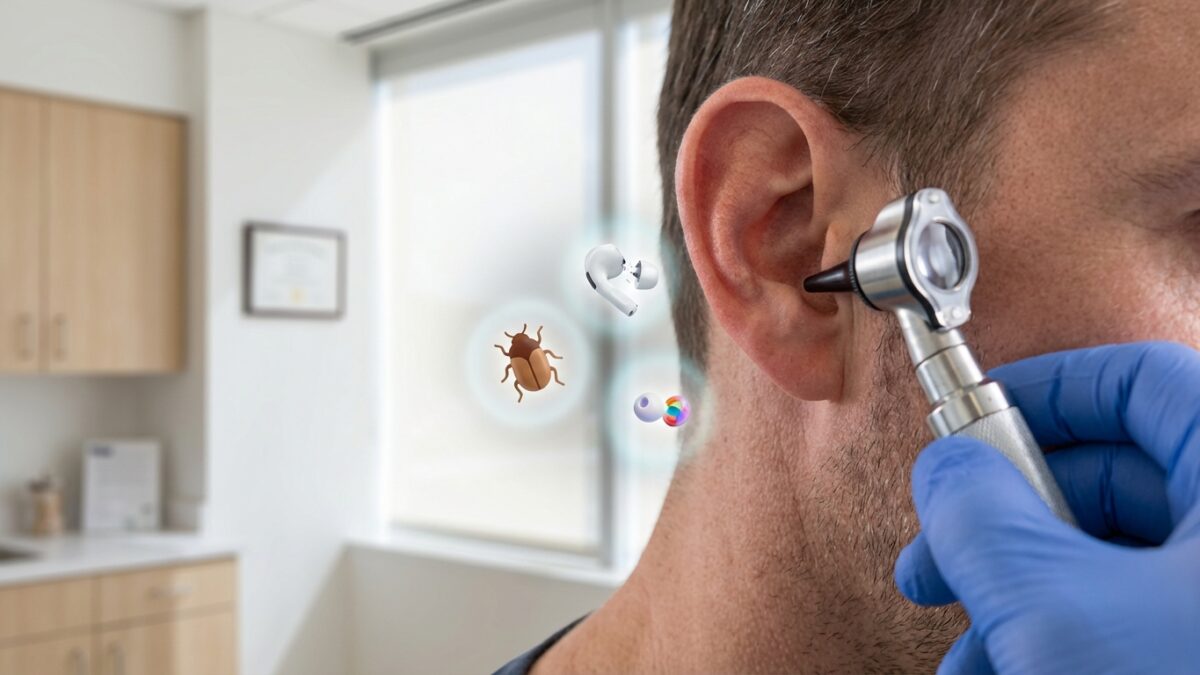
A foreign body in the ear remains a fairly common accident: in children, beads, stones, small toys, pieces of eraser or pencil leads get stuck easily; in adults, these are rather ends of cotton swabs, earphone tips or hearing aids. Insects represent approximately 14 to 18% of objects removed from the external ear canal. Not all of these scenarios have the same urgency.
Recognizing a foreign body in the ear
Symptoms vary greatly. Sometimes, especially in children, there is almost none and the child ear foreign body is discovered when there is a smelly discharge or hearing loss. For a
insect in the earthe signs are more telling: friction noises, beating, tickling, inability to sleep. “A spider can enter the ear inadvertently, often at night while sleeping or while seeking heat/moisture in the external ear canal, without the person initially realizing it“, explains Dr Gérald Kierzek, emergency doctor interviewed.
In both adults and children, the typical sensations remain similar: “Sensations include intense itching, tickling, ringing or rubbing/moving noises, pain, blocked ear, and sometimes discharge or bleeding“, lists the doctor. Sharp pain, bleeding, dizziness or a significant loss of hearing suggest damage to the eardrum and justify an urgent consultation.
At first, the stuck object may cause pain, drainage, or itching. If the object is sharp or pointed, it may injure the ear canal. What is worrying is that those affected often do not realize that they have something in their ear, especially children who do not always mention it. And if the object remains in the ear for too long, the risk of infection increases, which can even lead to a very painful otitis externa. In the long term, this can affect hearing if the eardrum is damaged. Fortunately, these serious cases are rare.
What to do depending on the object stuck in the ear
First principle: do not tinker with the ear. “Do not use cotton swabs, fingers or any other object to extract it, as this may aggravate the lesions or push it further.“, insists Dr. Gérald Kierzek. In the presence of an insect that moves, specialists can recommend, while waiting for help, to immerse it with physiological serum, sterile water or, as the doctor suggests, “Pour in mineral or olive oil (if you are not allergic to it), to help drown the spider and get it out naturally, but only while waiting for help.“.
For a stuck earphone tip, piece of cotton swab, toy, bead, seed or sand, no homemade tool is suitable. Doctors point out that pushing the object downwards can tear the ear canal or perforate the eardrum. The consultation must be rapid, with some situations to be considered as a real emergency:
- Button cell or magnet visible in the ear;
- Very intense pain, bleeding, severe dizziness;
- Child inconsolable or fever with purulent discharge.
In these cases, emergency services or an on-call ENT specialist should be contacted immediately.
How the ENT removes the object and treats the ear
In consultation or in the emergency room, the doctor examines the duct using an otoscope, sometimes an operating microscope. Irrigation with water or saline is mainly used for small non-plant debris, while aspiration helps with smooth beads or modeling clay. Curettes, hooks or forceps remove large insects, cotton, tips, or a button battery when possible.
After the extraction, the ENT checks the ear. “Cleaning the duct and prescribing antibiotics or anti-inflammatories are sometimes required in the event of infection or inflammation.“, adds Dr Gérald Kierzek. “Generally, there are no lasting after-effects if treatment is rapid.“.