
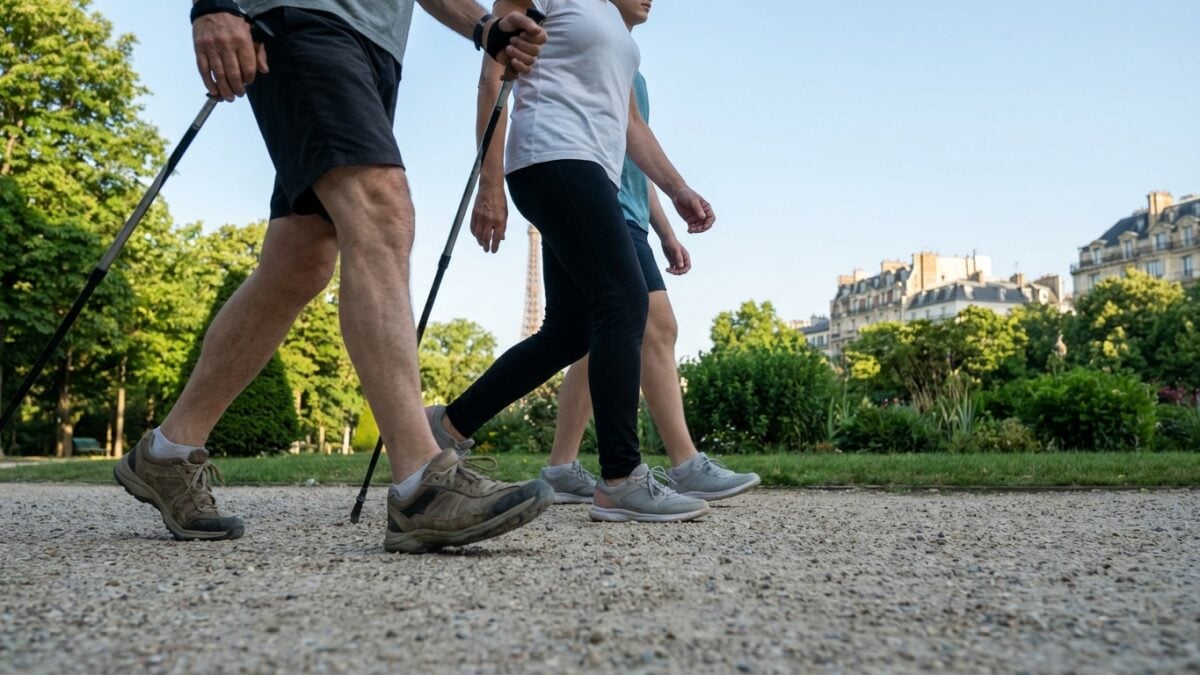
In France, 12.4 million people ran in 2023, but many like neither running nor chasing 10,000 steps. On TikTok, another routine attracts attention: Japanese walking. According to the latest report from
PureGyma British gym network, Google searches for Japanese walking jumped 2,968% between summer 2024 and summer 2025. The brand predicts it will become the fastest growing fitness trend in 2026, symbolizing a shift towards low-impact activities and the end of the “no pain no gain” cult. It remains to understand how it works.
The 3-3 method explained simply
The method involves alternating three minutes of brisk walking with three minutes of slower walking, for at least 30 minutes, four times a week. The fast phase should seem “fairly difficult” without being exhausting, the slow phase clearly “light”. Gastroenterologist Saurabh Sethi summarizes: “It’s the kind of walk you do when rushing to an important meeting“. No need for technical clothing or a pedometer: walk, time, repeat.
Imagined in 2007 by professors Hiroshi Nose and Shizue Masuki at the University of Shinshu, Japanese walking was first tested on 246 elderly people divided between moderate continuous walking and interval walking. After five months, the “Japanese walking” group had better physical condition, lower blood pressure and increased thigh strength.by almost 20%“. The idea: a simple activity, possible even with limitations, to replace the rigid objective of 10,000 steps.
What studies show about Japanese walking
Japanese researchers also followed more than 700 participants, with improvements in cognitive functions, depression and sleep quality. A five-month study published in 2013 in the journal Journal of Applied Physiology in seniors confirmed better cardiovascular health, lower blood pressure, less abdominal fat and increased insulin sensitivity, useful against type 2 diabetes. For physiologist John Buckley, “by causing these small bursts of intense exercise, we push the muscles, heart and lungs to adapt a little more“.
“Walking costs nothing, it is simple and, for most people, it can be integrated into regular activities such as going to work, shopping or visiting friends” explained Dr. Gérald Kierzek, emergency physician and Medical Director of True Medical, in a previous article.
How to adopt Japanese walking without getting injured?
For those who don’t like running, Japanese walking serves as low-impact cardio. Better to start below the 3-3 protocol: a few cycles of one minute fast and two minutes slow on flat ground.
Progress must remain gentle. “Injury prevention is based on a basic rule of common sense: listen to your body and progress in small steps.“, recalls physiotherapist Stéphane Demorand in the columns of The Point. Increasing the time or distance by around 10% per week is already enough.