
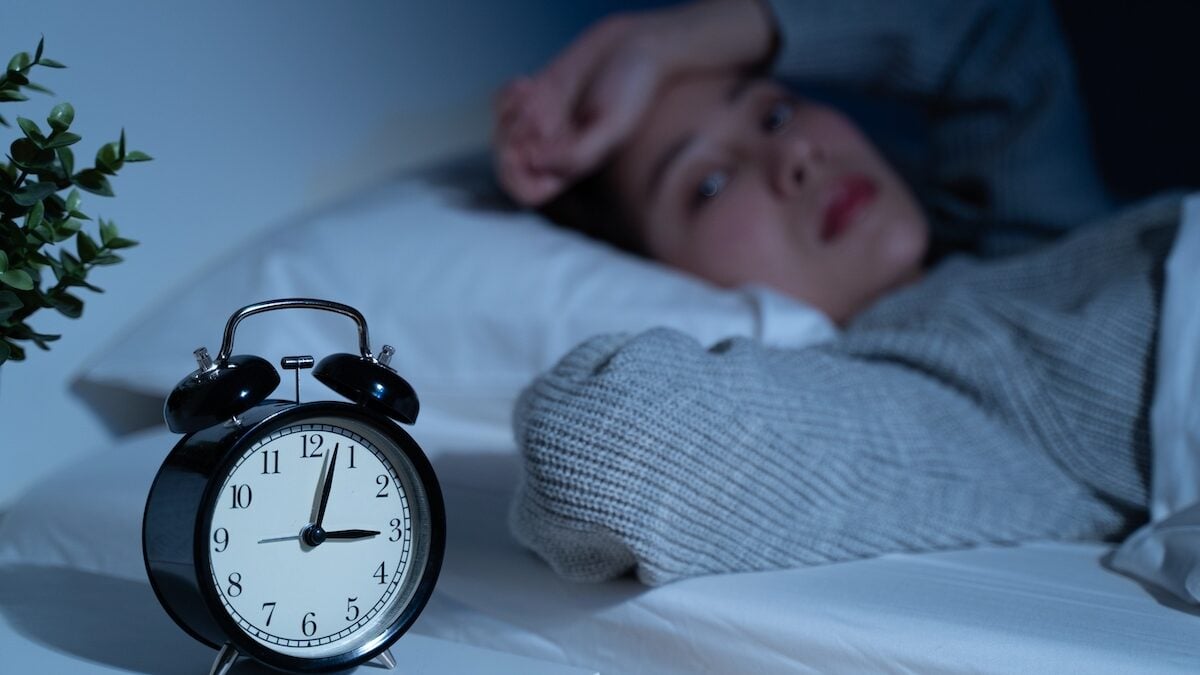
You’ve been waiting for this moment for weeks. A weekend at the hotel, a few days with relatives, a trip to finally breathe. The room is quiet, the bed soft, everything seems combined for a perfect night. And yet, when you wake up, the observation is the same: broken sleep, difficult falling asleep, persistent fatigue. Why does our body fail us as soon as we leave our usual bed?
A brain that refuses to go to sleep
Contrary to what we often think, it is not the mattress, nor even the overall comfort, that is to blame. According to Dr. Gérald Kierzek, the main reason lies elsewhere: the brain goes into alert mode when it finds itself in a new environment.
Even when everything seems reassuring, our brain has not yet validated the premises. He considers the place as potentially uncertain and maintains a form of vigilance, incompatible with deep and restorative sleep. Result: we sleep, but only half.
The “first night effect”, an archaic reflex for everyone
Researchers have even given this phenomenon a name: the “first night effect.” It results in falling asleep longer, lighter sleep, more micro-awakenings and a reduction in paradoxical sleep, which is essential for mental recovery.
In practice, it is as if the brain kept “one eye open”. This mechanism would be inherited from our ancestors, for whom sleeping in an unfamiliar place exposed real dangers. A form of nighttime protection system, still very active today.
“The good news is that this state of surveillance does not last. From the second or third nightonce the environment is deemed safe and familiar, the brain releases pressure and sleep cycles return to normal..
What happens in the brain at night
Neurologically, research points to the role of a key area: the extended amygdala, involved in the management of emotions, stress and fear. In an unknown location, this region remains more active than usual.
Certain specific neurons, called IPACL-CRF, act as a real nighttime alarm. Their activation maintains wakefulness or very superficial sleep until the brain has integrated the environment as safe.
“This mechanism exists in mammals and could have been created to more easily detect predators or threats during rest”.
In some people, this mechanism is even more marked. Anxiety, chronic stress or post-traumatic stress disorder can lead to excessive hypervigilance, causing broken nights… even at home.
When the environment reinforces hypervigilance
Added to these internal mechanisms are all the little signals that remind the brain that it is not “at home”. A noise from the corridor, a different light, an unusual smell, a changing temperature… or simply the excitement of the trip.
Even if the bedding is comfortable, these sensory shifts are enough to maintain the state of alert. People already prone to insomnia or anxiety are particularly sensitive to it and often find their sleep even more disrupted when traveling.
How to sleep better from the first night elsewhere
If the effect of the first night never completely disappears, it is possible to reduce it by sending reassuring signals to the brain.
- Take a familiar object: pillow, pillowcase, blanket, or even a familiar smell;
- Reproduce your usual bedtime ritual: reading, soft music, dim lighting;
- Avoid caffeine, alcohol and screens in the evening, especially when traveling;
- Use earplugs, a night mask and adjust the room temperature;
- Practice slow breathing, cardiac coherence or a short relaxation session before sleeping.
These simple gestures help the brain recognize familiar landmarks and let down its guard more quickly.
When should you consult?
In the majority of cases, these bad nights remain transient and do not last more than one to three nights. “On the other hand, if the sleep problems have lasted for more than three monthswhatever the location, with marked hypervigilance or frequent nightmares, it is important to speak to a professional” warns Dr. Kierzek.
This may reveal a sleep disorder or an anxiety disorder requiring specialist advice. Sleeping elsewhere is then only an indicator of a deeper imbalance.