
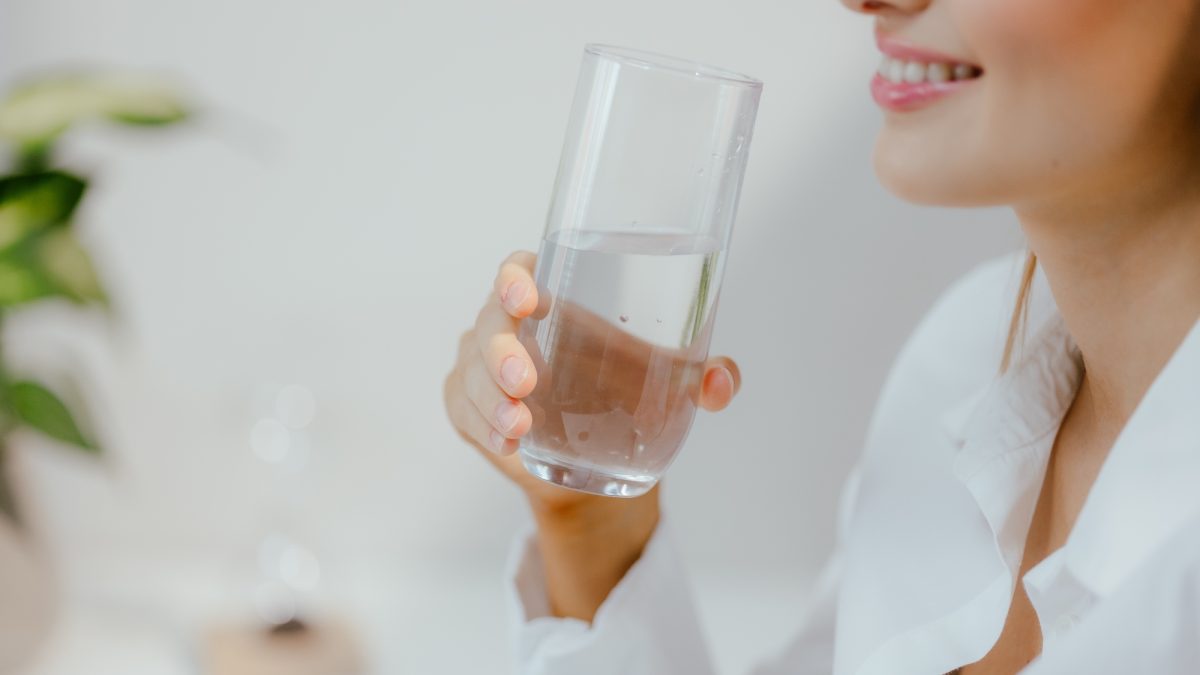
Are you drinking enough water every day? Without thinking about it too much, you would probably answer yes. But if we told you that it is recommended to drink eight glasses of water per day, spread throughout the day, would you still be as sure of being well hydrated? Probably not.
A journalist tests the experiment of 8 glasses of water per day
In an article published on the site Eating Welljournalist Abigail Abesamis Demarest set herself a challenge: drink the recommended amount of water every day for a week, or approximately 1.5 liters spread over the day.
She immediately recognizes that this is not a natural habit for her. “I usually keep a cup of water at my desk and sip on it while I work. I also always bring a bottle of water to my gym classes. Before this experience, I didn’t really track my water intake, but like many people, I knew I probably wasn’t drinking enough.”
What effects on his health?
At the end of this week of experimentation, she noted several observations:
- More frequent trips to the toilet :
“It wasn’t a surprise.”she admits; - Reduced consumption of coffee and alcohol : these drinks being diuretics, they would have forced her to go to the toilet even more often;
- No impact on weight : “I weighed myself every morning before eating, and my weight was exactly the same at the beginning and end of the week.” According to her, drinking more water does not necessarily reduce appetite or the quantities ingested.
She did not notice any other notable changes, probably due to the short duration of the experiment.
Hydration, a key element for health
On the subject, dietician Alexandra Murcier, member of our committee of experts, recalls the importance of hydrating well every day. “Good hydration is essential, because it influences many parameters. Our body being made up of 70% water, a lack of hydration can cause migraines, water retention and a feeling of fatigue.”
Water also plays a key role in sports practice.
“Drinking enough improves performance and reduces the risk of injury, while a lack of hydration increases it.”
Finally, she insists on the need to hydrate well all year round, and particularly in winter. “You can quickly become dehydrated due to a fever or an overheated environment. It is therefore important to drink regularly and pay attention to the needs of the most vulnerable people, such as children, the elderly or pregnant women.”