
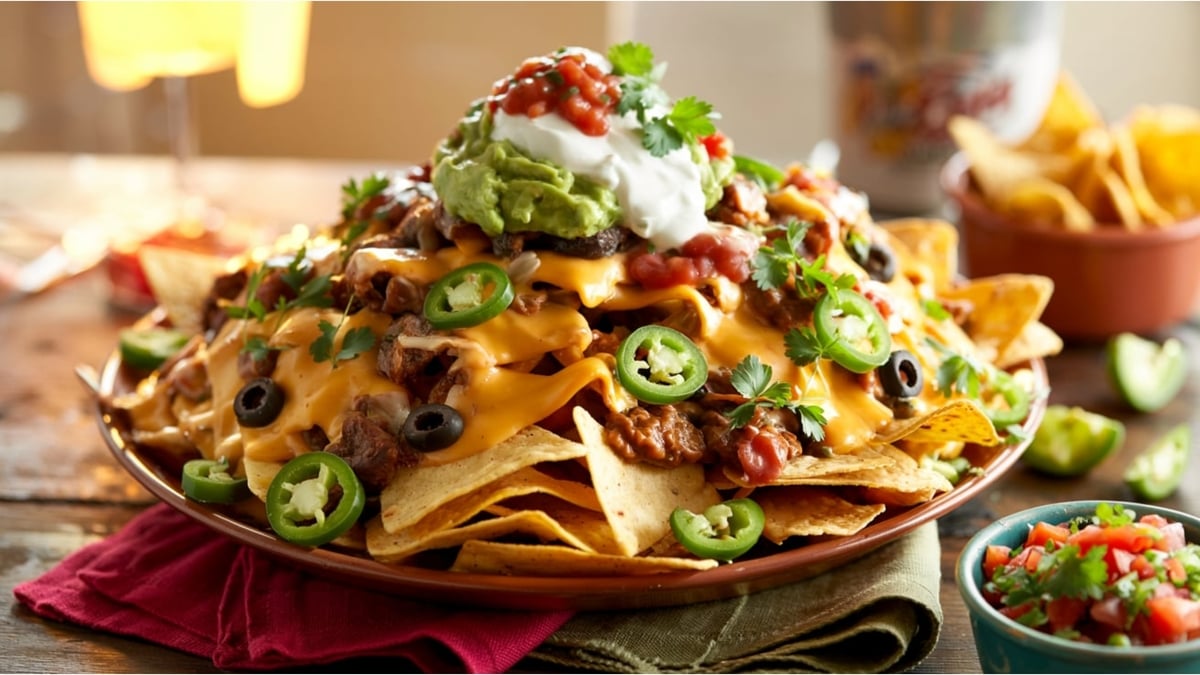
On TikTok, it’s impossible to miss them: “Italian Nachos” are everywhere. Made up of potato chips, Italian cold meats, parmesan and various condiments, they amaze our feed with their colorful aesthetic and gourmet aspect. But if they actually look very tasty, should we be wary of them from a health point of view? Julie Boët, dietician-nutritionist, deciphers this recipe for True Medical.
“Italian Nachos”, chips garnished with ham and cheese
On the networks, Italian Nachos videos abound, to the point of whetting the curiosity of gourmets around the world. But who are they exactly? In reality, they are simply nachos revisited: instead of corn chips, classic chips are used, then garnished with melted mozzarella or parmesan, cold meats and vegetables of your choice (tomatoes, arugula, peppers, red onions, etc.). These are usually roasted or pan-fried before being placed on the bed of crispy chips, then covered with melted cheese. Ultimately, we obtain an ultra-comforting and colorful aperitif plate.

The problem ? Nutritionally, Italian Nachos are not very healthy. They are even (very) rich in fats, especially saturated fatty acids.
“These bad fats mainly come from the Italian cold cuts used (such as salami, coppa or prosciutto), grated parmesan and creamy sauce often based on crème fraîche or mayonnaise. However, saturated fats are associated with an increase in LDL cholesterol when consumed in excess, and can increase the risk of cardiovascular disease. warns Julie Boët.
These revisited nachos can therefore increase daily energy intake very quickly, without providing the key nutrients essential for the proper functioning of our body.
Frying, toxic cooking
Another bad point: the potato chips, which form the basis of this dish, are usually fried in oil. However, while this cooking method provides crispiness, it increases the energy density of the potatoes and leads to the formation of certain toxic substances (the famous Maillard reaction!).
“These chips also remain refined carbohydrates low in fiber, processed and quickly absorbed, which contribute to a rapid rise in blood sugar and a feeling of hunger which returns quickly after the meal”, specifies the dietician. Indeed, chips do not in any way help maintain “stable” satiety. This means that by consuming these Italian nachos, you will want to throw yourself at a burger a few hours later.
A glaring lack of fiber and protein
The dietitian also wants to alert us… to the almost non-existent fiber content of this dish. While we know it, science has proven it: dietary fiber, present in vegetables, legumes, whole grains and fruits, play a crucial role in the proper functioning of transit.
“In the absence of fiber, digestion is faster, blood sugar rises more quickly and falls just as quickly, which can promote cravings shortly after the meal,” adds the expert.
As for proteins, necessary for the renewal of our tissues, they are also present in insufficient quantities to constitute a complete meal. “Cold meats and parmesan certainly provide protein, but their share remains relatively low on an entire plate.“, notes the dietician.
That said, it is important to qualify these observations. A dish like “Italian Nachos” remains a culinary pleasure.
Despite everything, when consumed occasionally, this dish does not present a major health risk. “Forbidding yourself from eating a particular dish is rarely a sustainable strategy; the main thing is rather to understand how these foods should fit into an overall balance”recalls the nutritionist.
How to further balance this dish?
Good news: several variations of these “nachos” are possible, however deviating from the original recipe.
- “You can replace classic potato chips with homemade foccacia or Italian bruschetta”;
- “Add thinly sliced roasted vegetables (such as zucchini, sweet potatoes or beets) to increase fiber and micronutrient intake”;
- “Add a more abundant and leaner source of protein, such as diced grilled chicken, and even seasoned cottage cheese”;
- “You can also lighten the sauce by replacing part of the cream with plain Greek yogurt, which provides more protein and less saturated fat.”
Finally, remember to accompany this type of plate with a good dose of fresh vegetables or a simple green salad, rich in antioxidants.
“I also advise you to season everything with aromatic herbs, lemon or balsamic vinegar (no cream of vinegar which will add sugar) to add flavor to the dish without adding additional calories”,
concludes Julie Boët.