
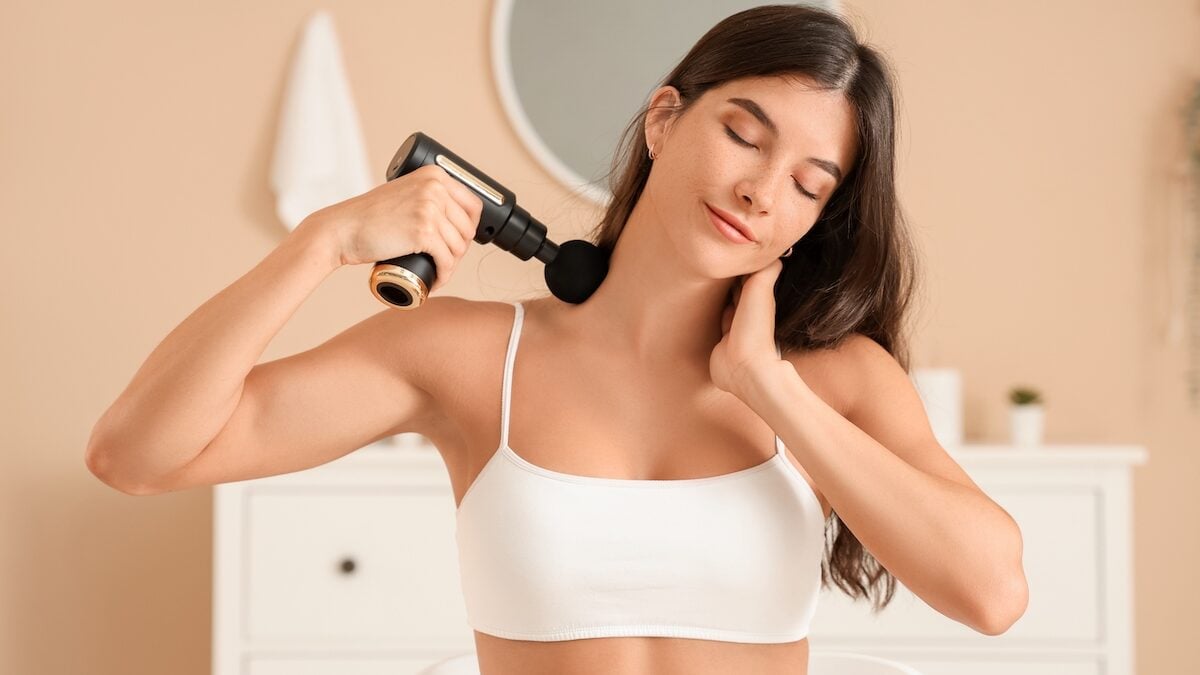
The home gym was just the starting point. Recent data from Klarna, relayed by Athletech Newsshow that millennials are now purchasing wellness tech devices to transform their living room into a recovery space, from head to toe. For younger generations, well-being has become a daily practice that structures their life choices. The way they organize recovery at home is one of the most visible signs.
Why are millennials betting on home recovery?
In the United States, Generation Z and millennials represent 36% of the adult population but already 41% of wellness spending. Cited industry studies show that more than 80% of millennials spend nearly a quarter of their disposable income on health and wellness. This budget no longer goes only to vitamins or medical visits: well-being is seen as a lasting investment, which resists economic crises.
Stress plays a key role. A report relayed by Sense of Wellness
points out that 40% of Gen Z declare themselves “almost always stressed“, compared to 23% of all generations. Faced with this pressure, many prefer recovery rituals at home, easier to fit in between two meetings and less intimidating than a spa. Biohacking, measuring oneself via connected objects and the idea of optimizing one’s energy feed this desire for control from one’s couch.
What does the living room look like?
Studies indicate that around 66% of millennials place wellness at the top of their priorities and around 50% have purchased at least one muscle recovery product in the past twelve months. And for these consumers, at-home recovery is no longer limited to the foam roller. Muscle recovery devices dominate: massage guns, compression boots, connected massage cushions and seats.
Then come heat and cold: infrared sauna blankets, compact cabins, cold plunge baths or hot/cold therapies inspired by sports protocols. Many of these devices cost between 260 and 550 euros, positioned as “pro” alternatives to repeated sessions in an institute. Alongside this, light therapy masks, red light mats and connected aesthetic devices extend the areas of beauty, longevity and mental health already identified as market growth levers.
Brands are adapting to these new needs
For well-being players, millennial demand no longer concerns a simple object, but an ecosystem. The cited reports emphasize the need for measurable results, scientific credibility and experiences combining physical product, application and coaching content.
In the French and European markets, this dynamic is combined with a strong sensitivity to “natural well-being” and sustainability, which is increasing sharply in Google searches. Brands that design compact, energy-efficient wellness tech solutions, combining reassuring materials, spa-inspired rituals and digital monitoring, are part of this new way that millennials are bringing recovery home.