
Practical, economical and available all year round, canned or frozen vegetables are attracting more and more French people. But do they really keep their nutritional promises? In its March 2026 issue, 60 Million consumers screened 30 references. Results: sometimes major differences in vitamins, minerals… and salt.
French people far from nutritional recommendations
“Eat five fruits and vegetables a day.” The message is known, but little followed. According to a survey cited by 60 Million consumers (n°622, March 2026), only 15% of adults and 11% of children reach the official recommendations, set at at least 400 g per day. On average, consumption stagnates around 140 g daily.
In this context, canned or frozen vegetables appear to be valuable allies: ready to use, inexpensive, available all year round. According to data from the Interprofessional Association for Canned and Frozen Vegetables (Unilet), 62% of households consume canned foods at least once a week, and 56% consume frozen foods.
But are these products as nutritionally interesting as their fresh counterparts? To find out, the magazine analyzed 30 references of extra-fine green beans, spinach branches and carrot peas, in cans, jars and frozen versions.
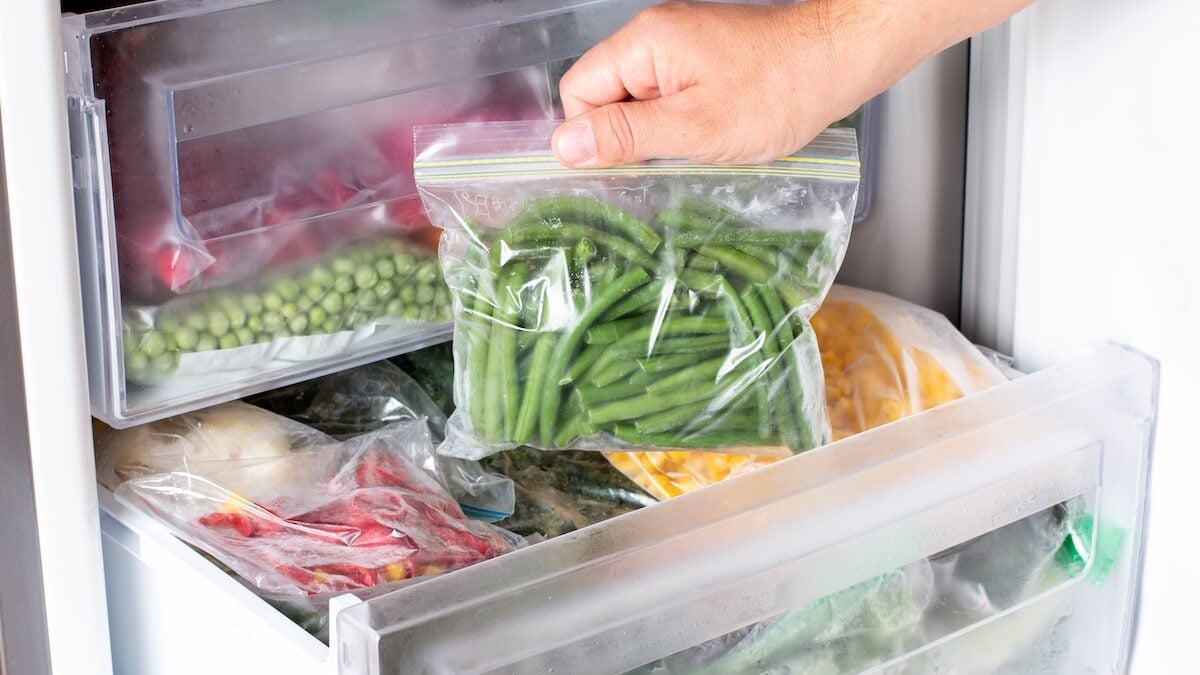
Frozen foods: champions of vitamins… and low salt levels
First lesson: frozen vegetables often do well, particularly for vitamin C and certain B group vitamins.
Rapid freezing after harvest (generally less than four hours) and blanching at moderate temperatures preserve heat-sensitive nutrients. Conversely, canning canned foods (sterilization at 121°C for around twenty minutes) further destroys fragile vitamins.
Striking example with green beans: certain frozen products display vitamin C contents up to 14 times higher than the average observed in cans. Same observation for carrot peas: frozen ones contain four to five times more vitamin C than cans and jars.
Another major advantage: the almost systematic absence of adding salt to frozen foods. Canned foods have contents of between 0.45 and 0.79 g per 100 g. A 200 g portion can therefore represent up to a third of the maximum 5 g of salt recommended per day. An important point of vigilance, especially for people suffering from hypertension.
Canned foods: interesting for certain minerals… but saltier
Not everything is to be thrown away when it comes to canned goods. On certain minerals, they are sometimes more efficient than frozen foods.
Canned spinach, for example, has high levels of iron, manganese and calcium. Some references far exceed the averages of the Anses Ciqual table for iron. Likewise, certain canned foods have interesting amounts of vitamin K1 or vitamin A.
Peas and carrots, all categories combined, also constitute the best family in terms of fiber (up to 6.3 g per 100 g in certain frozen references).
But the main downside of canned foods remains the salt, which is very present, as well as the partial degradation of water-soluble vitamins (B1, B6, B3, C), which sometimes migrate into the covering liquid.
Pesticides and nitrites: residues under surveillance
The investigation also reveals the presence of pesticide residues in the three families of vegetables analyzed. Good news: no banned molecules have been detected and the levels remain below the European regulatory thresholds. But certain references combine up to five different residues in the same product.
Concerning nitrites, only two samples of frozen spinach contained them, probably due to poor storage. Nitrate levels respect the limits set by European regulations.
The verdict of 60 Million consumers
Conclusion of the magazine: there is no absolute winner between canned and frozen. “Minerals and vitamins are preserved in a very variable manner from one product to another, whatever the vegetable family and the method of preservation.“, summarizes the investigation.
Frozen foods are generally distinguished by their richness in vitamin C and their low salt content. Canned foods can offer interesting contributions in certain minerals or fat-soluble vitamins, but at the cost of frequent excess sodium.
For consumers, the good reflex therefore remains to vary sources, to compare labels – particularly on salt – and, when possible, to favor the least processed and least salty references.
A useful reminder, as vegetables — in all their forms — remain an essential pillar in the prevention of cardiovascular diseases, certain cancers and even stress.