
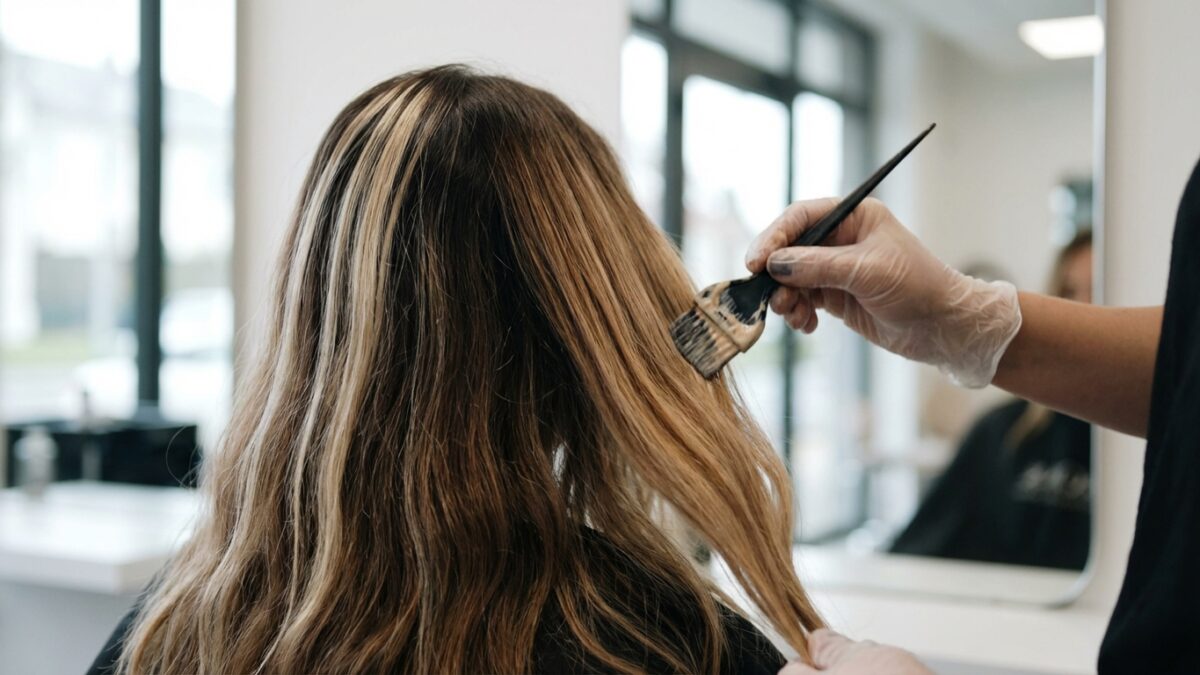
On the networks, the 2016 revival is a hit: matte nude lips, strong contouring, choker at the neck. But on hair, all the fads of the time do not stand the test of time so well. This is the case of the famous 2016 balayage, ultra contrasting, which many still wear without suspecting that it immediately betrays the year of their last big transformation.
French colorist Manon Lou, who is widely followed on Instagram, sees it in the salon: this old-fashioned style of locks still stands out on many heads in 2026, even though it no longer fits the current desire for naturalness. His diagnosis targets a very specific way of carrying out the scanning, not the technique itself. Is your color affected?
Balayage 2016: this root-end contrast that dates your color
The star sweep of 2016 can be recognized at a glance. The roots remain significantly darker, sometimes by two to three tones, while the lengths and ends turn very light blonde. The locks are large, visible, almost cut. At the time, all the it-girls had adopted it and realism was not the priority: we wanted the color to be seen, even if it meant losing softness.
To know if you still wear this look, a few simple clues:
- A clear bar between natural regrowth and light lengths;
- A “dark block/light block” effect rather than a gradient;
- The feeling that your locks are drawn with stabilo, especially in the photos.
Why do colorists say stop this sweeping at the roots?
In 2026, what poses a problem for pros is not sweeping, but demarcation. Manon Lou explains that highlights that are highlighted at the roots and not blended tend to leave too visible an effect when the hair grows back, creating an unwanted demarcation that is immediately noticeable. This horizontal line at the temples quickly gives the impression of an abandoned color, even when it is recent.
The stronger the contrast, the more the regrowth disrupts the harmony of the face and hardens the features. Visually, the hair loses its relief to transform into two blocks, which can add a few years and requires frequent appointments to “catch up with the roots”. The zeitgeist goes the opposite way: easy-going colors, discreet regrowth, sun effect that seems to come from inside the hair.
What alternatives to ask for a truly modern 2026 sweep
Colorists now favor blended versions. Contouring highlights only the strands that frame the face, while leaving the rest of the roots very natural. The new generation ombré hair slides the color from the roots to the ends without a visible line, for a soft and homogeneous result, far from the tie and dye of 2010.
To go further, techniques like color melting, Air Touch or “Indian Sun” balayage rely on several similar shades, blended from root to tip. The regrowth then mixes with the rest of the hair, without a clear border. At the salon, the key word remains simple: ask for a blended balayage, without demarcation, which remains pretty even several months after the visit. Simple words, but enough to turn a 2016 balayage into a 2026 color.