
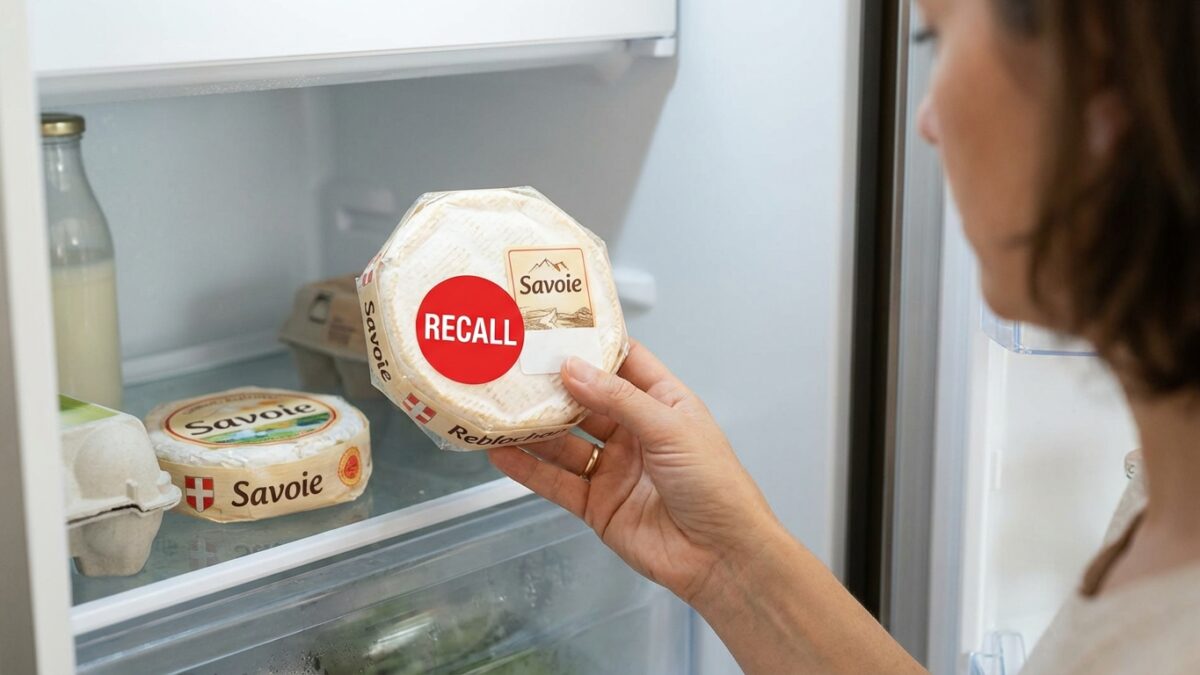
A new health alert targets Savoyard cheeses popular with raw milk lovers. Several batches of
raw milk cheesesincluding Reblochon, are the subject of a recall in France after the detection of bacteria Escherichia coli potentially dangerous.
The products concerned have recently been marketed across a large part of the country, sometimes in mass distribution. The authorities are calling on consumers to carefully check the batches present in their refrigerator, because the expiration dates are still in spring 2026.
Escherichia coli: which raw milk Savoie cheeses are recalled?
First product targeted: a Reblochon from Savoie
AOP with raw milk 28% MG UDNR, 450 g, barcode 3368959894246, lot 6-01V, with a use-by date set at 04/15/2026 sold by the U cooperative. Reason indicated on RappelConso: “MICROBIOLOGICAL NON-COMPLIANCE”. This cheese bears the FR 74.145.050 EU health mark, and the recall procedure runs until April 15, 2026, with the possibility of reimbursement via the point of sale or consumer service (0969366936).
A second unbranded Reblochon is recalled: lot
6-01expiry date 04/15/2026, packaged in cheeses weighing 450 to 550 g, diameter 14 cm, plastic-coated paper packaging. It was sold in the cutting or traditional section of Intermarché throughout France, between 01/23/2026 and 02/04/2026, under the same health brand FR 74.145.050 EU. (consumer service 0450375176)
An unbranded “Savoie Cheese”, lot 6-02Hexpiry date 04/08/2026, weight 400 to 450 g, is also recalled: distributed from 02/05/2026 to 02/18/2026 via several wholesalers such as Hautbois SA, Deroche or Losfeld Distribution (consumer service 0450375176)
What are the risks with Escherichia coli STEC in these raw milk cheeses?
The recall sheets indicate the presence ofEscherichia coli Toxigenic shiga (STEC), a form of the bacteria capable of producing toxins. They specify: “Toxigenic Shiga Escherichia coli (STEC) can cause, in the week following the consumption of contaminated products, diarrhea, sometimes bloody, abdominal pain and vomiting, accompanied or not by fever. These symptoms can be followed (5 to 8% of cases) by severe kidney complications, mainly in children,” indicate the sheets published on
ReminderConso.
The authorities remind that people who have consumed these cheeses and exhibit these signs must consult their doctor without delay, noting the product, date and place of purchase. In the absence of symptoms within 15 days following consumption, it is not considered necessary to consult. Children under 5 years old, pregnant women, the elderly or immunocompromised people are considered particularly vulnerable to this type of infection.
What to do if you have these raw milk cheeses at home?
The instructions are clear: no longer consume the products from the batches mentioned. Depending on the case, the recall sheets invite you to destroy the cheese or return it to the store for a refund. To find your way around, the authorities recommend checking the label and, if in doubt, contacting the store or dedicated numbers.
- Take the raw milk Savoie cheeses out of your fridge;
- Check lot, DLC and, if present, barcode;
- Above all, do not taste “to see”;
- Destroy them or return them to the point of sale for reimbursement.
For the rest, the health authorities advise sensitive groups to avoid raw milk and raw milk products, to favor cooked pressed cheeses (Emmental, Comté, etc.), processed cheeses and those made from pasteurized milk, and to cook minced meats thoroughly (70°C). A reminder which adds to the now regular vigilance around raw milk cheeses contaminated by Escherichia coli.