
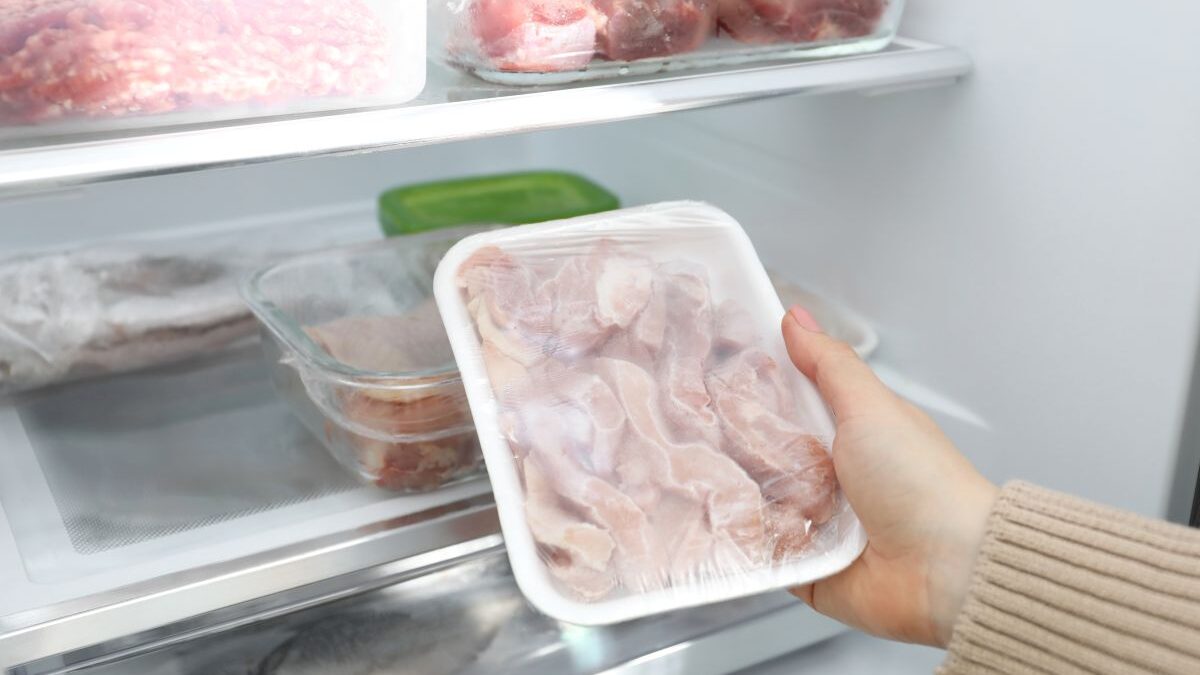
Full fridge, busy schedule, approaching dates: the idea of freeze food that is about to expire
arrives quickly. Between the guilt of throwing it away and the fear of poisoning ourselves, we often hesitate in front of a tray of meat on the eve of the date.
The answer is neither completely yes nor completely no. It all depends on the type of date indicated, the condition of the food and when you decide to put it in the freezer. Behind this everyday gesture are actually questions of invisible bacteria and organization.
DLC, DDM: the basics before freezing almost expired food
On very perishable products (fresh meat, fish, ready meals in the fresh section, etc.), there is a
expiration dateannounced by the words “to consume until…”.
After this date, consumption can become dangerous, even if the smell and taste seem normal, because germs such as Listeria or certain Salmonella may have multiplied without this being visible.
In the other case: the minimum durability date is presentrecognizable by the formula “best consumed before…”. It mainly concerns dry or slightly perishable products. After this deadline, the food risks losing flavor, color or texture, without becoming toxic if it remains healthy to the eye and nose. This difference changes everything when you think about freezing.
Freezing and bacteria: why waiting for the end of DLC is risky
Microbiologists point out that freezing does not kill bacteria, it only suspends their activity. A DLC product has already started to deteriorate as the date approaches, even if it remains “consumable”. Freezing it at the last moment amounts to freezing an already fragile balance: once thawed, the process resumes where it left off, sometimes very quickly.
It is therefore strongly recommended not to freeze raw food close to its shelf life. For DDM products, the action generally remains acceptable if the food is still visually correct and has not already been frozen by the manufacturer. In practice, a few benchmarks help to decide:
- MPD product still healthy: freezing possible;
- Well-cooked homemade dish, cooled for less than two hours: freezing possible;
- Raw meat or fish on day 1 of the expiry date: freezing is not recommended;
- Food questionable in smell or appearance: do not freeze or consume.
Anticipate, cook, label: good reflexes for safe freezing
Specialists are almost unanimous: the fresher a food is when frozen, the better the storage conditions. It is therefore better to place meat or fish in the freezer when there are still several days before the shelf life. Another safe option: cook the food (complete cooking), let it cool for no more than two hours at room temperature, then freeze it quickly while respecting the
cold chain.
Freezing does not make a product edible forever. The cold slows down the degradation without stopping it; over the months, taste, smell and texture deteriorate. Note the freezing date, adapt the duration to the type of food and remain very careful for vulnerable people (pregnant women, elderly people, young children, immunocompromised people) limits the risks. If in doubt after defrosting, it is better to throw it away than get sick.