
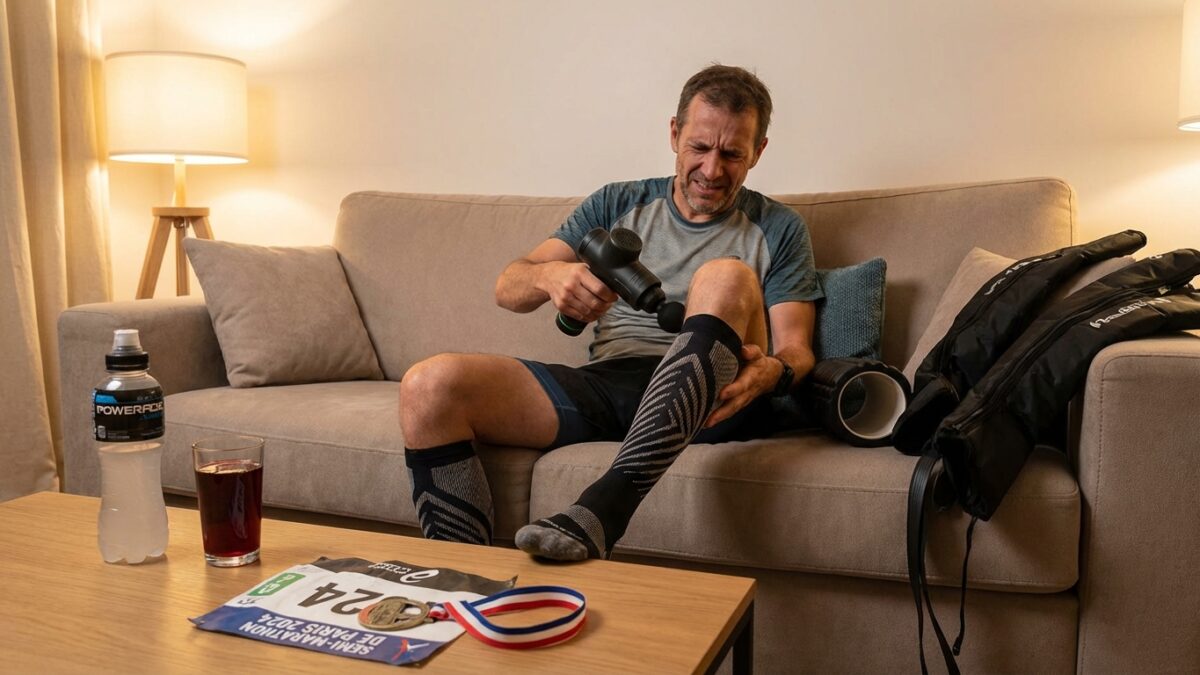
The day after a marathon, many runners have the same stiff gait and quads on fire. The body endured 42 km with thousands of micro-shocks in the muscles and tendons. On paper, the finish line marks the end. For your body, this is only the beginning of a long phase of recovery after marathon.
Studies show that it takes about seven to ten days for muscle cells to repair themselves, and sometimes almost a month for tendons to return to normal. Between the cold bath, the massage and the post-race drink, the product offering is immense. It’s all about choosing the ones that will really help you feel light again on the next starting line.
Post-marathon recovery: first the basics, then the tools
Just after arrival, the best product remains free: walk ten minutes, change, drink water, then a drink containing a little salt and carbohydrates. The following hours, priority is given to sleep, a meal rich in carbohydrates and proteins, and regular hydration. The following week, many coaches recommend reducing volume and intensity by about half rather than stopping altogether.
Once this base is installed, the accessories become real repair accelerators. Self-massage tools restart circulation and relax the fibers. Compression clothing relieves heavy legs during the train or car ride home. More sophisticated, some infrared or electromagnetic pulse heating mats seek to reduce inflammation and promote deeper sleep.
Massage gun, roller and compression boots: pamper your legs
For a gentle massage after a half or marathon, many runners start with a long foam roller, often called a foam roller. By rolling the calves, quadriceps and glutes on it, we help the blood to circulate and limit stiffness the next day. When an area remains very tense, a small massage ball placed under the foot or hip allows you to target a specific knot in a few minutes.
THE
massage gun goes further. Thanks to its vibrations and its different tips, sometimes heated or rotating, it deeply relaxes the quadriceps, hamstrings or calves, as long as you remain light the day after the race. For high-volume training, portable compression boots, with seven pressure levels and around four hours of battery life, provide effective drainage while sitting on the couch.
Electrolytes, collagen and cherry juice: a boost from the inside
As for drinking, water alone doesn’t replace everything you’ve lost in sweat. A drink containing
electrolytes provides, for example, around 1,000 mg of sodium, 200 mg of potassium and 60 mg of magnesium per dose, a trio that limits cramps and fatigue. For deep tissues, some athletes rely on collagen shots with 10 g of collagen and 35 mg of vitamin C, or on a concentrated cherry juice known to soothe aches and promote sleep.