
Whether performed under local or general anesthesia, certain medical procedures leave a mark on patients. If the act itself is sometimes painless, the “path to recovery” can be complex.
This ranking, shared by the Daily Mail, seems fair, for Dr Kierzek, emergency doctor and medical director of True Medical. “This classification is consistent with validated pain scales and clinical feedback.” he assures. “But understanding why this care hurts is the first step to better managing your recovery.”
Marrow biopsy and lumbar puncture: dreaded procedures
Bone marrow biopsy, often performed at the hip to diagnose leukemia or collect stem cells, is one of the most impressive procedures.
“The needle passing through the hip bone under local anesthesia, spinal cord compression and post-operative hematoma cause dull pain that can radiate for days. explains Dr. Kierzek.
For its part, the lumbar puncture, which consists of taking cerebrospinal fluid between two vertebrae, requires the patient to remain awake.
In addition to the discomfort and tingling during insertion, Dr. Kierzek recalls the existence of “post-PL syndrome“, characterized by intense headaches in 10 to 30% of cases.
Thoracic and spinal surgery: the challenge of convalescence
Open heart surgery requires sawing of the sternum. Although the operation takes place under general anesthesia, waking up is sometimes painful. “Manipulation of the myocardium and cutting of the bone causes intense chest pain which persists for 4 to 6 weeks.specifies the emergency doctor.
Spinal surgery (spinal fusion) is also at the top of the ranking. She manipulates areas extremely rich in nerves.
Here, post-operative pain coupled with essential but grueling physiotherapy often makes it the number 1 surgical procedure in terms of suffering experienced.
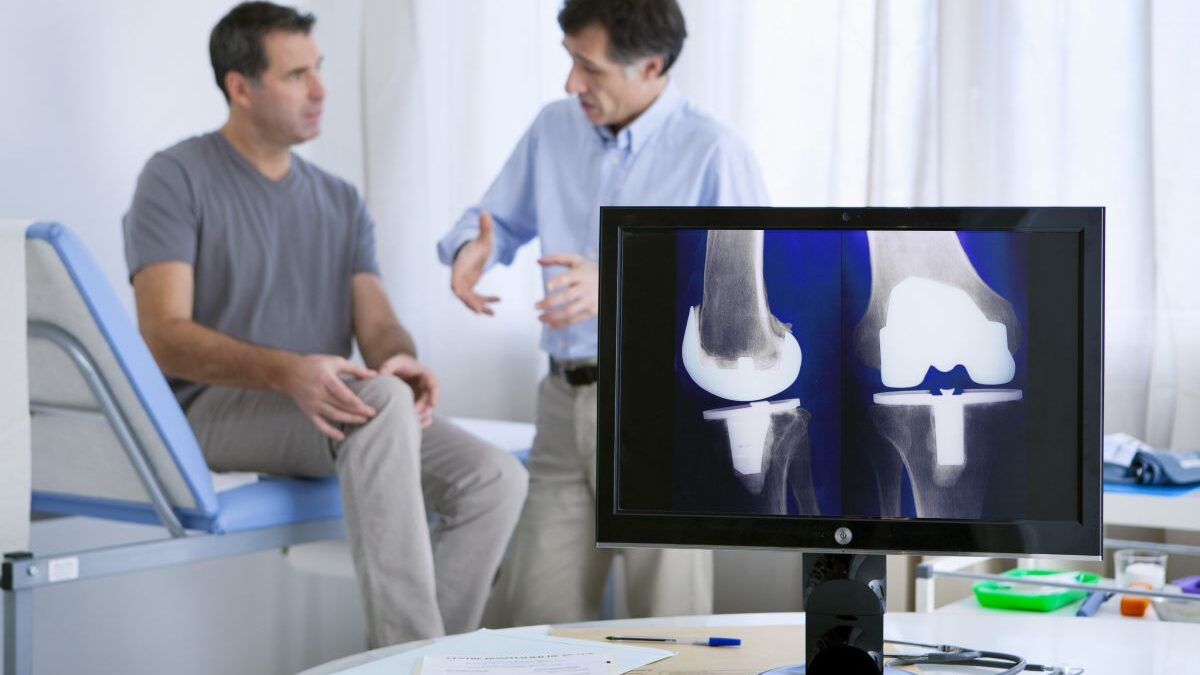
Total knee prosthesis: grueling rehabilitation
Total knee replacement with a prosthesis is a common procedure, but paradoxically very traumatic. The surgeon must saw off the ends of the femur and tibia to fix the prosthesis.
According to Dr. Kierzek, “sawing bones and stretching ligaments revives hypersensitive periosteal nerves for 3 to 6 months during post-operative mobilization“The secret to better recovery, however, lies in early movement, despite discomfort.
Hysteroscopy: a female pain that is too often underestimated
Hysteroscopy involves inserting a camera into the uterus. Although it is essential for diagnosing fibroids, it is often performed without sedation.
“This procedure, invasive without general anesthesia, achieves a score of 7/10 on average in a third of women.“, emphasizes Dr. Kierzek.
Cervical dilation and instrumentation of the cavity cause cramps similar to periods, but much more amplified.
How to minimize suffering?
Faced with these acts, medicine does not remain helpless. Dr. Gérald Kierzek recalls that “the whole point of anesthesia-analgesia is to eliminate pain during the procedure and minimize it afterwards.”
Today, doctors favor a multimodal approach:
- Therapeutic escalation: from paracetamol to opioids if necessary;
- Loco-regional anesthesia: to block the nerves in the area concerned without putting the whole body to sleep;
- Non-invasive techniques: such as cryotherapy (cold) or electrical stimulation (TENS) which “scrambles” the painful signals sent to the brain.
In all cases, anticipation remains your best ally: never hesitate to discuss the relief options available in advance with your anesthetist or surgeon to approach your convalescence with more serenity.