
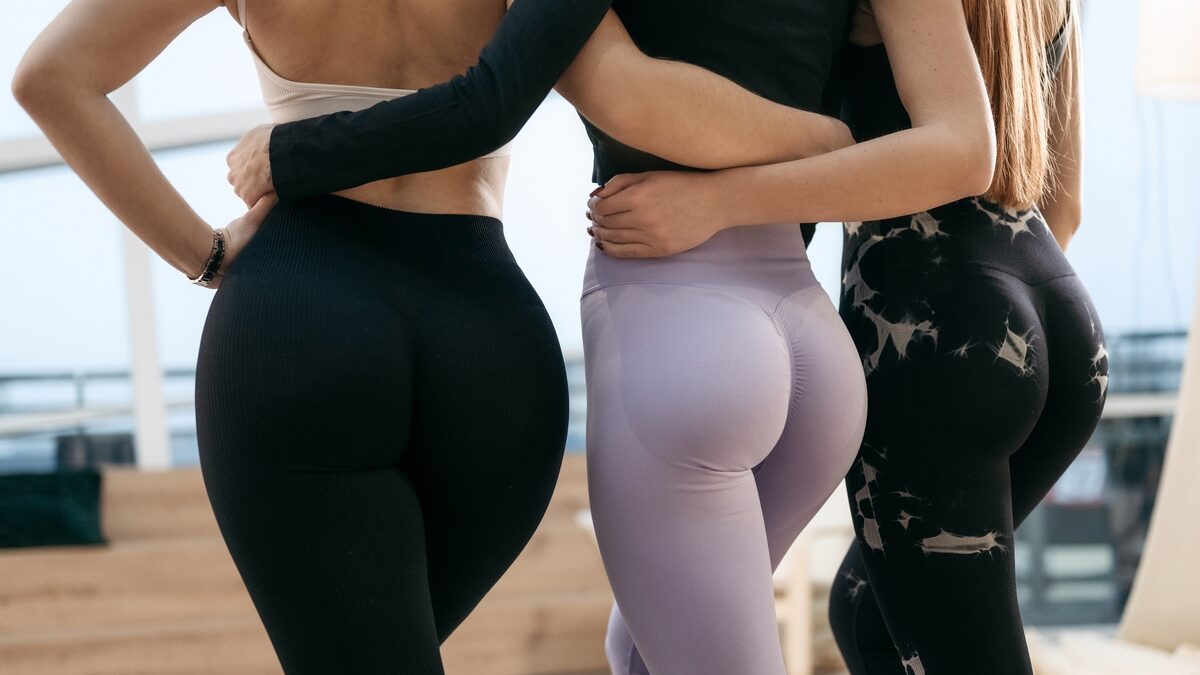
A-shaped, V-shaped, round or square: the buttocks have very varied shapes. But where do these differences come from and can we modify them? Lighting with two specialists.
The buttocks, everyday allies
The buttocks are made up of powerful muscles that allow the body to move on a daily basis. It is thanks to them that you can walk, run… or even sit.
“The buttock is made up of muscles (mainly the gluteus maximus), adipose tissue and fibrous septa connecting the skin to the fat“, explains Dr Yaël Berdah, plastic and aesthetic surgeon in Paris.
These famous buttocks also help maintain our posture: glutes in good condition help to keep the pelvis well aligned. They also relieve the spine – which is heavily stressed – and limit pain in the lower back.
Finally, the buttocks have a protective role. The presence of fat in this area helps cushion shocks and protect the pelvic bones. In other words, they serve as a natural cushion.
However, if we are all endowed with this little natural padding, did you know that their shape varies greatly from one person to another? Many factors – such as fat distribution, physical activity or even genetics – can indeed influence the appearance of our buttocks.
Different factors involved
The shape of the buttocks varies due to “anatomical, hormonal and environmental factors“, confirms Dr Yaël Berdah, plastic and aesthetic surgeon in Paris. “There is sexual dimorphism: in women, the pelvis is wider and estrogen impregnation promotes the distribution of fat at the level of the buttocks, which gives more rounded and projected shapes than in men. she reveals.
- bone structure also plays a key role:
“the width of the pelvis, the orientation of the hips and the pelvic morphology determine the projection and shape of the buttocks”, specifies the specialist. - sport also increases muscle mass (especially with exercises such as squats) and improves tone, “but has little direct effect on fat, which depends mainly on weight and metabolism”, recalls Dr Yaël Berdah;
- Finally, other factors come into play, such as hormones, age (with progressive sagging of the skin), genetics and ethnic origins.
Finally, complementary elements influence their form: “aging (loss of tone and redistribution of fat), genetics (basic shape), posture (pelvic tilt), morphological variations (round, square, A or V shapes), weight variations (storage or fat loss) and skin quality (elasticity and connective tissue)”underlines Dr Yaël Berdah.
What are the different shapes of buttocks?
There are actually four, according to Dr. Fatya Assadi:
- The A-shape, called “pear”, wider at the bottom with volume on the hips, giving a feminine and natural appearance;
- The V shape, narrower at the bottom and wider at the top. It is often associated with loss of volume or aging;
- the square shape, with few curves and marked hips;
- And finally the round O shape, with a well-distributed volume, a curved and plump appearance, often sought after.
The good news? It is entirely possible to change the shape of your buttocks.
The different possible solutions to correct the shape of your buttocks
Yes, it is possible to transform our glutes”by modifying certain lifestyle habits which determine their forms: sport, lymphatic drainage, hormonal treatment, modification of posture, etc.”, specifies Dr Yaël Berdah.
But many other options exist to modify their shape and/or volume,”depending on the patient’s request“, admits Dr. Fatya Assadi, specialist in aesthetic medicine.
- Hyaluronic acid injections, in great demand, allow you to slightly increase the volume of the buttocks and fill certain hollows. Results typically last between one and two years. “The advantage of injections is that they offer a non-invasive alternative to surgery“, underlines Dr Assadi;
- Liposuction, particularly below and above the buttock, allows “reduce their width“admits Dr. Yaël Berdah;
- Lipofilling, or BBL (Brazilian Butt Lift), which consists of taking fat (from the patient concerned) then reinjecting it into the buttocks. A method that guarantees a rather lasting result. “It is the most requested technique, also driven by a fashion effect“, specifies Dr Assadi. Method for which Dr Yaël Berdah expresses reservations due to its “dangerousness” ;
- Buttock implants, for their part, correspond to a heavier and more invasive procedure. “They modify both the shape and projection of the buttock with a reproducible and stable result“, notes Dr Yaël Berdah.
“There are also less invasive techniques, such as radiofrequency or EMS (electromuscular stimulation), which allow muscles to be toned using specific machines. Some people also turn to cryolipolysis to reduce fat deposits around the buttocks, although this remains less common.“, underlines Dr Fatya Assadi.
Be careful though: these interventions are not without risks. “Complications such as infections, even septicemia or necrosis, can occur. Increasing the volume of your buttocks must therefore be very supervised and done subtly, by qualified professionals. In my opinion, however, all these increases are a fashion effect.“, she concludes.