
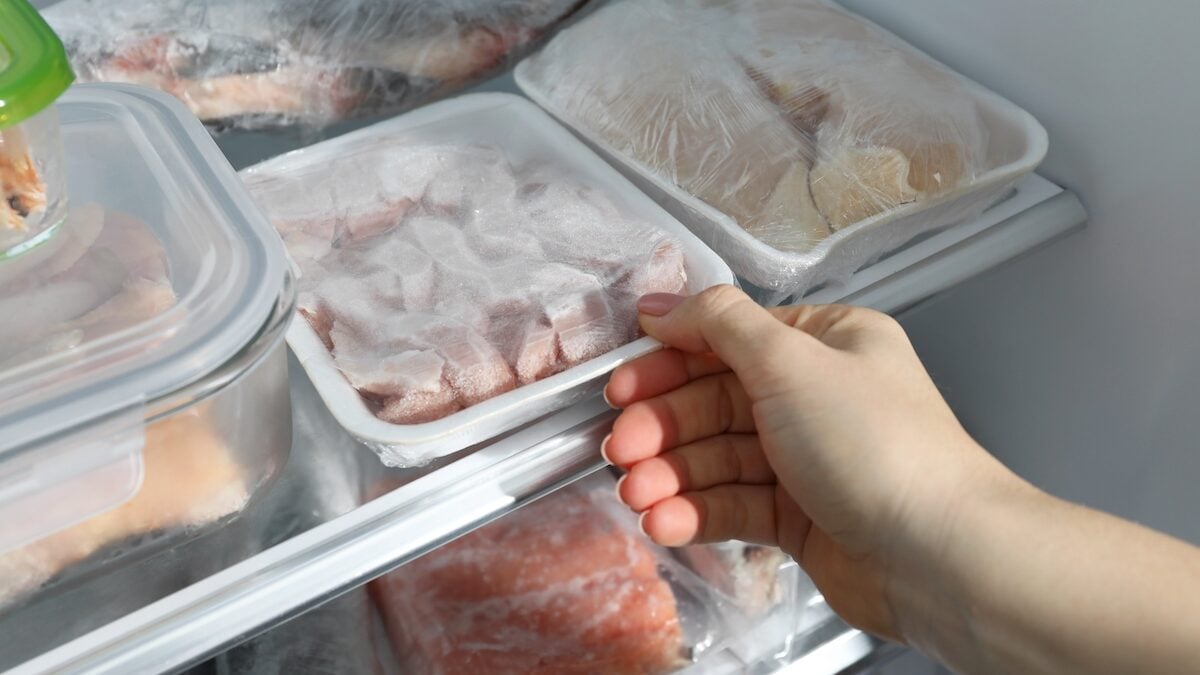
After a busy day, preparing a quick, convenient and nutritious meal can sometimes be a challenge. Frozen foods then emerge as a valuable solution. Easy to store, economical and available all year round, they help limit waste and save time in the kitchen. But be careful: while some foods can be cooked directly after freezing, others must be defrosted beforehand to avoid health risks and preserve their texture. Dietitian Alexandra Murcier warns in particular of five categories of foods that should never be cooked directly from frozen.
Large pieces of meat
Whether beef, pork or poultry, thick cuts of meat should not be cooked without defrosting.
“The surface will heat up very quickly while the core will still remain frozen or insufficiently hot. Cooking will therefore be uneven and will not guarantee optimal food safety”explains Alexandra Murcier.
This situation can promote the survival and multiplication of bacteria such as
Escherichia coli or salmonella, not destroyed by freezing. Result: an increased risk of food poisoning, but also tougher and less flavorful meat.
Experts recommend defrosting meat in the refrigerator, then checking for doneness using a thermometer.
Fish and seafood
Rich in water, fish and seafood have particularly fragile flesh.
“If you cook them directly from frozen, the water they contain is suddenly released, which gives a soft texture that is not very pleasant in the mouth”specifies the dietitian.
Another point of vigilance: when the cold chain has been broken, certain fish can produce histamine, a substance responsible for food poisoning. So we defrost, but in a cool place.
Vegetables rich in water
Zucchini, tomatoes, cucumbers or eggplants are also among the foods that do not tolerate immediate cooking after freezing.
According to Alexandra Murcier, “the cold weakens their cell walls. When they are cooked directly, they become soft, waterlogged and lose their nutritional quality”. There, it’s no longer really a question of risk… but of flavors and benefits. This method can in particular lead to a loss of water-soluble vitamins, such as those of group B and vitamin C.
Egg products
Quiches, sauces or pastry preparations containing eggs can have their texture profoundly modified by freezing.
“Egg proteins are denatured by cold. If they are cooked directly, coagulation becomes irregular and the texture can become grainy” explains the specialist.
Cooked dishes and gratins
Finally, even if the temptation is great to reheat a frozen dish directly in the oven, the result is not always satisfactory.
The edges may become overcooked or crispy, while the center remains cold. For even cooking and better taste quality, prior defrosting is strongly recommended.
How to defrost your food correctly?
To preserve both food safety and product quality, Alexandra Murcier recommends a few simple actions:
-
Defrost food in the refrigerator, ideally the day before;
- Avoid thawing at room temperature, which promotes bacterial proliferation;
- Drain or squeeze water-rich foods before cooking to remove excess liquid;
- Check the cooking thoroughly;
- Avoid cooking foods that are still frozen in a slow cooker, as raising the temperature too slowly increases the risk of poisoning.