
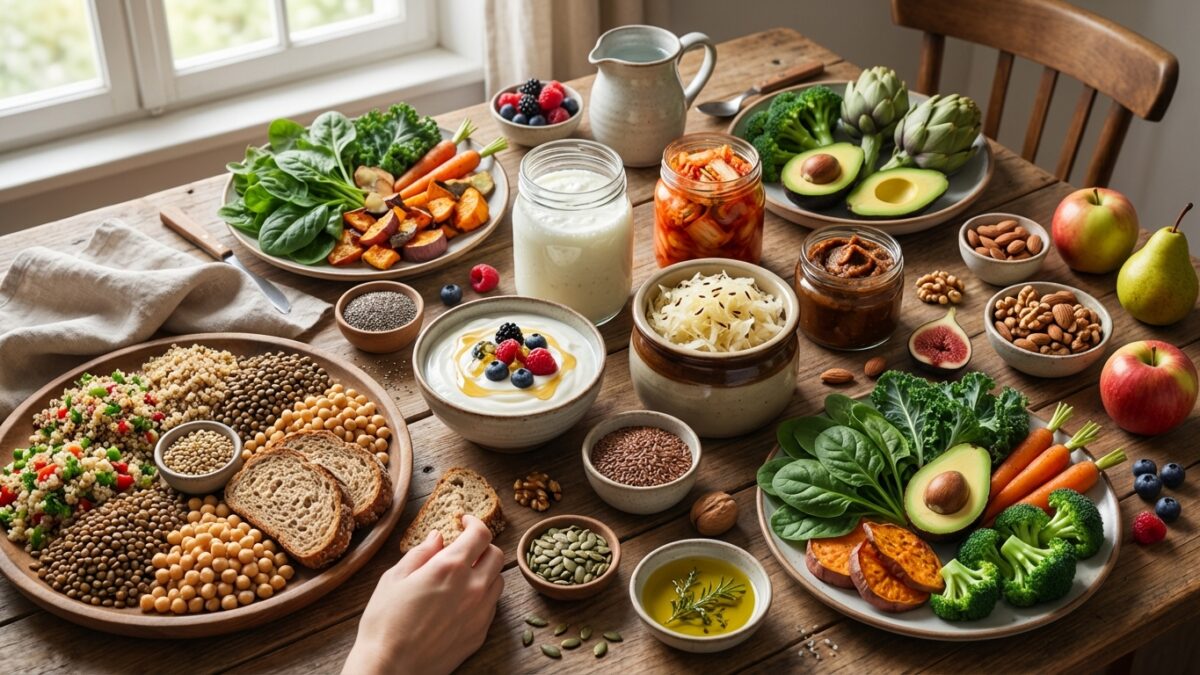
Bloating after each meal, tense stomach, capricious transit… For many, digestion has become a real daily headache. Behind these discomforts often lies an unbalanced intestinal microbiota. Good news, this terrain changes with what you eat. Combining probiotics, these good living bacteria, with fibers that nourish them helps support flora and transit. Recent studies describe a powerful duo, especially when it comes to every meal.
The trio of probiotics, prebiotics and fibers in action
Probiotics are live bacteria that colonize the intestine and help with digestion.
Prebiotics are fermentable fibers that our enzymes don’t digest, but that good bacteria love. By degrading them, they produce short-chain fatty acids which balance the pH, curb unwanted germs and stimulate transit.
Soluble fiber converts into these compounds, while insoluble fiber increases the bulk of stools and makes them easier to pass. They are found in asparagus, artichokes, leeks, garlic, onions, unripe bananas, legumes and whole grains. The recommendations speak of at least 30 g of fiber per day, while many French people stay between 6 and 20 g.
These foods rich in probiotics to pair with fiber every day
To nourish your flora, the ideal remains to place at least one portion of foods naturally rich in probiotics on the plate every day. The easiest ones to find in stores are:
- Unsweetened plain or Greek yogurt;
-
Milk or fruit kefir;
-
Raw, unpasteurized sauerkraut;
-
Kimchi, miso, soy tempeh;
-
Pickles and other lacto-fermented vegetables in brine;
-
Kombucha and unpasteurized fermented drinks.
A portion corresponds in practice to a pot of yogurt, a glass of kefir or a small handful of raw sauerkraut added cold. Not all fermented products keep as many bacteria alive, especially if they are pasteurized or very sweet, but they still provide useful compounds for digestion.
Quantities, false friends and rhythm to revolutionize your digestion
To stay comfortable, the goal can be simple: aim for at least 30 g of fiber per day, including about 5 g of prebiotics, and one to two servings of fermented foods. In other words, a bowl of oatmeal with fruits and seeds, plus yogurt or a little raw sauerkraut, is already enough to get closer to these benchmarks.
On the other hand, too many ultra-processed foods such as biscuits, sodas, very sweet yogurts or prepared meals, or the prolonged elimination of whole grains or legumes, impoverishes the flora.