
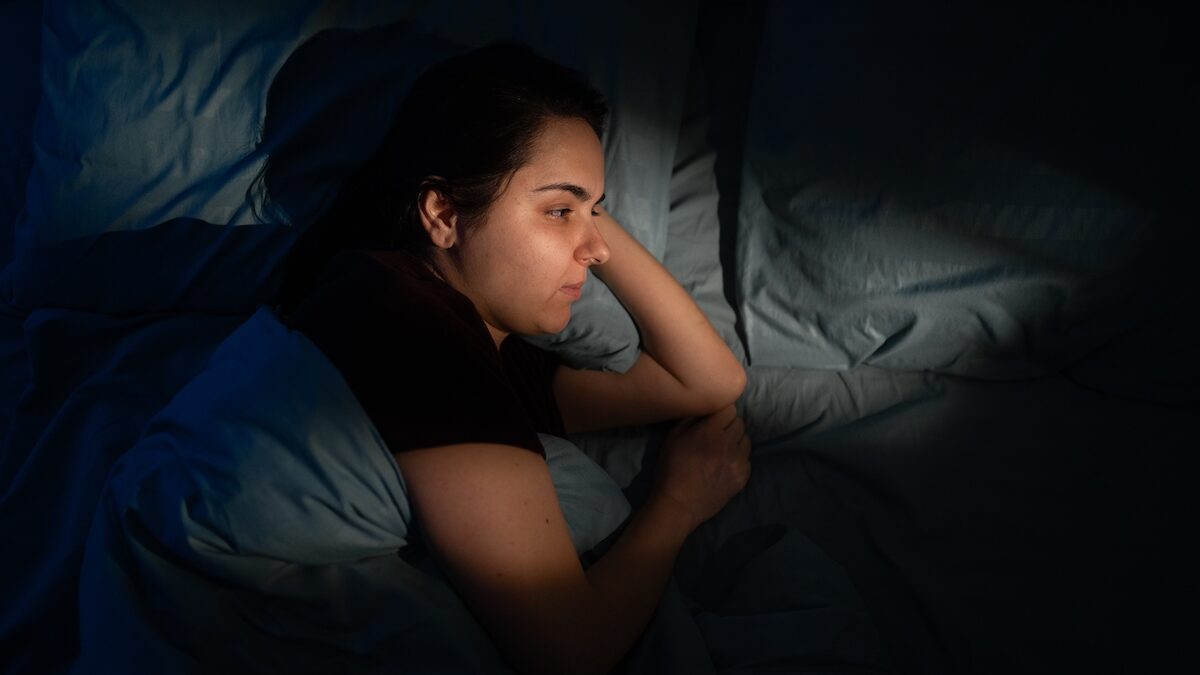
Sometimes all it takes is an hour less, like during the transition to summer time, to see how fragile sleep is. But for millions of women, this imbalance does not last overnight. It settles, stretches, and eventually takes its toll on each day. An Ipsos study carried out for Novanuit reveals that 6 out of 10 women in pre-menopause or menopause suffer from sleep disorders. These figures are anchored in a larger reality, at the crossroads of the intimate and the biological.
When the night prolongs the tumult of the day
The bedroom, often perceived as a refuge, becomes for many a space where everything is replayed. The study highlights a massive phenomenon: 41% of women say they think about their problems when going to sleep, while 40% are already anticipating the next day’s tasks.
The silence of the night amplifies what did not find its place during the day. Family, professional and domestic responsibilities creep into the darkness. Sleep recedes, replaced by a form of anxious wakefulness.
This mechanism is not isolated. Nearly half of French people identify stress and nighttime thoughts as the main causes of their difficulty sleeping. A circle then emerges: the more the mind becomes agitated, the more sleep becomes fragmented, and the more fatigue feeds worry.
A physiological storm, when the body shifts to menopause
Added to this psychological tension is a deeper upheaval. Pre-menopause and menopause act as accelerators. According to the study, 75% of women believe that their sleep problems appeared or worsened at this pivotal moment.
The figures reflect a marked physical reality:
- 86% mention fragmented sleep;
- 56% struggle to stay asleep;
- 50% live with daily daytime fatigue.
The body changes, hormonal cycles modify, and with them the ability to surrender to rest. Nocturnal awakenings become frequent, sometimes unexplained, leaving a feeling of diffuse exhaustion in the morning.
This fatigue is not trivial. It settles into everyday life, affects concentration, mood, and sometimes even self-perception.
Between distrust and search for solutions
Faced with these difficult nights, the answer is not always medical. A study conducted by Kantar reveals that 64% of people suffering from sleep disorders do not receive any treatment. The reasons are clear: 33% prefer to avoid medications, and 17% fear a form of dependence. This caution does not reflect resignation, but a search for alternatives.
The women concerned are exploring other avenues. Food supplements appear to be the most tested solution, with 29% of users, far ahead of prescription drugs (17%). In this process, support remains essential. The general practitioner remains the first contact for 47% of women, followed by the pharmacist. At the same time, 36% conduct their own research online.
Between medical advice and personal initiatives, a movement is taking shape. That of women who refuse to endure these troubled nights, and patiently seek to find peaceful sleep again.