
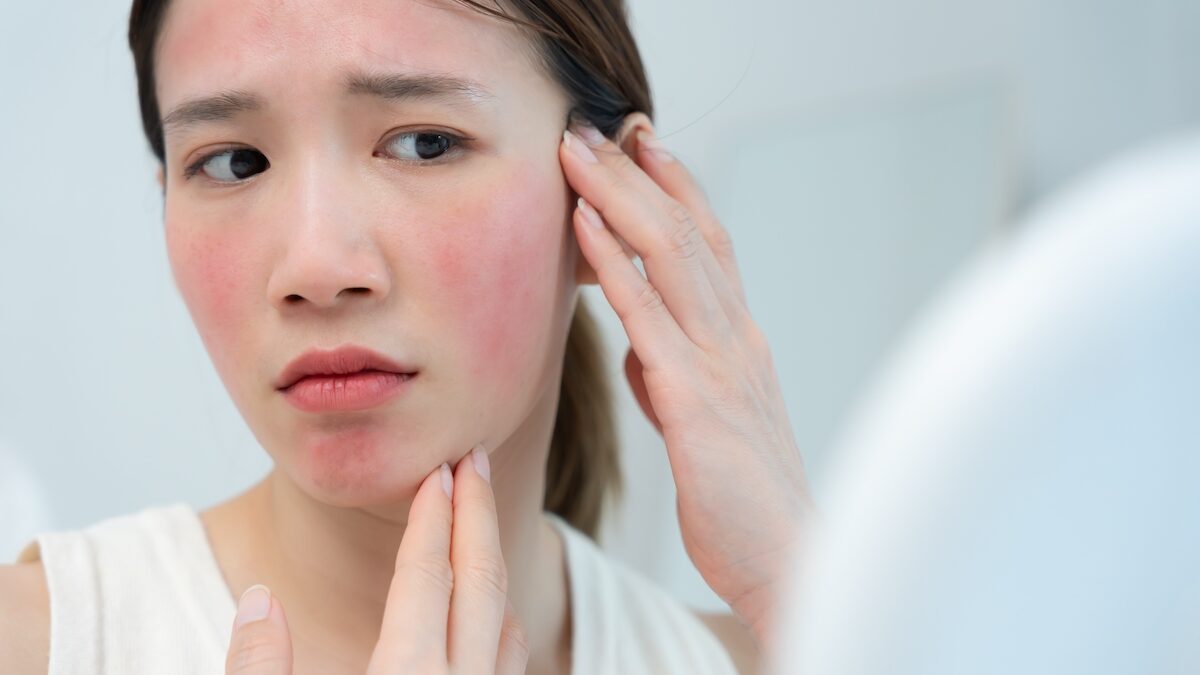
On TikTok and Instagram, there are millions of videos where a red mask turns the face red before revealing smooth skin. The message is clear: if it heats up, it’s a good sign. These facial treatments packed with active ingredients, which Internet users call “itchy treatments”, promise immediate glow and tightened pores, at the cost of a few grimaces in front of the camera.
This trend is not new, but it has exploded since the arrival of the famous red peel from The Ordinary, then AHA/BHA exfoliating pads and micro-spicule treatments inspired by K-Beauty and microneedling. There remains a question that runs through the minds of many: adopting these tingling products, is it a good idea for your skin?
Why itchy skincare products are all the rage online
On the networks, the hashtag skincare has tens of billions of views and the “before/after” videos of treatments that itch the skin are fascinating. The red peel, rich in acids with a low pH, opened the way: in a few minutes, it exfoliates the skin surface, makes the nerve endings tingle and leaves this tingling sensation presented as totally normal.
Behind these images hide several families of products. Chemical exfoliants with AHA or BHA lower the pH to dissolve dead cells, a bit like melting off small skin. Formulas with micro-spikes, sometimes from marine sponges, act like invisible mini-needles that restart skin renewal and improve the absorption of active ingredients.
Tingling, burning: know the difference before following TikTok
In this context, a slight tingling which lasts a few minutes and moderate heat just after application are expected, especially on thick, combination or blemish-prone skin. The surface is renewed more quickly, the pores appear tighter and some people finally find an answer to their irregular skin texture, for example with pads soaked in acids or home microneedling treatments.
The cursor switches when the sensation becomes a sharp burn. Persistent pain, marked redness that spreads, itching, swelling or peeling skin for several days indicates a compromised skin barrier. Dermatologists are observing a wave of lesions among adolescents who accumulate several acids, sometimes with high doses of glycolic acid, without sunscreen, while these viral routines almost always forget UV protection.
Take the plunge or refrain: adapt the itchy treatments to your skin
The question becomes: who can try these itchy treatments, and how? Thick, oily skin or skin with enlarged pores can try a chemical exfoliant or a micro-spicule treatment once or twice a week, in the evening, on dry skin. That evening, we avoid other strong active ingredients like retinol, and we follow up with a moisturizing cream.
At the same time, the next day, sun protection remains essential, because exfoliated skin is more vulnerable to UV rays, particularly on dark skin types prone to spots. Sensitive, reactive skin marked by eczema or rosacea benefits from staying on gentler options, such as PHAs, fruit enzymes or barrier repair treatments, and the trend is then towards glow without tingling.
Our selection: