
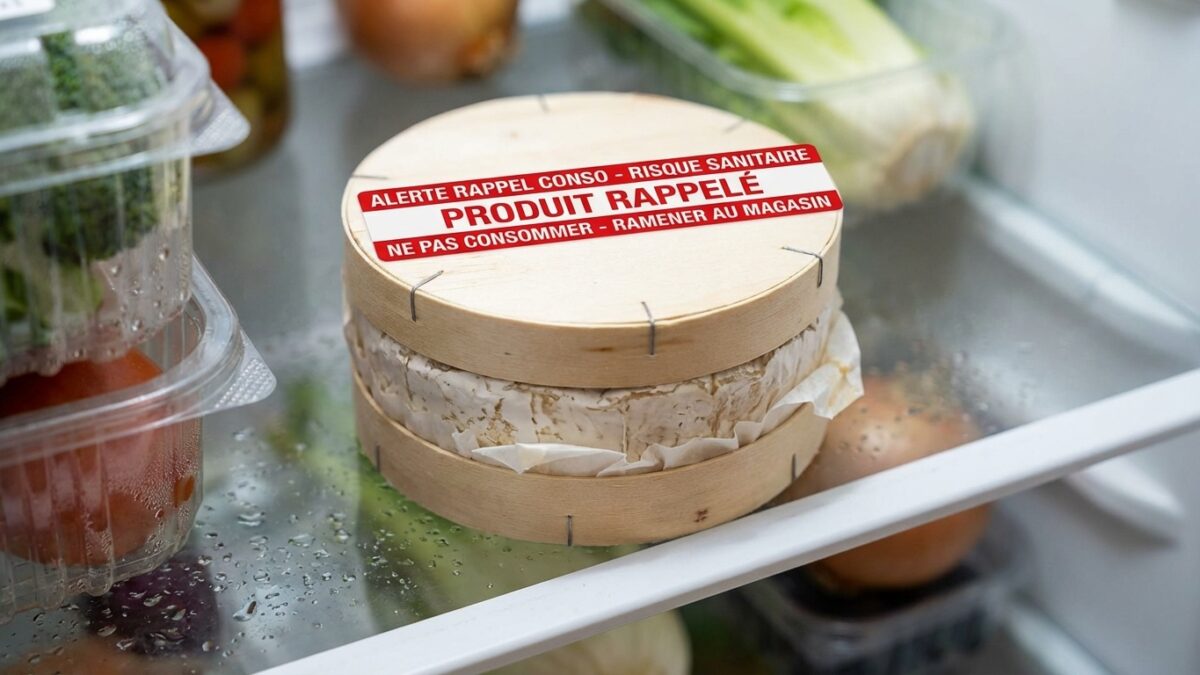
A new cheese recall has just been launched in France. In refrigerators, a raw milk Camembert, very popular with amateurs, may find itself at the heart of a health alert, due to a risk of serious infection for certain people.
According to a sheet distributed on the official Rappel Conso platform, a Camembert de Normandie AOP Blessed
is recalled throughout France due to contamination by bacteria responsible for listeriosis. Only one batch is targeted, with a distant expiration date, which increases the probability of still having some at home. It remains to quickly check if your box is part of the recall.
Reminder of Camembert de Normandie AOP Bienheureux: batch and date to check
The recall concerns a 250 g raw milk cheese, sold under the name Camembert de Normandie AOP Bienheureux. Only products meeting the following references precisely are concerned.
- Name: Camembert de Normandie AOP Bienheureux, 250 g
- GTIN (barcode): 3770028026005
- Batch : 250226
- Minimum durability date (DDM): 01/05/2026
If the box of Camembert that you have in the fridge does not present exactly this lot and this DDM, you are not affected by this recall of Camembert from Normandy. The affected product was distributed on French territory; the shelf life of until May 1, 2026 allows time for these cheeses to still circulate between cupboards, refrigerators and cheese platters.
Listeria and listeriosis: what are the risks with this recalled Camembert?
The official reason for this recall of Normandy AOP Blessed Camembert for Listeria is contamination with Listeria monocytogenesa bacteria that can cause listeriosis. In France, around 400 cases of listeriosis are recorded each year, including around thirty in pregnant women, for whom the risk is estimated to be around 20 times higher than for the rest of the population. Elderly people or people with weakened immune systems are also among the most exposed groups.
According to the Consumer Recall sheet, the incubation period for listeriosis can be up to eight weeks. Symptoms to watch out for are fever, isolated or accompanied by headache and body aches. More serious forms can lead to neurological complications or maternal or fetal damage in pregnant women. In this context, pregnant women, immunocompromised people and seniors must remain particularly attentive to any unusual signs.
You bought or ate this Camembert: what to do now?
The main instructions given to consumers are clear: no longer consume this cheese and destroy it. The manufacturer offers an exchange of the product, according to the usual in-store terms. For any questions, a contact number is made available:
0688276059. People who have already eaten this Camembert and present symptoms are invited to consult their doctor, notifying them of this consumption and the batch reference. Even in the absence of immediate signs, monitoring for eight weeks following ingestion remains recommended, particularly for people at risk.