
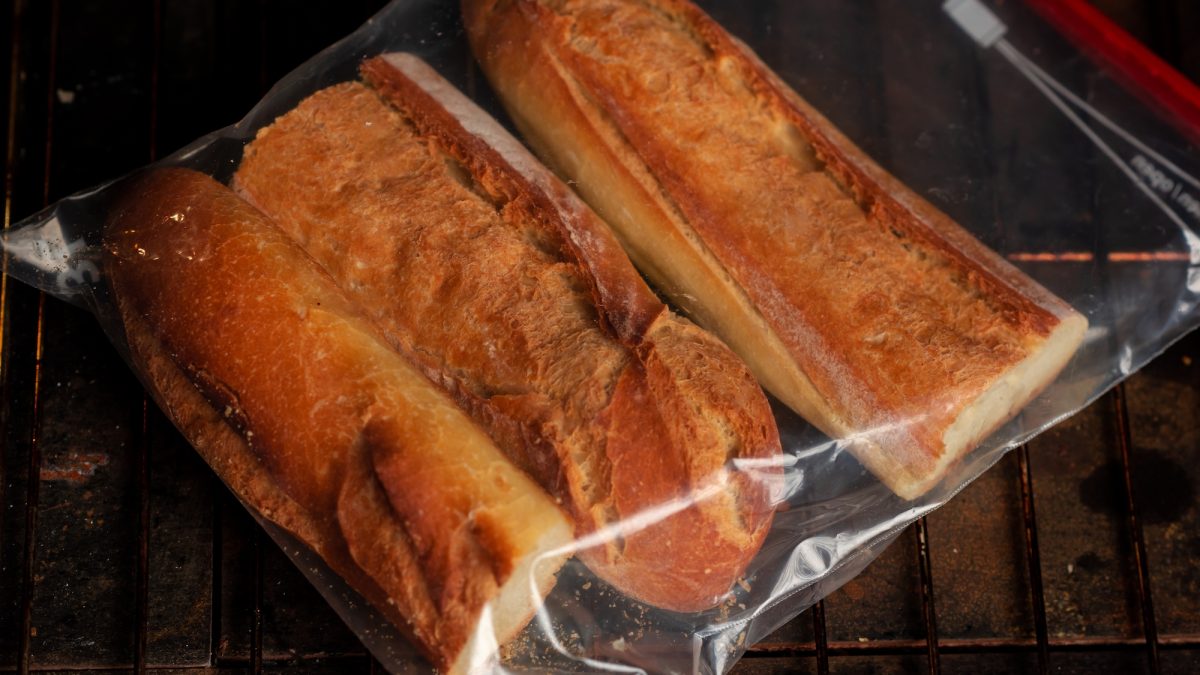
Buy a good baguette, feel it still warm under your fingers, then… put it directly in the freezer. For many French people, this gesture has become automatic. At a time when we are tracking down the slightest waste, preserving bread by freezing it seems to be a solution full of common sense. But is this really a foolproof method? Some nutritionists and bakers warn of an often underestimated effect: the loss of bread quality.
In France, where we consume on average 120 grams of bread per day per person, this practice affects one in two households, according to the latest figures from the Bread Observatory. While freezing can be very useful for preserving stocks, it still requires some precautions. Because freezing is not trivial: it has a direct impact on the texture, the taste, and even on food safety if the bread is poorly defrosted. Explanations.
Freezing your bread: what are the real benefits for your health and your wallet?
Freezing doesn’t just save your ends: it avoids throwing away nearly 9 kilos of bread per year per household, according to the Ecological Transition Agency (ADEME). A simple gesture, but one that has a real ecological and economic impact. Better yet: contrary to some popular belief, freezing your bread allows you to preserve its nutrients, notably magnesium and fiber, essential for digestion.
This method of preservation acts by slowing down the degradation of the components of the bread, without altering its nutritional value… provided you respect the rules. Bread should be frozen the same day of purchase, never once it begins to harden. Indeed, what is dry will never regain its softness, even when baked.
And that’s not all. Well packaged in an airtight bag or film intended for freezing, the bread can be kept for up to two months without significant loss of quality. After this time, although it remains edible, it becomes bland and loses its crispy crumb which gives it all its charm.
What you really risk if you defrost your bread incorrectly
It is at this stage that everything can change. Because yes, defrosting is the crux of the matter. Too fast, it makes the bread rubbery; too slow, it encourages the proliferation of bacteria in areas that are still cold. To avoid unpleasant surprises, let your bread thaw at room temperature for at least 2 hours, without enclosing it in plastic packaging.
But there is a more subtle trap: humidity. When freezing, fine droplets of water form inside the bread. When defrosting, these droplets diffuse, and can alter the texture by making it spongy. Result: a soft crust, a soggy crumb, and that bland taste that everyone fears.
Here are the steps to take to avoid spoiling your bread:
- Cut your bread into portions before freezing: this avoids having to defrost a whole baguette for a few slices;
- Use an airtight bag or aluminum foil to avoid freezer burn;
- Never refreeze bread that has already been thawed;
- Reheat slightly in the oven to revive the crust without drying out the crumb;
- Consume it within 24 hours after defrosting to maintain its full quality.
Why some bakers recommend against this practice (and what they suggest instead)
Some artisan bakers are skeptical of home freezing. “Bread is a living product“, recalls François Tanguy, baker in Rennes. “When we freeze it, we freeze its evolution, but we do not stop it completely“. What this means in concrete terms: a progressive decline in organoleptic quality, this famous mixture of smells, texture and taste which makes good bread rich.
The advice they often give to their clients? Opt for long-fermented breads, such as sourdough bread, which naturally keeps longer. Another alternative: order pre-baked bread to finish in the oven at home. An increasingly popular solution, which combines the freshness of daily bread with the flexibility of homemade stock.