
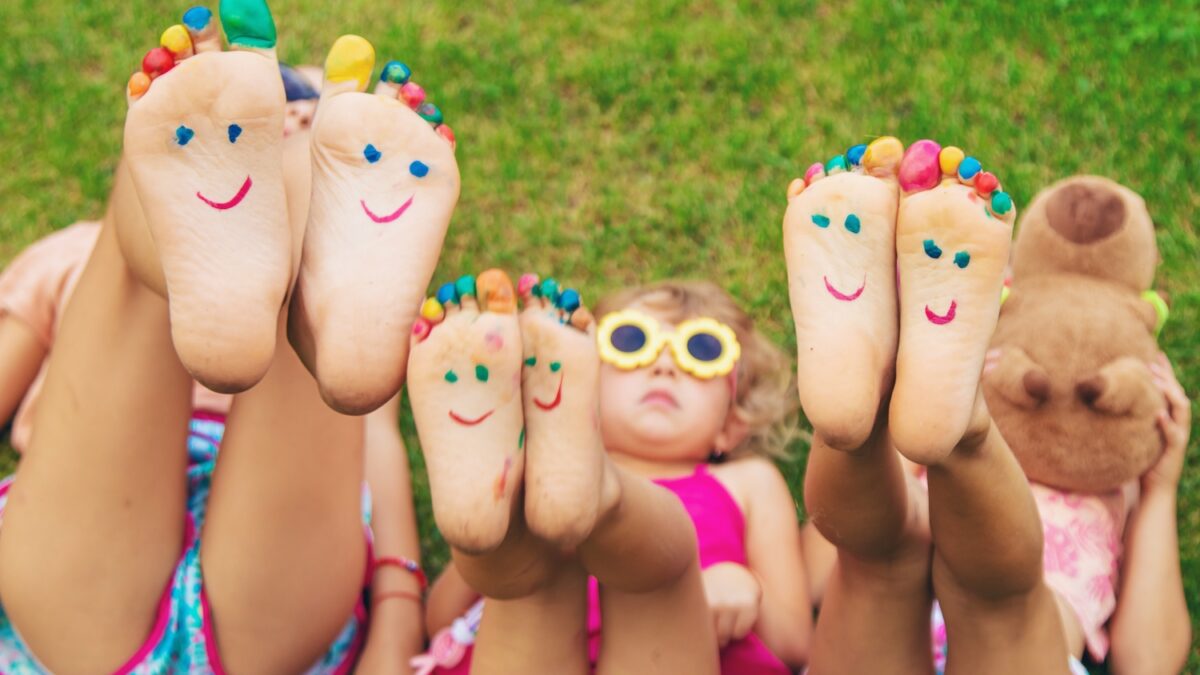
Unsuitable shoes, insufficient monitoring, ignored warning signs… While the child’s foot is still under construction, specialists are calling for increased vigilance. Because when properly supported, this foundation of the body can avoid many complications in adolescence and adulthood.
A fragile pillar under construction
We often forget them. And yet, children’s feet already carry a lot: their weight, their games, their learning… and sometimes their first imbalances. In full growth, the foot is a structure that is flexible, malleable and vulnerable. An architecture in the making, each stage of which conditions the overall balance of the body. However, monitoring remains largely insufficient. According to data from the National Foot Health Observatory (ONPS, 2019), only
15% of children consult a chiropodist-podiatrist. A figure that raises questions, as the stakes are so early.
At the same time, clothing habits are changing:
almost 85% of children wear sneakers every dayparticularly at school (ONPS, 2025). Practical, comfortable in appearance, they are not always adapted to the child’s morphology or physiology. Too narrow at the front, too rigid or poorly adjusted, they can hinder the natural development of the foot.
However, as professionals point out, an ideal shoe for a child must meet simple but essential criteria: sufficient width at the toes, a flexible and flat sole, and an effective closing system (scratch, laces or strap). So many details which, combined, can make all the difference.
The transition is often invisible. But, little by little, poor footwear or an undetected problem can alter posture, unbalance walking, and lead to chain repercussions throughout the body.
Weak signals not to be trivialized
In the tumult of childhood, falls are part of the landscape. But not all of them should be minimized. A child who falls frequently even though he has learned to walk, or who regularly falls while running, is not necessarily “clumsy”.
 © UFSP
Other, more discreet signs should also alert you: feet turning inwards, knees “looking at each other”, an asymmetry in posture, pain during exercise, or even unusual fatigue. Even rapid or abnormal wear and tear on shoes can be a valuable indicator.
Added to this are more visible but sometimes neglected problems: ingrown nails, plantar warts, excessive sweating… So many reasons which justify a consultation.
Because behind these manifestations, there is often a more complex mechanism. The foot is not just a point of support: it is at the heart of a dynamic system which involves the muscles, joints, and general balance.
A podiatric assessment then makes it possible to carefully evaluate the posture, gait and development of the foot. If necessary, support can be provided: pedicure care, orthopedic insoles, specific equipment. Early interventions, often simple, but decisive.
Prevent today to avoid tomorrow
Recent data sheds encouraging light. According to a study conducted by PodoScore in 2024, nearly 75% of children show an improvement in their pathologies after appropriate treatmentincluding in particular the wearing of foot orthotics.
A figure which strongly recalls the central role of the chiropodist-podiatrist in the health journey of the youngest. Prevention, detection, support: so many missions that are still too little known to the general public.
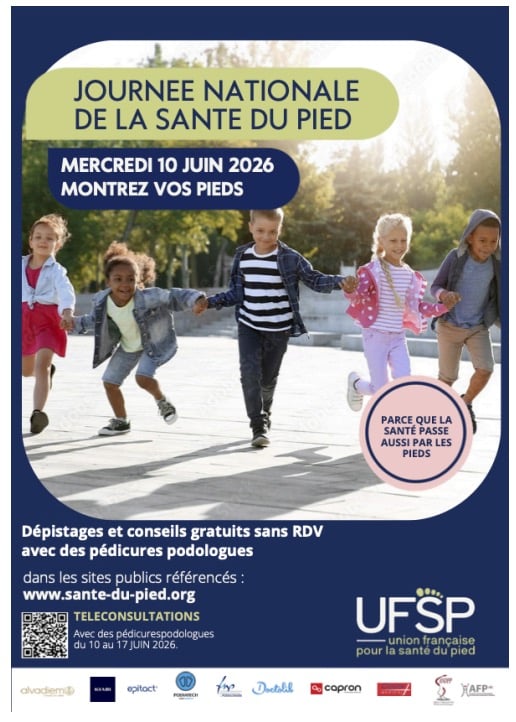
This is precisely the ambition of National Foot Health Day, organized on June 10, 2026. Throughout France, professionals are mobilizing to meet families, offer free podiatric assessments and provide concrete advice.
For those who cannot travel, free teleconsultations are also offered, in order to ensure that no child is left out of this preventive approach.
Beyond the event, a collective awareness is beginning. Because taking care of your feet from childhood is investing in future health. This is to prevent silent disorders from becoming, years later, chronic pain or functional limitations. Implicitly, something is obvious: under each child’s step, the adult of tomorrow can already be seen. And sometimes it all starts… with a well-chosen pair of shoes and an attentive look.