
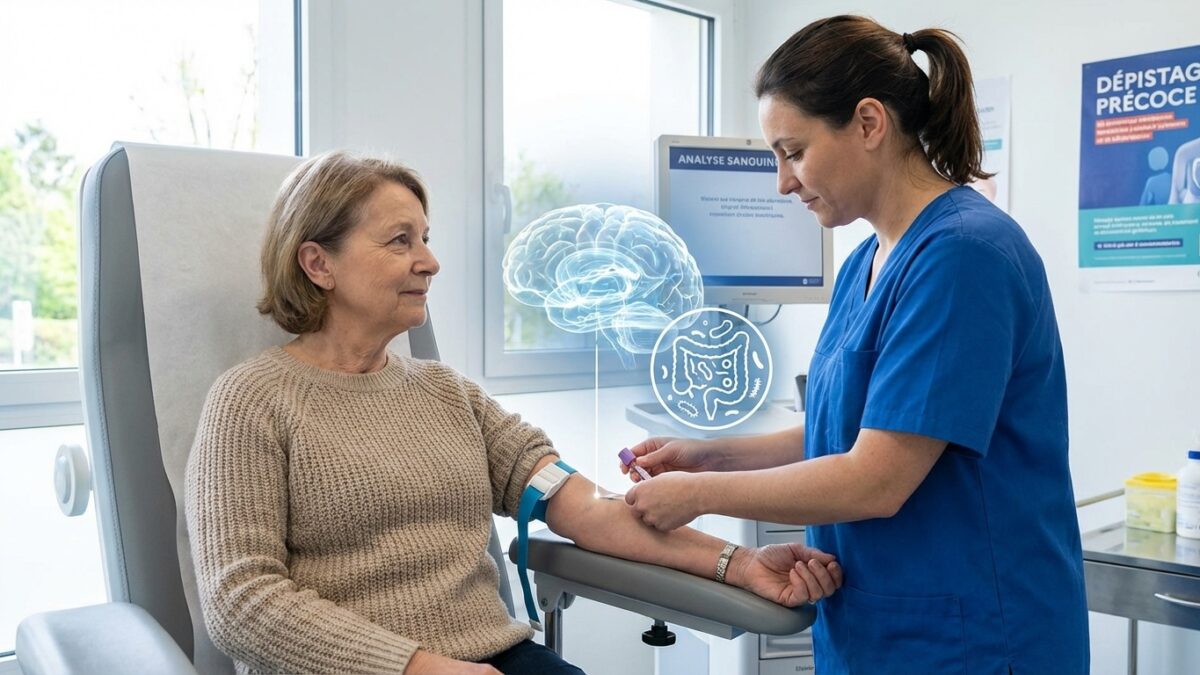
A simple blood test to find out if you risk developing dementia in a few years: the idea seems to come from the future, but it is starting to take shape in British labs. Researchers have shown that a set of molecules circulating in the blood could indicate a decline in memory very early on.
Dementia already affects around 55.2 million people worldwide, a wave expected to triple by 2050 if nothing changes. “Dementia is one of the greatest public health challenges of our time” said Dr David Vauzour, a senior researcher at the University of East Anglia’s Norwich Medical School. His team believes they have found a new, quiet warning signal.
A blood test to detect dementia at the first symptoms
Faced with the expected sharp increase in the number of cases linked to the aging of the population, it is more urgent than ever to put in place early detection, better support and effective prevention strategies.
“Early detection is crucial because, by the time symptoms of dementia become evident, much of the brain damage has already occurred. Identifying biological warning signs earlier could enable timely lifestyle changes, targeted interventions and better monitoring” estimates the expert.
The study, carried out by the University of East Anglia and Queen Mary University of London and published in the scientific journal Gut Microbesfollowed 150 adults over 50, with an average age of 65.5. among them, there were 50 people without disorder, 50 with subjective memory complaints and 50 with mild cognitive impairment, often an early stage before proven dementia.
All gave a stool sample and fasting blood test. The researchers measured 33 small molecules from food and intestinal bacteria, while mapping the microbiota.
Dr Vauzour said: “Using advanced computer modeling and AI-based machine learning, we explored whether specific combinations of these chemicals from the gut and diet could distinguish healthy people from those experiencing early cognitive decline.”.
Six blood metabolites from the microbiota as early signals of dementia
By examining this data with algorithmsartificial intelligencethe team identified a panel of six key metabolites: 5-hydroxyindole acetic acid, indole-3-propionic acid, choline, indoxyl sulfate, kynurenine and kynurenic acid. Some, more protective for the brain, decreased; others, linked to inflammation or toxicity, increased with cognitive decline.
“What we found was truly striking“, summed up David Vauzour. “Even in people who were just beginning to notice slight changes in memory, there were clear changes in both their gut flora and the metabolites it released into the bloodstream.”.
By combining these six markers, a Random Forest type model classified the participants into the 3 groups with 79% accuracy and distinguished healthy subjects from those with mild cognitive impairment with more than 80% success. According to the expert:
“This supports growing evidence that the so-called gut-brain axis – the communication network between our digestive system and the brain – may play an important role in cognitive aging.“.
A test not yet available, but a way to prevent dementia
For the moment, this is not a test available from the doctor. “Although we do not yet have a diagnostic test, our work suggests that we could use information about diet and gut microbiota to detect dementia earlier, potentially even before significant brain damage occurs.” added Dr Simon McArthur, co-author of the study and researcher at Queen Mary University of London.
For Saber Sami, of Alzheimer’s Research UK, “This study is exciting because it connects advanced data analysis to a clinically realistic goal: finding a simple and acceptable way to detect risk earlier“. The study, however, remains limited to 150 people, all British. But the authors also see a new target:microbiota-gut-brain axisvia food, probiotics or personalized nutrition.
Dr Vauzour said: “If certain gut bacteria or the chemicals they produce contribute to early cognitive decline, treatments involving diet, probiotics, microbiome-based therapies or personalized nutrition could one day be part of dementia prevention strategies.”.