

In many men treated for prostate cancerhormone therapy increases weight, disrupts blood sugar levels and causes loss of energy. To counter these effects, doctors recommend moving, but fatigue, pain or advanced illness sometimes make regular exercise almost impossible.
A team from the Sylvester Comprehensive Cancer Center at the University of Miami explored another avenue: a diabetes drug, metformincould activate in the blood a molecule normally produced after intense exercise. Their study, published in the journal EMBO Molecular Medicineopens an unexpected avenue to support patients’ metabolism, without replacing exercise.
Metformin and Lac-Phe: an unexpected duo in patients on hormonal therapy
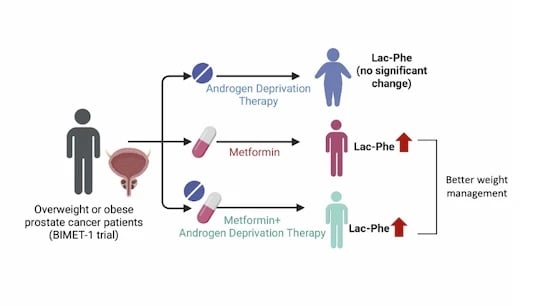
Metformin is the world’s most prescribed oral antidiabetic drug for type 2 diabetes. In the BIMET-1 trial, researchers gave it to 29 non-diabetic men with prostate cancer, often in combination with the hormone treatment bicalutamide. They also analyzed the blood of 25 other patients, some already receiving metformin at doses of 500 to 1,000 mg twice daily for metabolic disorders.
 © EMBO Molecular Medicine
At the center of the work, a small molecule:
N-lactoyl-phenylalanineor Lac-Phe. It is formed when lactate produced by exercise combines with an amino acid, phenylalanine, and its levels rise after intense exercise, linked to reduced appetite and better weight control. “Metabolism is at the heart of all cellular activities. These results suggest that Lac-Phe could be a very informative signal for understanding how metformin affects metabolism in prostate cancer patients.” explained Dr. David Lombard, professor of pathology and laboratory medicine and vice president of clinical and translational research at the Miller School.
Levels comparable to intense exercise, without moving
In the patients in the study, metformin markedly and repeatedly increased Lac-Phe concentrations, to levels close to those observed after intense exercise in healthy volunteers, around 0.1 to 0.35 µM, or even up to 1.7 µM in the advanced cohort. This effect persisted after the start of hormone therapy. “From a clinical perspective, observing a metabolic signal similar to that associated with intense exercise was striking. For patients whose treatments or symptoms limit physical activity, such an effect could be particularly significant” said Dr. Marijo Bilusic, first author of the study, a medical oncologist specializing in urology and urology and professor of medical oncology at the Miller School.
The authors also observed that patients receiving metformin managed their weight better under hormonal therapy: in six months of combined bicalutamide, only one gained weight. Lac-Phe seemed more linked to weight than the metabolic stress hormone GDF-15. In contrast, variations in Lac-Phe followed neither PSA nor tumor response, confirming that it is not an anticancer marker. “Anticancer treatments often have repercussions on the body that go beyond the tumor. Promoting metabolic health can influence how patients tolerate treatment and their well-being over time, although it does not directly impact tumor growth. This study made it possible to explore the molecular pathways likely to be activated for therapeutic purposes in order to improve the results of treatments inducing metabolic stress.“, said Professor Priyamvada Rai, co-leader of the tumor biology program and professor of radiation oncology at the Miller School.
A “pseudo-sports session” in tablet form, but not for everyone or at all costs
The researchers insist: even if metformin mimics one of the key signals ofexerciseit does not replace physical activity, which acts on the muscles, heart, bones and morale. The molecule remains a drug with possible side effects (nausea, diarrhea, abdominal pain, drop in vitamin B12), as they are known for diabetic patients. It should not be taken as self-medication, especially as it is contraindicated in cases of kidney or liver problems or significant alcohol consumption.
“What is encouraging about this work is that it reminds us that cancer treatment is not limited to targeting tumors. It is also about supporting the patient as a whole. By better understanding the impact of treatments on metabolism, we can begin to identify ways to help patients maintain their strength, resilience and quality of life throughout their treatment.” concludes Dr Rai.