
When epileptic seizures begin before primary school and are resistant to medication, families’ daily lives become filled with emergencies, shortened nights, and worry. In France, 700,000 people live with epilepsy; almost half are under 20 years old and, for a third of patients, available treatments do not stop the attacks.
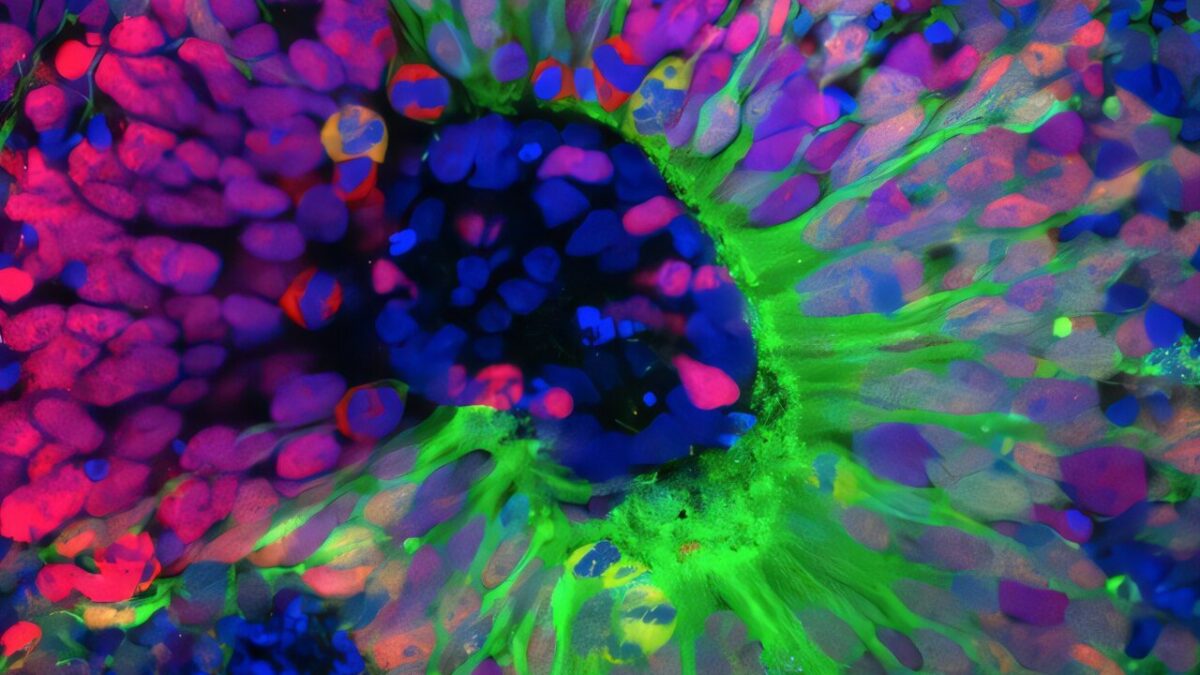
For some of these children, the cause lies in a tiny malformation of the cortex, focal cortical dysplasia type II (FCDII). To understand why the same mutation causes this anomaly in some and not in others, the MOSAIC team created human cortical organoids in the laboratory, small mini brains models ofchildhood epilepsy.
Mini-brains to decipher resistant childhood epilepsy
FCDII belongs to the “mTORopathies”, a group of diseases where mutations deactivate brakes of the pathway
mTORwhich regulates the growth of brain cells. The key gene here is called DEPDC5. At the Institut du Cerveau, within the Paris Brain Institute, the MOSAIC team is studying how its defects transform a developing cortex into a breeding ground for seizures.
Researchers took blood cells from a young patient with a DEPDC5 mutation and his unaffected brother, then reprogrammed them into stem cells, before transforming them into cortical organoids, small three-dimensional structures a few millimeters long that mimic brain development.
“There already existed mouse models of this disease, but they did not perfectly reproduce the characteristics of the patients,” explains Marina Maletic, first author of the study cited by the Brain Institute. “Human cortical development presents specificities that are not found in mice. We therefore created human mosaic organoids, obtained by mixing cells carrying two mutated copies of the DEPDC5 gene with cells carrying only one. This allows us to reconstruct the genetic situation observed in the brains of patients“.
Over the course of six months of development, the team examined three categories of organoids: control (healthy) organoids, heterozygous organoids (with only one copy of the gene mutated), and mosaic organoids. This comparative study over time made it possible to identify anomalies which require total inactivation of the gene to manifest themselves.
DEPDC5 and the double-hit: when two mutations trigger the disease
“In FCDII, a first inherited mutation in the DEPDC5 gene is not enough to cause the disease. It is the acquisition of a second somatic mutation – in a specific cell, at a specific moment in brain development – that triggers the pathological process.“, explains Stéphanie Baulac, head of the MOSAIC team at the Brain Institute.
Only these mosaic mini-brains developed the characteristics of dysplasia: giant neurons, clusters of neurofilaments, strong activation of the mTOR pathway, reversed in the model by rapamycin, a drug that blocks this pathway. By following their development month after month using RNA sequencing cell by cell, the researchers saw the cortex’s calendar go awry early, with neurons in the upper layers produced too quickly and the Notch and Wnt cellular communication pathways, guardians of this clock, abnormally activated.
Towards precision medicine for childhood epilepsy using mini-brains
At six months, recording the electrical activity of these organoids on arrays of microelectrodes revealed an unstable neuronal network: more frequent, widespread discharges than in control organoids, a profile considered to be the in vitro equivalent of epileptic seizures.
“We can’t really talk about epilepsy in an organoid. He’s a model, not a patient! However, we consider this abnormal electrical activity to be a correlate of epileptic seizures in humans. This observation closes our description of the pathological process.adds Marina Maletic.
These mini-brains also reveal genes associated with epilepsy which could become new treatment targets. “It is an excellent model which will, in the long term, enable precision medicine : by developing laboratory mini-brains from a patient’s cells, we will be able to test several therapeutic options to determine which one suits them best“, concludes Marina Maletic.