
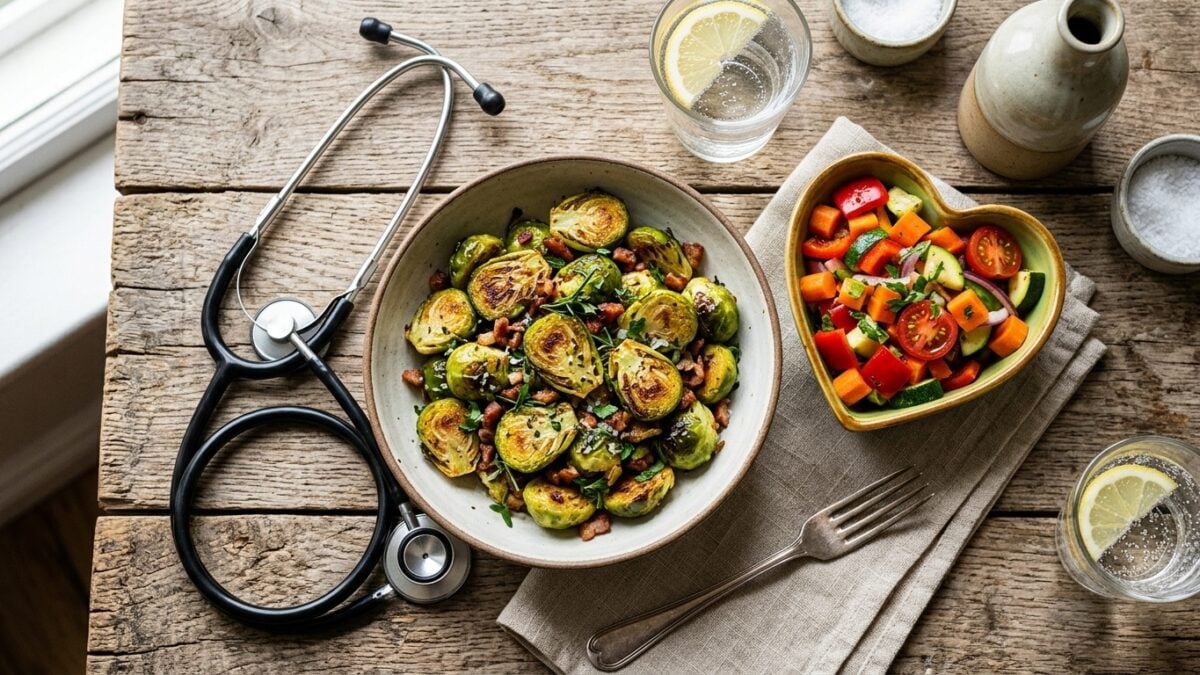
In France, nearly 150,000 people die each year from cardiovascular diseases. This makes it the leading cause of death among women and those over 65. Faced with these figures, many are looking for simple actions to adopt on the plate, without turning everything upside down.
An American cardiologist, Carl Lavie Jr., just happens to have an unexpected favorite: the
brussels sprout. These little green bouquets, often shunned at the table, are among her favorite foods for the heart. “It’s a vegetable that many don’t think about!” explains the cardiologist, cited by EatingWell. It remains to be understood why this mini cabbage ticks so many health boxes.
Why Brussels sprouts are the #1 heart-healthy vegetable
Dietitian Elana Natker agrees: “Brussels sprouts are an often forgotten vegetable but good for the heart for many reasons”. Around 100 g of cooked Brussels sprouts provide around 4 g of fiber, almost 90 to 100% of the daily requirement of vitamin C, more than 200% of vitamin K1 and around 300 mg of potassium. This cocktail helps lower “bad” LDL cholesterol, limit atherosclerosis and better control blood pressure.
Fiber nourishes the microbiota, which produces short-chain fatty acids beneficial to the vessels. The natural nitrates in Brussels sprouts are transformed into nitric oxide. The molecule that dilates the arteries and helps reducehigh blood pressure. Vitamin C and antioxidant sulfur compounds protect the vessel walls from oxidative stress.
More supple arteries and better controlled blood pressure
A study cited by Santé Magazine observed, in older women, that higher consumption of cruciferous vegetables like Brussels sprouts was associated with an approximately 0.05 mm thinner carotid wall, a marker of less atherosclerosis. Potassium, very present in this vegetable, counteracts excess daily salt and helps stabilize blood pressure.
To get real heart benefits, several French specialists recommend a portion of 150 to 200 g of cooked Brussels sprouts. All two to three times a week, integrated into five servings of fruits and vegetables per day. This never replaces treatment, but reinforces prevention, especially in people already affected by blood pressure or cholesterol.
The Best Ways to Cook Brussels Sprouts Without the Guilt
On the kitchen side, the site EatingWell gets straight to the point:
“Double baking is the best thing about Brussels sprouts.” First cooking them until tender, crushing them slightly, then putting them back in the oven with a drizzle of olive oil gives a crispy result, without excess saturated fat. Steaming or quickly frying with garlic, onion and olive oil also maintains a good level of vitamins and minerals.
Another practical tip: “Use this air fryer Brussels sprouts recipe”he continues. In a warm salad with citrus fruits and a few nuts, on a light homemade pizza or as an accompaniment to fatty fish, this long-unloved vegetable easily finds its place on the menu. Enough to reconcile many palates with Brussels sprouts. And, in the process, offer valuable support to your heart.