
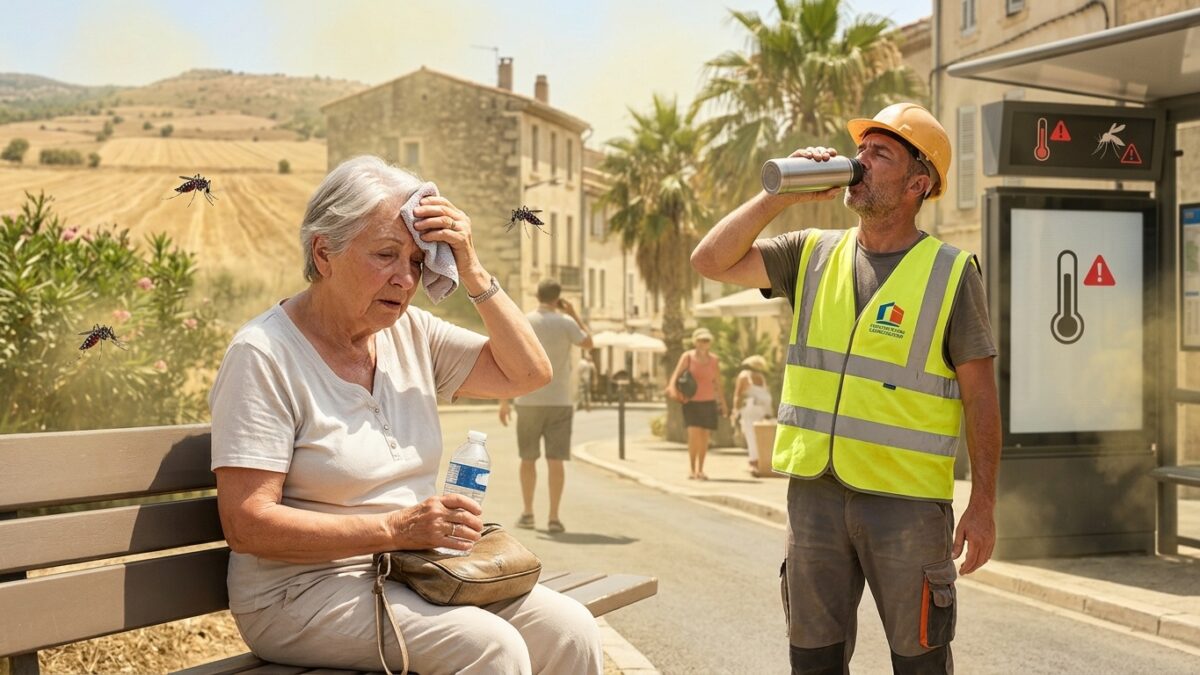
In Europe, the effects of climate change are no longer a matter of distant projections: they are already measured in hospitals and public health statistics. According to the Lancet Countdown Europe 2026 report, several indicators are increasing at the same time: heat-related deaths, diseases transmitted by mosquitoes and even difficulties in accessing sufficient food.
Between 2015 and 2024, researchers estimate that there will be an average of 52 additional heat-related deaths per million people each year. At the same time, the most vulnerable populations — infants and the elderly — were exposed to heat waves for record durations, representing billions of cumulative days.
These developments reflect a simple reality: certain diseases are already changing in scale in Europe, including in France.
Heat, a major health risk
Extreme heat is the most visible health effect of climate change today. The summer of 2024 was the hottest on record in Europe, with almost 63,000 deaths attributed to the heat.
Concretely, this means an increase in heat stroke, but also worsening of already existing diseases, particularly cardiac or respiratory. Very hot nights also play an important role: they prevent the body from recovering, which particularly weakens the elderly or sick.
As Joacim Rocklöv, a specialist in these issues, points out, the effects are already present today, and not in a hypothetical future. The most exposed populations are known: seniors, infants, people with chronic illnesses and outdoor workers.
Mosquitoes and ticks: diseases that progress
Warming also modifies the distribution of disease-carrying insects. Species of mosquitoes capable of transmitting viruses are establishing themselves more permanently in Europe.
Among the diseases concerned:
-
Dengue fever, the risk of transmission of which has greatly increased;
- The West Nile Virus, clearly increasing in several regions;
- And, to a lesser extent, Malaria, especially in the form of imported cases.
Ticks also change with the climate. If Lyme Disease remains well established, other threats appear, such as Crimean-Congo Hemorrhagic Fever, linked to species of ticks adapted to warmer and drier environments.
In summary, certain diseases that were hitherto rare or absent in Europe are gradually becoming risks to monitor.
Allergies and diet: more discreet but real effects
Climate change also has a less visible impact, particularly on allergies. The pollen season is now extended by one to two weeks, which prolongs the exposure of allergy sufferers.
Result: longer, sometimes more intense symptoms, particularly for people suffering from asthma or allergic rhinitis.
Another consequence: food. Episodes of heat and drought affect agricultural production, which can increase prices and reduce access to certain foods. By 2023, more than a million additional people in Europe will be affected by some form of food insecurity.
This has cascading effects: when diet deteriorates, the risk of diseases such as cardiovascular disorders, diabetes or obesity increases. Furthermore, warming waters also favor certain infections, such as those caused by bacteria of the Vibrio genus in coastal areas.
A transformation already underway
All of these phenomena show that climate change is not limited to environmental issues: it is already transforming the health of Europeans. And these impacts are not distributed equally. The southern regions of Europe and the most precarious populations are particularly exposed.
In other words, global warming does not only prepare for the challenges of tomorrow: it is already redefining health risks on the continent today.