
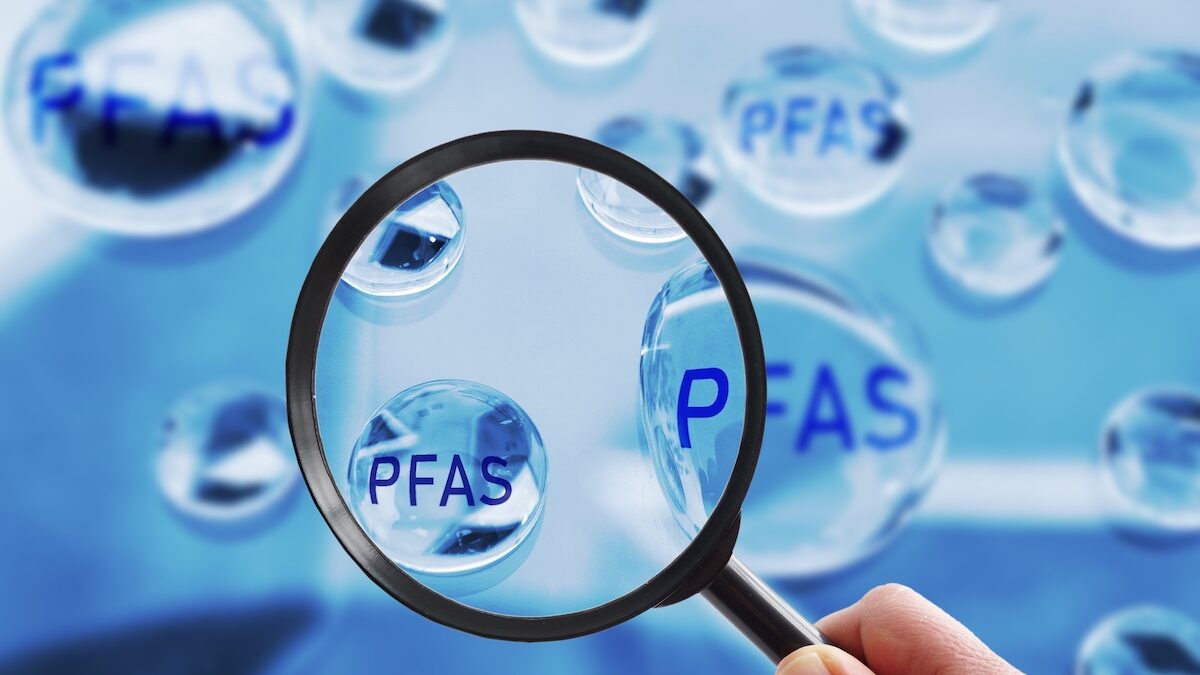
Long invisible, per- and polyfluoroalkyl substances, better known as PFAS, are now making their mark in the public debate. Used since the 1950s for their non-stick and waterproofing properties, they are now detected in the environment and in the human body. Faced with these “eternal pollutants”, which persist for a long time, health authorities are calling for vigilance without giving in to panic. Because although it is difficult to completely avoid them, concrete solutions exist to reduce exposure.
Substances omnipresent in our daily lives
PFAS bring together several thousand chemical compounds used in many sectors: textiles, cosmetics, food packaging, kitchen utensils and even fire-fighting foams. Their particularity: exceptional resistance to heat and water, but also very low degradation in the environment.
Result: these substances are found in soil, water and the food chain. Exposure of the population occurs mainly through food and drinking water, although indoor air or certain everyday products can also play a role. In France, as elsewhere in Europe, traces of PFAS are detected in the majority of the population.
What health risks?
Scientific knowledge is progressing, but uncertainties remain. Prolonged exposure to PFAS could lead to several health effects: hormonal disorders, liver damage or even disruptions to the immune system. Certain compounds are also suspected of increasing the risk of cancer.
However, the authorities point out that it is difficult to attribute a health problem to exposure to PFAS alone. The risk depends in particular on the level and duration of exposure. This is why prevention is based above all on reducing daily contact.
Good reflexes to limit your exposure
Good news: simple actions can already significantly reduce exposure.
In terms of diet, it is advisable to vary meals and to favor tap water, which is subject to regular health checks. It is also better to limit grease-resistant packaging and avoid heating food in plastic.
At home, daily ventilation and regular dust cleaning (ideally with a HEPA filter) are recommended. When it comes to cooking, choose materials like glass, stainless steel or cast iron, and replace damaged non-stick pans.
Finally, in the bathroom, it is better to limit water-resistant cosmetics and choose products with a simple composition, preferably made in Europe.
Growing mobilization of the authorities
Faced with the scale of the phenomenon, the public authorities are stepping up their action. Since 2024, an interministerial plan aims to better monitor PFAS and reduce their presence in the environment. Several substances are already banned or in the process of being restricted, particularly in packaging or textiles.
French regulations have further tightened with a law adopted in 2025, providing in particular for progressive bans on certain everyday products and strengthening controls on drinking water.
It is impossible to completely escape PFAS, but it is entirely possible to act on a scale. By adopting a few simple habits, everyone can reduce their exposure — while waiting for broader measures to sustainably limit these pollutants in our environment.