
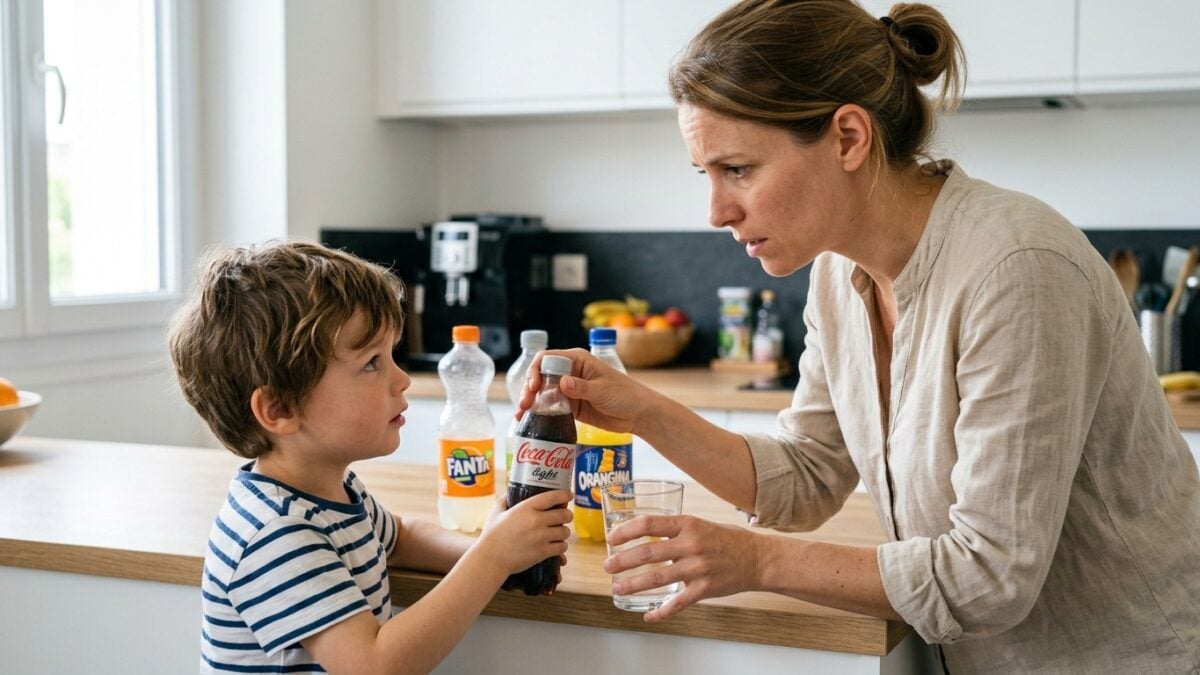
In the United Kingdom, a committee of nutrition experts has just attacked “light” sodas and sugar-free syrups served to toddlers. This warning targets drinks containing artificial sweeteners like aspartame or stevia, although many parents consider them safer than regular sodas.
Eating too much sugar increases the risk of cavities, obesity and type 2 diabetes, which has encouraged the industry to offer almost calorie-free sweeteners. The Scientific Advisory Committee on Nutrition (SACN) British, however, believes that these sweetened drinks
pose a problem in preschool children and that other answers are possible. Enough to question the habits of French families.
Drinks with sweeteners: what the British SACN committee recommends
The SACN advises not to give this type of drink to
young children and instead get used to drinking water. The committee judges that the evidence of an effect on cavities is “weak”, with benefits mainly linked to “other positive changes in diet”, and affirms that “this is not essential and it is not the only option”, according to the BBC.
The committee deplores such a “lack of data” and “insufficient data” on the quantity of sweeteners actually consumed.
“We strongly support SACN’s call for industry to make data publicly available on the amount of these sweeteners in their ingredients to better inform what people are consuming and inform our assessments” Robin May, chief scientific adviser to the Food Standards Agency, told the BBC.
For Graham Finlayson, professor of psychobiology at the University of Leeds, caution is warranted, but “with obesity and diabetes rates rising, impulsive policy changes could do more harm than good”he warned the BBC.
Sweeteners, sweet taste and health: the view of the WHO and the French authorities
In the UK, all sweeteners used remain deemed safe after rigorous safety testing. But several teams fear that they will foster in children a marked taste for sweets, which complicates the learning of other flavors.
L’World Health Organization (WHO)
recommends against sweeteners for weight control and cites signals of increased risk of type 2 diabetes and cardiovascular disease.
In France, theHANDLES and the European Food Safety Authority believe that they do not provide proven nutritional benefit, while the law prohibits sweeteners in products intended for children under 4 years old and the unlimited serving of sugary or artificially sweetened drinks.
What should you do about your child’s drinks in the face of these warnings?
For the children from 1 to 5 years oldthe instructions are simple: water and plain milk, no sugary or watered down drinks. The International Sweeteners Association (ISA), however, highlights a possible interest.
“As part of an overall healthy diet and lifestyle, low- or zero-calorie sweeteners can be used to contribute to public health goals of reducing sugar consumption. ISA supports SACN’s call for continued investment in high-quality, long-term research.”concluded the organization cited by the BBC.