
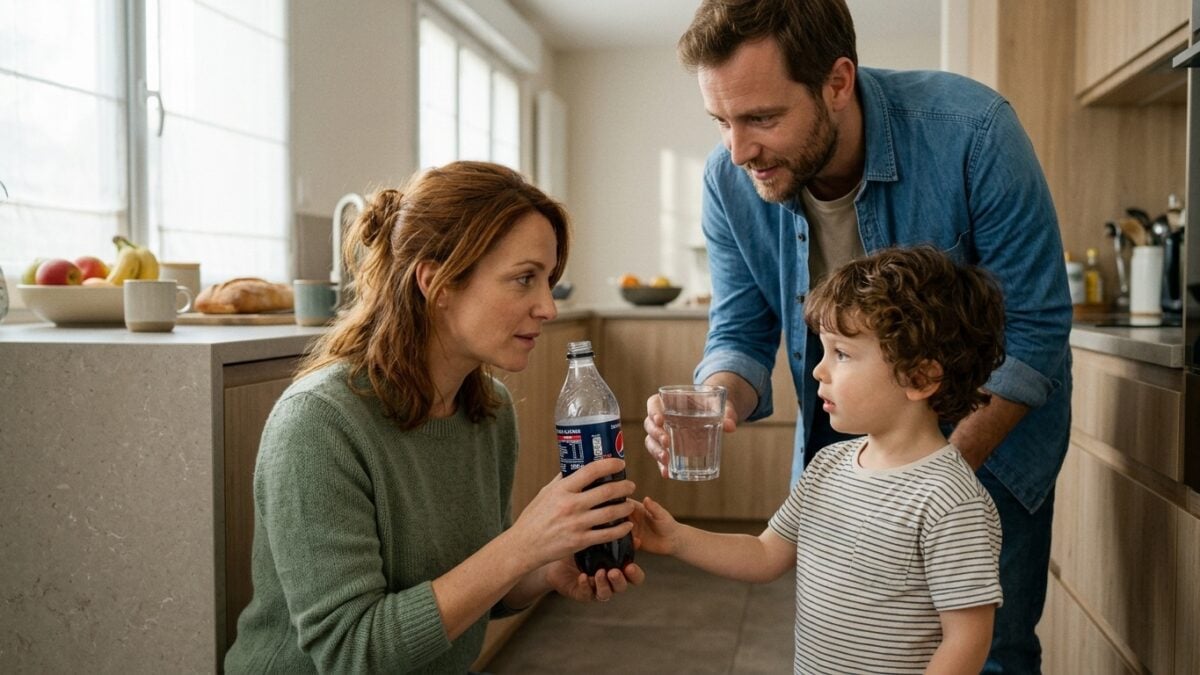
Giving a toddler a zero soda sometimes seems less “serious” than a glass of cola. In the United Kingdom, experts now completely advise against these drinks with
sweeteners for preschool children, reigniting the debate even in family kitchens.
Designed as an alternative to sugar, these artificial sweeteners or natural extracts, such as aspartame or stevia, are included in many “light” or “sugar-free” drinks. Their place in the diet of young children becomes a concrete question for parents.
Drinks with sweeteners: what the SACN recommends for young children
On April 3, 2025, the British Scientific Advisory Committee on Nutrition (SACN) recommended no longer offering “sugar-free” syrups to preschool children, diet soda or “toothkind” drinks containing artificial sweeteners like aspartame, stevia, saccharin or sucralose. After reviewing the work, the committee considers that the evidence for reduction of cavities is “weak” and that health benefits mainly from a reduction in free sugars associated with “other positive changes in the diet”. For weight, the possible effect of these drinks “is not essential and is not the only option”, summarizes the SACN, in an opinion reported by the BBC.
SACN also mentions a “lack of data” on the population’s exposure to sweeteners and “insufficient evidence” to assess the risks. Professor Robin May, chief scientific adviser to the Food Standards Agency, said: “We strongly support SACN’s call for industry to make data on the amount of these sweeteners in their ingredients public to better inform what people are consuming and to inform our assessments of these ingredients.”
Professor Graham Finlayson, of the University of Leeds, warns: “With obesity and diabetes rates rising, impulsive policy changes could do more harm than good”.
The International Sweeteners Association, for its part, believes that “As part of an overall healthy diet and lifestyle, low- or zero-calorie sweeteners can be used to support public health goals for reducing sugar intake.” and states:
“ISA supports SACN’s call for continued investment in high quality research over the long term”.
In France, an already restrictive framework for light drinks for the youngest
In France, these opinions are added to a cautious framework. In Europe, it is prohibited to add low-calorie sweeteners to products intended specifically for children under 4 years old. The National Nutrition and Health Program recommends water as a basic drink.
Several French nutritionists consider it unsuitable to hydrate with sweetened drinks, fearing that they maintain a strong appetite for sweets and confuse hunger signals in young people.
Sweeteners and young children: what reflexes to adopt for drinks?
For toddlers, the message is simple: avoid drinks with sweeteners as much as possible, whether zero sodas, “sugar-free” syrups or flavored waters. On the label, names like aspartame or sucralose indicate their presence. In older children, the SACN sees an advantage in reducing sugar, but specialists recommend saving these drinks for occasions and favoring water on a daily basis.