
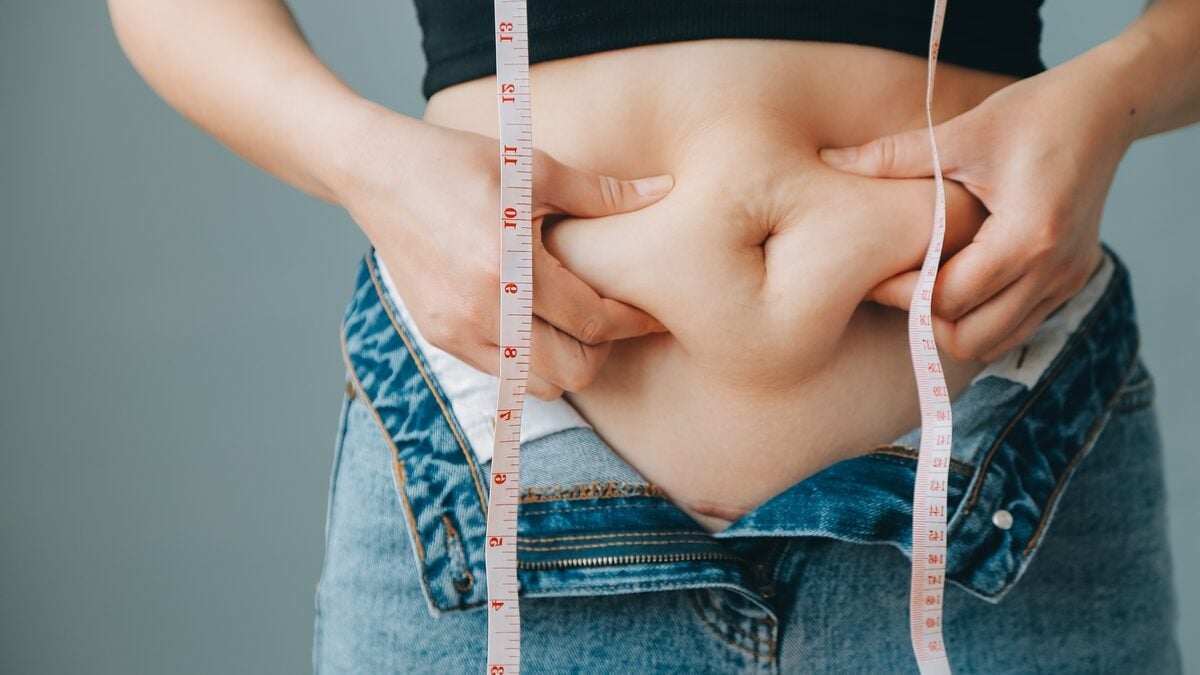
With age, the body evolves… and so does the silhouette. Abdominal fat – that is to say the accumulation of fat at the waist – tends to develop more easily after the age of 50. But according to Vanessa Bedjaï-Haddad, dietician-nutritionist, one dietary error in particular could accelerate this phenomenon. Here it is.
Why this mistake can promote abdominal fat after 50
To lose these famous bulges that appear after the age of fifty, there is no point in going through a series of drastic diets and frustrations. Forcing yourself to eat a simple green salad (devoid of any protein or starch) could cause much more damage than you think.
“The common mistake in my opinion is to want to… lighten your meals too much. After the age of 50, many women significantly reduce starchy foods, fats or overall intake, thinking they will act on abdominal fat. However, this is often counterproductive.”
recalls Vanessa Bedjaï-Haddad.
And for good reason: when food intake is too low, the body goes into “economy” mode. It slows down the metabolism to preserve its reserves and compensates by promoting the storage of fats, particularly in the abdominal area.
Declining expenses and a switch to economy mode: the evil duo
Added to this is a progressive muscle loss which further reduces daily energy expenditure. Result: despite significant dietary efforts, the figure changes little, or even deteriorates.
“With hormonal changes, the gradual decline in muscle mass and sometimes less physical activity, the body becomes more sensitive to variations in blood sugar and abdominal storage. A meal that is too light, low in protein and fiber, increases the risk of cravings, sweet snacking at the end of the day and ultimately more disorganized intake,” confirms the expert.
Small belly: how to correct the situation?
To reverse the trend, it is essential to find structured and balanced meals – which truly satisfy. By eating better, you will avoid blood sugar spikes and cravings that promote fat storage.
“The objective is therefore not to eat less, but to better structure your plates: a real source of protein at each meal, vegetables, fiber, starchy foods well chosen according to the activity, and good fats in appropriate quantities”, underlines the dietitian.
At the same time, remember to maintain regular physical activity, whatever it may be (Pilates, yoga, brisk walking, etc.) and consider in particular muscle strengthening, which helps preserve lean mass and boost metabolism.
“Abdominal fat is therefore not corrected with any form of restriction, but with regularity (in your efforts), satiety and muscular maintenance. This is often where the difference comes into play”, concludes Vanessa Bedjaï-Haddad.
Faced with hormonal changes and muscle loss, the key would therefore not be to eat less, but better. A simple rebalancing, combined with regular physical activity, could make all the difference to your figure… and in the long term.