
Being left-handed often amuse those around you, being ambidextrous intrigues even more. However, behind this small daily peculiarity lies a discreet marker of the organization of the brain, very different in a right-handed person and in a person who uses both hands indifferently.
A large meta-analysis published in Psychological Bulletin compiled 402 sets of data, or more than 202,000 people, and confirms a link between atypical dominant hand and certain psychological disorders. But this link is far from uniform, and it reserves some surprises.
Left-handed, right-handed, ambidextrous: how the brain chooses its hand
About 85-90% of the population is right-handed, around 10% left-handed, and almost 1% truly ambidextrous. This manual preference appears very early, sometimes already before birth, then stabilizes especially between 4 and 5 years of age. When a child constantly switches from one hand to the other, we often speak of a mixed hand or still unclear laterality.
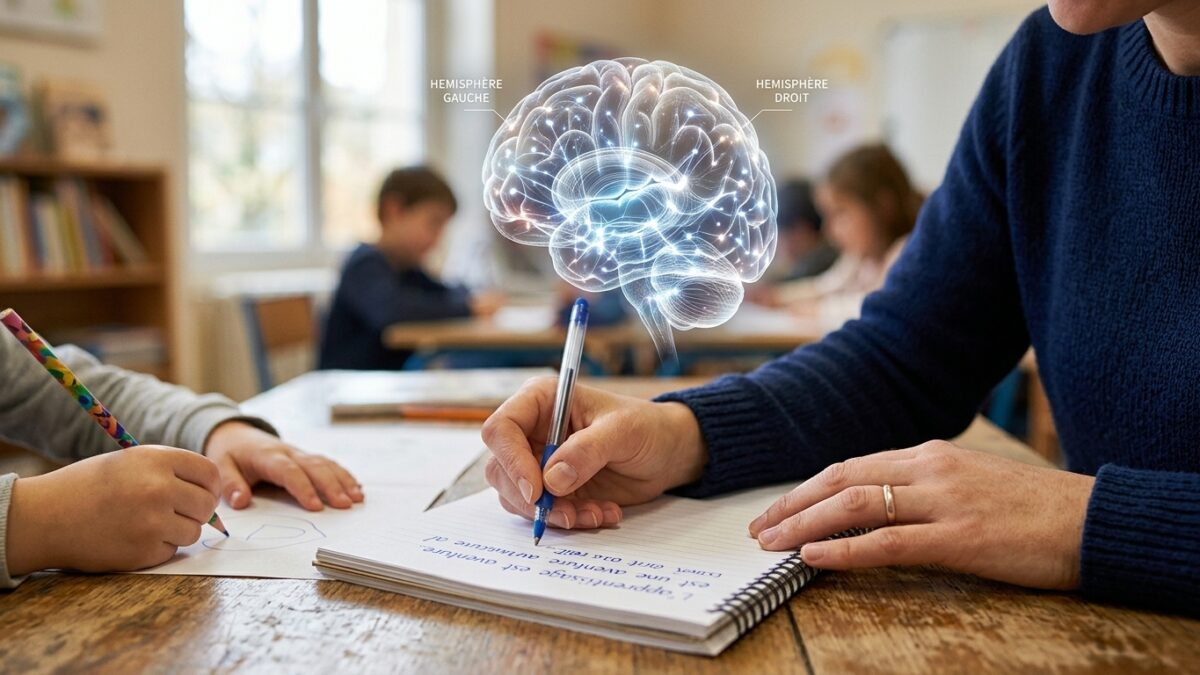
Behind this choice is cerebral lateralization: in around 90% of right-handers, language is mainly located in the left hemisphere, compared to around 70% of left-handers. Other left-handers, and even more so some ambidextrous people, have a more symmetrical brain. It is this slightly different organization that intrigues researchers.
Non-right hand and neurodevelopmental disorders: what the science says
Julian Packheiser’s team reanalyzed 10 meta-analyses relating to autism, ADHD, dyslexia, dyscalculia, intellectual disability, schizophrenia, PTSD, stuttering and even pedophilia. Overall, people with a mental or neurodevelopmental disorder are approximately 1.5 times more likely to have a non-right hand (left-handed or mixed hand) than controls. When we distinguish, the association is stronger for mixed hand than for “pure” left-handedness.
The differences are especially marked for schizophrenia, autism spectrum disorders and intellectual disability. Conversely, common disorders such as depression or dyscalculia do not show a clear difference with the general population. Disorders classified as neurodevelopmental, those that involve language difficulties, and those that begin early in life concentrate most of the link, which relates directly to the early stages of brain construction.
Left-handed people, ambidextrous people and neurodevelopmental disorders: what to do on a daily basis
The figures still speak for themselves: around 20% of people with schizophrenia are left-handed, twice as many as in the general population, and autistic people are between 2 and 3.5 times more likely to be left-handed. A large Finnish study of nearly 8,000 young people also indicates that ambidextrous people have around 90% more risk of difficulties in mathematics and more language disorders, and that they more often show signs of ADHD, with more severe symptoms. Other work shows that children without a clear dominant hand have more mental health, language and academic problems than well-lateralized right-handers or left-handers.
However, being left-handed or ambidextrous is not a diagnosis. Most left-handers have no psychological disorder, and no clear difference in IQ or creativity is found on average compared to right-handers. The practical message is especially valid for children: if, after 6 or 7 years, laterality remains unclear and is accompanied by difficulties with language, reading or attention, advice from a pediatrician, neuropsychologist or speech therapist can help. Specialists also advise against forcing a left-handed person to become right-handed or training intensively in ambidexterity, because blurring the specialization of the hemispheres could complicate learning rather than helping it.