
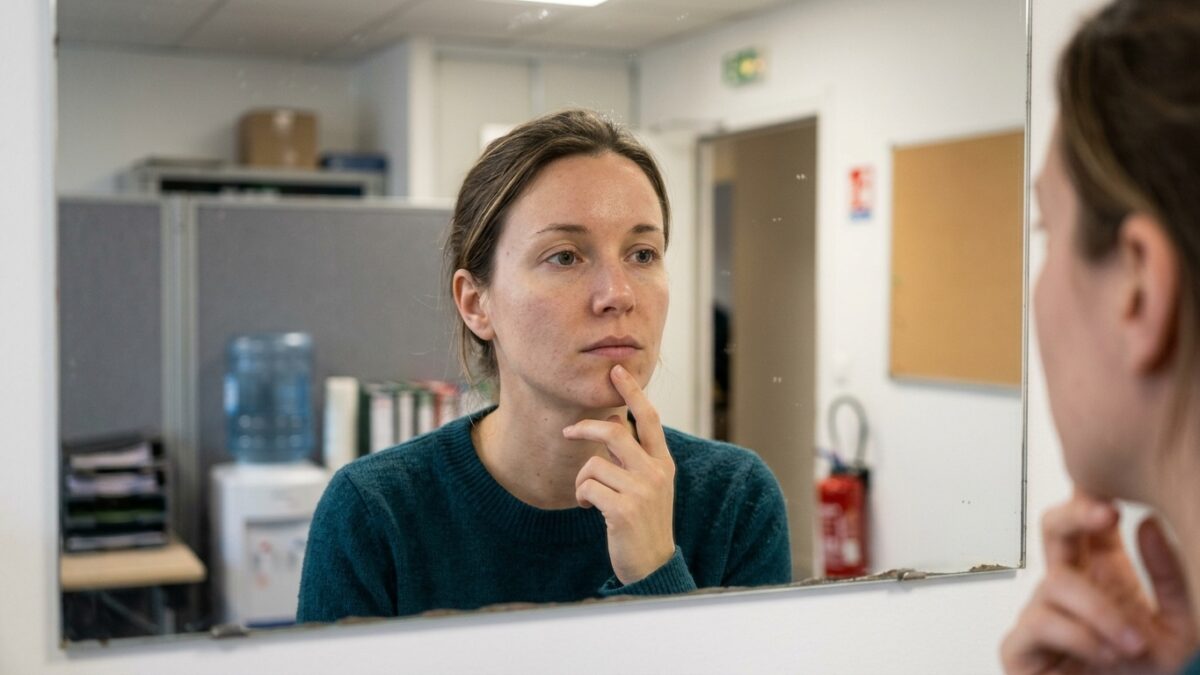
Going out without mascara or lipstick, arriving at the office with a bare face, assuming your dark circles even in front of the phone camera: for some, this has become the new normal. Many then wonder if this choice is a simple practical comfort or if it says something deeper about the personality.
Makeup has accompanied humanity for millennia, from the highlighted eyes of ancient Egypt to the palettes of today. However, the rise of the natural face intrigues psychology researchers: the fact of wearing makeup or not wearing makeup acts as a social signal that influences self-esteem, the way others look at it and even certain careers. Studies show that the story is less simple than a yes or no to mascara.
When not wearing makeup reflects strong confidence
For psychologist Tara Well, professor at Barnard College, affiliated with Columbia University, refusing daily makeup is not a whim. Her works depict women who embrace their skin as it is, assert strong self-confidence and a rejection of traditional beauty standards, as if their faces were affirming out loud: “I am good as I am.”
Often, this choice goes with a search for simplicity: less time in front of the mirror, fewer products on the skin, more mental freedom. Studies on body image show that women who say they are satisfied with their appearance use less cosmetics on average and feel more aligned with what the mirror reflects. They express something like: “I decide how I want to appear to the world.”
When the bare face hides inner fatigue
Clinicians point out that the same decision can tell something completely different. For some women who are depressed, suffering from a serious illness or exhausted by burnout, abruptly stopping all makeup can accompany a loss of the desire to please, or even the desire to live. Body dissatisfaction, avoidance of the mirror and strong social anxiety set in, with the impression of being “too much” or “not enough” for the eyes of others.
At the other end, studies show that around 32% of women wear makeup even for a very quick run, and 10% stay in makeup at home. This “camouflage makeup” is often linked to self-objectification: looking at oneself almost exclusively through the eyes of others. Refusing any makeup can then be a form of defense, a way of saying that we are withdrawing from this social game.
What Psychology Reveals About Not Wearing Makeup
Research on “premium beauty” indicates that a made-up face is often judged to be more attractive and competent, while heavy makeup can lower perceptions of competence or morality. A face without makeup will be read differently depending on the context: quiet authenticity at the office, rebellion in the evening, weariness when everything else in the outfit seems neglected.