
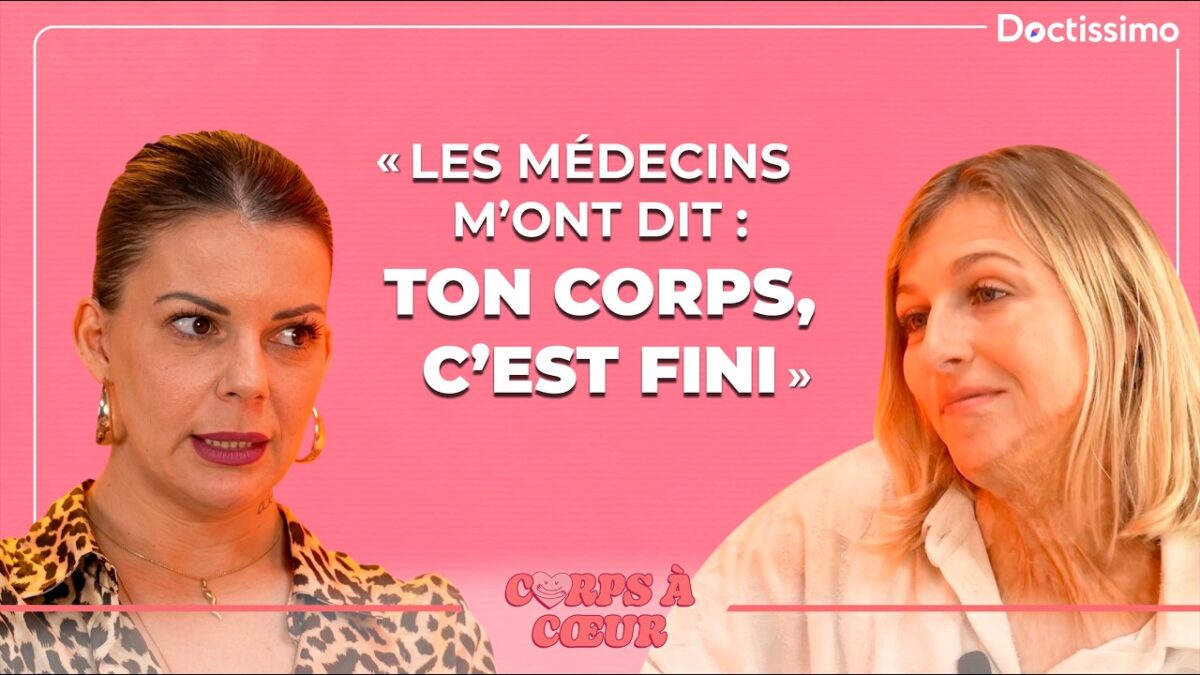
At 17, Angelina Bruno was not heading towards an extraordinary destiny. She was just driving to a picnic. In a few seconds, an accident tears off her right arm, seriously injuring her body and leaving her on the verge of death, before the intervention of a doctor and a nurse who happened to be present on the scene.
In Corps à Coeur, the True Medical show hosted by Julie Bourges, she mainly talks about the aftermath: the return home, the loss of autonomy, the pain, the looks, then the dance. A path that will take her to the opening ceremony of the Paris 2024 Paralympic Games, on Place de la Concorde, alongside other artists with disabilities.
Angelina Bruno, the shock of the post-accident
In the hospital, Angelina Bruno survives. But once she returns home, another ordeal begins. Right-handed before the accident, she had to repeat the most ordinary movements from the beginning. Opening a bottle of water, spreading, getting dressed, putting on a bra, doing your hair: everything suddenly becomes complicated.
In the interview, the dancer sums up this slap in simple words: “I didn’t know how to do anything anymore”. Reconstruction is not just physical. She also speaks of a deep identity crisis, with the feeling of abruptly leaving the world of able-bodied people, in a society where few figures resemble her.
This lack of representation weighs heavily. At school, on television, around her, Angelina doesn’t see anyone going through the same thing. She says she wore a painful prosthesis for a long time, not for herself, but to avoid disturbing the gaze of others.
Dance as refuge, then as affirmation
Before being brought back to her disability, Angelina Bruno insists on what she is: a dancer. In Corps à Coeur, she talks about the trap of labels, when the headlines mainly talk about “the disabled woman who danced”. Over time, she learns to shift her gaze.
She formulates it with a central nuance in her journey:
“I remain the dancer with a disability”. Then she explains this inner shift: “I am not the disabled person who dances, but I am the disabled dancer.”
Dance then becomes a space to bring out what words cannot convey. Hip-hop offers him energy, anger, a way of standing up differently. “When I dance, when I arrive on stage, it’s my place”she confides. On stage, she no longer asks for permission to exist: she takes her place.
At the Paris 2024 Paralympic Games, “this is our moment”
Her journey takes on a particular dimension during the opening ceremony of the Paris 2024 Paralympic Games. Angelina Bruno dances with other artists with disabilities, in a painting where she feels for the first time this meeting between substance and form.
She describes this moment as a “magical” experience, carried by the energy of Concorde, the dancers, the audience and the presence of Lucky Love. In the middle of this scene, she has the feeling that something is opening: “This is our moment”. She adds: “You guys can exist for an evening”.
This visibility responds to a lack that she experienced at a very young age. After receiving messages from teenagers and people “who were different”, Angelina Bruno understands why making her story public can matter. “I would really like to be able to be one for these little ones”she says of the model of representation she wishes she had at 17.
Even his little stage prop tells something of this reconquest. Angelina shows on the show a customized sock that she uses to protect and beautify her stump. An intimate detail, which has become almost a signature: a way of remaining flirtatious, of choosing what she shows and transforming what others look at.