
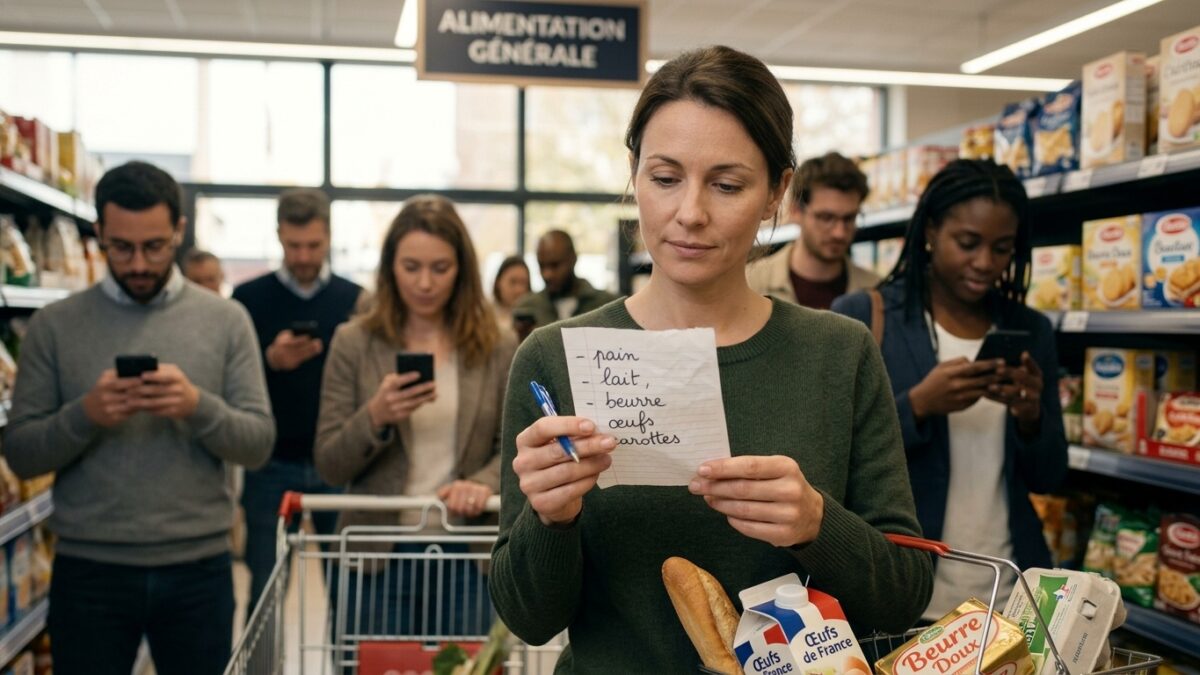
In the pasta section, your phone remains quietly in the bag while you unfold a small crumpled sheet. Around, everyone is scrolling through a shopping app. Sometimes you feel like you’re stuck in the era of the notebook and pen, almost going against the grain.
In reality, psychology shows that this habit of keeping a shopping list on paper is consistent with seven uncommon personality traits: trained brain, protected attention, peaceful relationship with money, taste for rituals. And it all starts from this little piece of paper.
What your paper shopping list says about your brain
Psychologists speak of conscientiousness to designate organized, reliable people who like to plan. But this profile loves lists. A British survey showed that 68% of adults feel more “organized and in control” when they write their lists by hand. For you, structuring purchases, checking off what is done, anticipating meals for the week is almost natural.
The handwritten gesture also pampers your memory. Japanese MRI studies observed that users of paper diaries activated more areas linked to the recall of memories and found information approximately 25% faster than those on smartphones. Further EEG studies in 2023 indicate that handwriting creates richer brain connectivity than keyboarding. And since the mere presence of the phone already reduces working memory and attention, writing on paper keeps digital distractions away and preserves your concentration.
A more thoughtful relationship with money and mental load
Another common point observed: fans of the handwritten shopping list are better at limiting impulsive purchases. Researchers at Drexel University have shown that digital lists are more easily transformed into an “editable” document, which opens the door to extras. Paper marks the route through the store, reduces unforeseen detours and encourages more thoughtful consumption, aligned with the household budget.
Writing down your errands also works like cognitive offloading: you transfer part of the information from your head to the sheet. A study at Baylor found that people who wrote a simple to-do list took an average of nine minutes less to fall asleep than those who wrote nothing. Same logic for household mental load: once the list is stuck on the fridge, your brain can slow down, without fear of forgetting milk or diapers.
Tactile profiles, nostalgia and the small ecology of everyday life
Many fans of the handwritten list describe an almost physical pleasure in tracing, circling, crossing out. Psychologists speak of tactile or kinesthetic profiles, in which the hand participates in reflection. This “embodied cognition” means that the friction of the pen, the sound of the folded paper or the gesture of checking helps one to concentrate and memorize, a bit like with a real book rather than a screen.
Last recurring trait: an attachment to family rituals and a form of ecological sobriety. Many grew up with the sheet taped up in the kitchen, refilled over the days. This gentle nostalgia reinforces the feeling of continuity and connection to loved ones. Some reuse envelopes or scrap paper, choosing a small, durable notebook. A discreet way of saying that technology has its place, but not in every everyday gesture.