
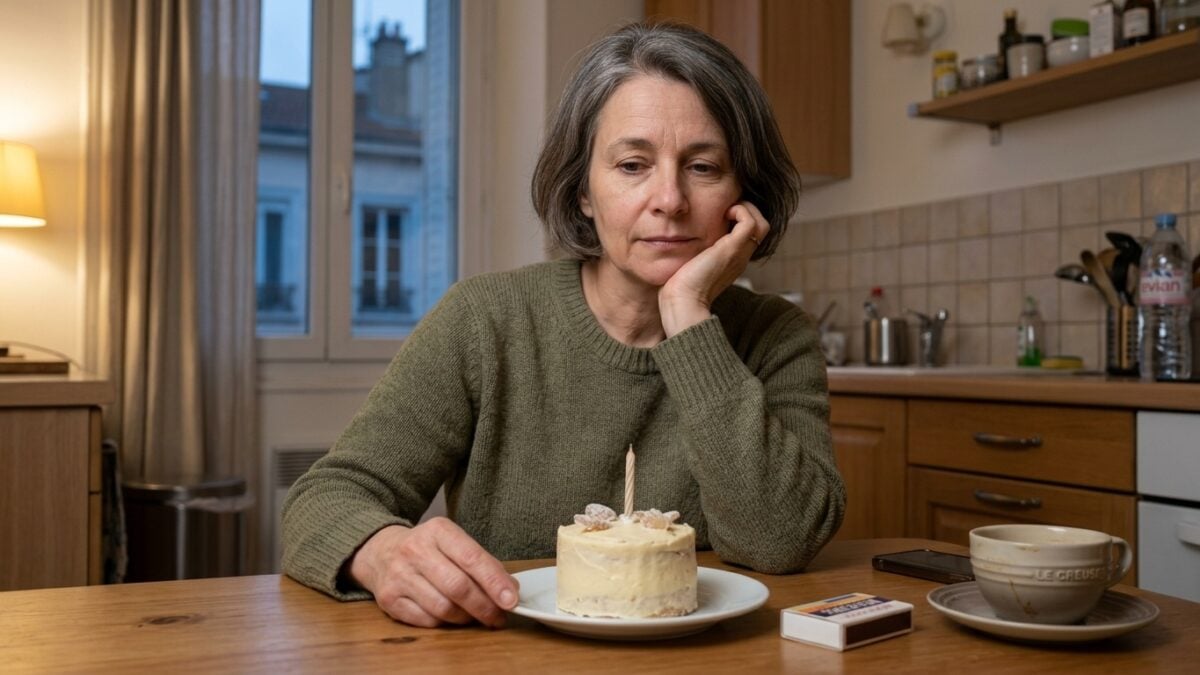
In every group of friends, there is that person who, over the years, stops announcing their birthday, dodges candles at the office and pretends that their birthday is just another day. This withdrawal intrigues, sometimes worries those close to them, who continue to see this day as an almost sacred meeting.
Psychology doesn’t just describe a whim. Behind the fact of no longer celebrating one’s birthday, especially as one gets older, we often find a set of stable traits, almost a way of relating to the world. Seven characteristics come up regularly in studies and consultations, and they paint a much less cold profile than we imagine.
No longer celebrating your birthday: a phenomenon that increases with age
For children, their birthday is often the most anticipated day of the year. Later, many adults let the date slip away without fanfare. A 2018 Lithuanian study of 309 students indicated that 30.7% do not consider their birthday important, and 73.5% believe that it loses its significance over time.
For some, the approach of this day even triggers birthday depression: sadness, apathy, irritability, a feeling of failure. Psychologist Ernesto Lira de la Rosa, cited by Psychologies.com, speaks of a mixture of emotional fatigue and social pressure, especially in people already prone to anxiety or depression.
Seven personality traits that psychology often observes
Specialists first notice a strong emotional maturity: these people have an identity stable enough not to depend on a shower of messages or gifts. They value the quality of their inner life more than the number on the cake. Carl Jung summed up this tendency with the phrase: “The privilege of a lifetime is to become who you really are.”
A second common trait is this way of savoring ordinary moments rather than big dates: a coffee with a loved one counts more than a surprise evening. Then comes the acceptance of the passage of time and mortality, a decline in materialism, a marked empathy, a taste for chosen solitude, often tinged with a strong introversion, and a great emotional authenticity which makes the performances difficult to bear.
Living with these traits without feeling “abnormal”
These traits are not born in a vacuum. Many people who now refuse all celebrations had disappointing, even humiliating childhood birthdays, or grew up in families where there was little celebration. With age, they protect their personal boundaries more and assume another way of receiving affection, more discreet but more regular.
For the person concerned, recognizing this functioning allows you to feel less guilty: preferring a dinner for two, a walk or a simple call rather than a big party remains a healthy option. For loved ones, the challenge is above all to respect this temperament, to ask concrete questions about what would please, without forcing the candles or the public.