
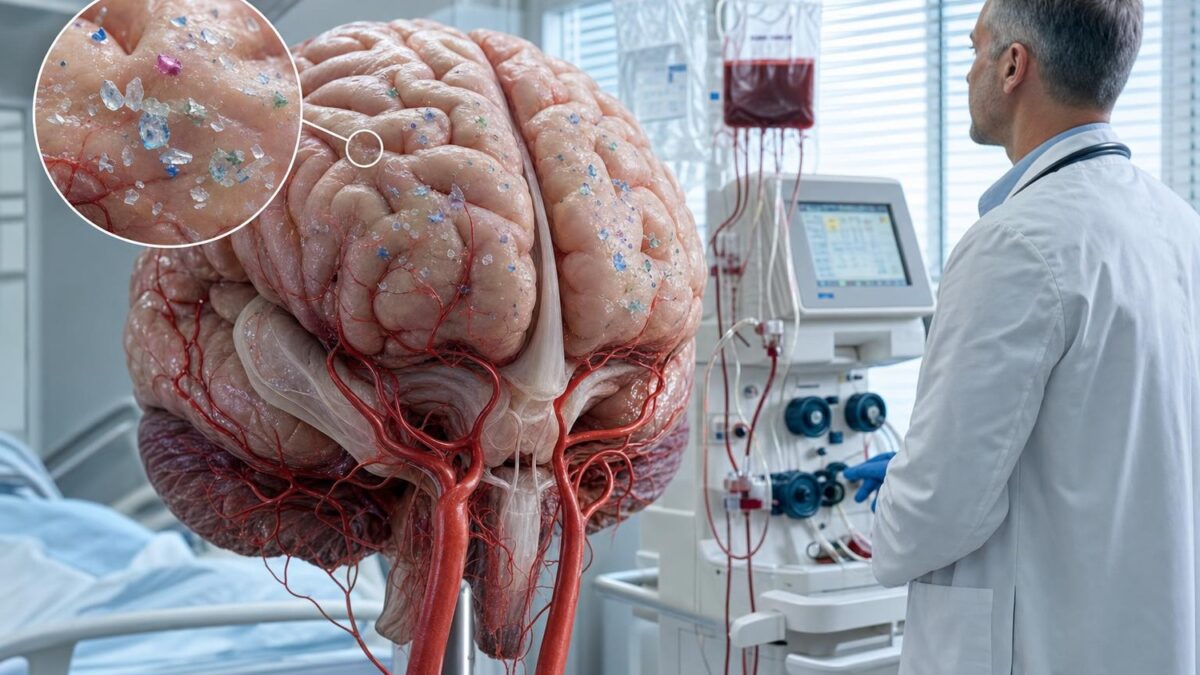
Brain diseases take a heavy toll, and stroke alone causes an estimated 11.9 million new cases per year. In this context, seeing waste from plastic invade brain tissue is cause for concern. scale hange: an expert column published on May 5, 2026 in the journal Brain Health of Genomic Press claims that the microplastic load has crossed the threshold ofemergency for brain health.
Experts report that autopsies already show an increase of around 50% in brain microplastic burden between 2016 and 2024, with higher levels in donors with dementia. Dr. Julio Licinio, president and CEO of Genomic Press, sums up the situation: “We have before our eyes an organ where the highest concentrations of microplastics ever measured meet the most stringent clinical criteria in all of medicine. Cognition, mood, stroke, dementia… Treating this as a peripheral environmental concern, when the relevant peripheral organs carry less contaminant than the central organ, has become difficult to defend“.
From carotid plaques to the brain: the microplastic-stroke axis
The omnipresence of microplastics in the body is alarming. In Giovanni Marfella’s study on patients undergoing carotid artery surgery, micro- and nanoplastics were detected in atherosclerotic plaques. According to the systematic review by Jakub Kufel of the University of Silesia in Katowice in 2026, simply having these particles in plaque increased the combined risk of myocardial infarction, stroke or death by about 4.5 times, even after taking into account classic risk factors, making it a strong candidate for modifiable risk factor.
The experiences collected in Brain Health describe the journey of these particles towards the brain. In mice, Kopatz shows that polystyrene nanoparticles cross the blood-brain barrier to reach the brain in less than two hours, while larger fragments remain blocked. Other models discussed by Jakub Kufel suggest that particle-laden blood cells clog brain capillaries and worsen ischemic damage, reinforcing the idea of a second toxic hit to brain tissue.
Microplastics have even been located in the intracellular compartment of the human placenta, implying fetal exposure during the most crucial period of neurodevelopment. Children, whose blood-brain barrier is still building and whose intake of microplastics per kilogram of weight exceeds that of adults, could accumulate quantities that current adult cohorts cannot predict.
Ultra-processed foods and the brain: the same problem with many faces
According to the authors, in the absence of a validated clinical elimination method, observes the Perspective, the reduction of exposure at the population level is today only accessible by reducing the consumption of ultra-processed foods. Ultra-processed foods, which already provide more than half of the calories in the United States, accumulate microplastics through heated packaging and wear and tear from industrial processes. Large cohorts, such as the UK Biobank and REGARDS, associate them with more depression, anxiety, cognitive decline, stroke and dementia, even after accounting for overall diet quality. The authors see the same pattern of exposure capable of striking the heart, the blood vessels, the mood and the memory at the same time.
“The boundary between physical health and mental health has always been more administrative than biological.observes Dr. Nicholas Fabiano, Department of Psychiatry at the University of Ottawa, co-author of the article. “Microplastics do not respect this boundary. The same particles that lodge in the atheroma also reach the brain. The same dietary exposures that increase cardiovascular risk also increase the risk of depression and dementia. We have before us a single problem, with many clinical faces”.
Apheresis and STOMP research: first avenues for eliminating microplastics
To open a therapeutic door, the Perspective of Brain Health highlights apheresis. Director of the Center for Internal Medicine and the Medical Clinic at the University Hospital Dresden, Stefan R. Bornstein showed that this blood filtration already used clinically can remove material compatible with microplastic particles from human plasma. The authors point out, however, echoing the STOMP program launched by ARPA-H, that no elimination method can be validated without reliable measurement tools; For the moment, the most realistic lever remains to reduce ultra-processed foods, the main vector of modifiable exposure today.