
While the Andean hantavirus can, in rare cases, be transmitted from human to human, the authorities insist: no risk of uncontrolled circulation has been identified at this stage. Detailed review of an exceptional health system, between scientific vigilance and human support.
A return under very high health protection
Their trip ended far from the usual images of a return from a cruise. On Sunday, the five French nationals present on board the “Hondius” were repatriated from the Canaries under particularly strict health conditions.
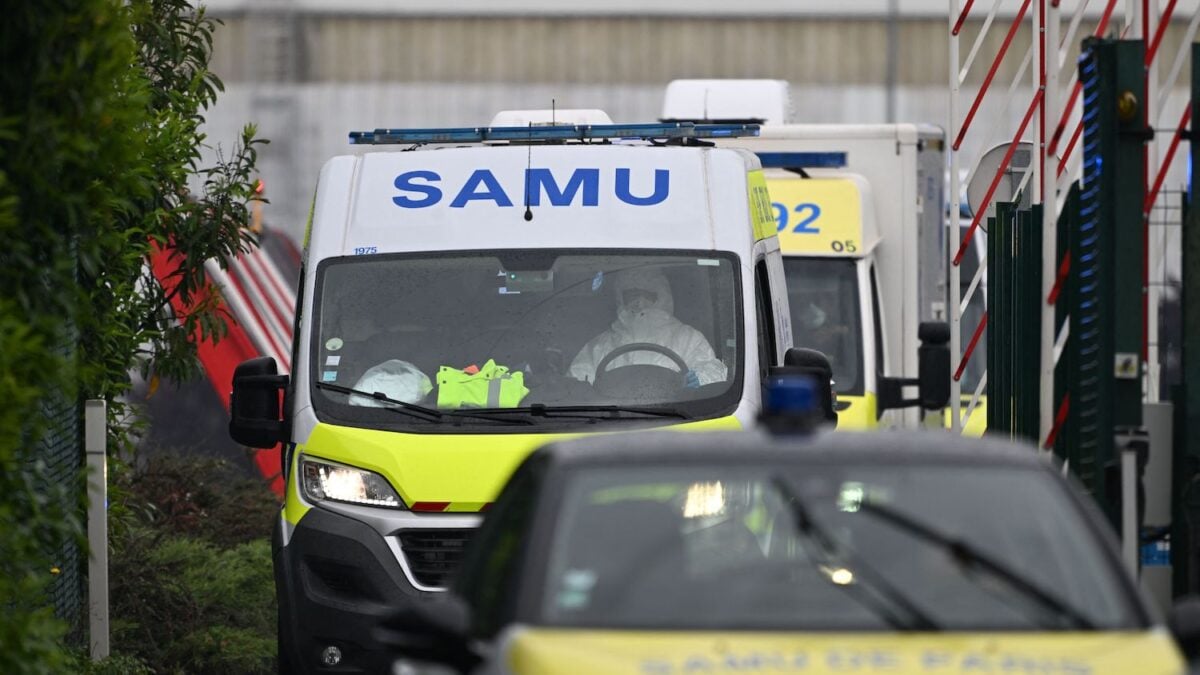
After a first test on site, all asymptomatic at the time of evacuation, they left the ship without contact with the local population. FFP2 masks screwed onto their faces, full protective suits, they then boarded a medical Falcon 900EX before landing at Le Bourget, where teams from the Île-de-France Regional Health Agency were waiting for them in protective gear.
The transfer to Bichat hospital in Paris was done by individual ambulance, under police escort. An impressive display, but assumed by the authorities to avoid any potential contamination.
In a press release, the Ministry of Health recalls that “all the precautionary measures provided for by the health protocols have been implemented”. Above all, the authorities want to send a clear message: the risk is taken very seriously, precisely to avoid any spread.
A French woman tested positive, maximum security triggered at Bichat hospital
Because the Andean hantavirus is not an ordinary virus. This strain, observed mainly in South America, is known for a rare feature among hantaviruses: possible human-to-human transmission. It can cause severe cardiopulmonary syndrome, potentially fatal in around a third of cases according to the specialists interviewed in the documents sent.
At this stage, however, one of the French women repatriated with symptoms has just tested positive as announced this morning at 8:30 a.m.
Why a 42-day quarantine? The choice of the maximum precautionary principle
Upon arrival, the returnees were placed in a specialized unit for an initial phase of isolation of 72 hours. This period should allow, according to the authorities, a “complete evaluation” through repeated PCR and serological tests.
In Le Parisien, Professor Karine Lacombe, head of the infectious diseases department at Saint-Antoine hospital, explains in the documents consulted: “They will have both PCR and serological tests“.
If a test comes back positive, hospitalization will be extended. Otherwise, passengers will be able to return to their homes – or a dedicated place – but will have to continue in extremely supervised isolation for 42 days.
This duration may seem dizzying. It actually corresponds to the maximum incubation period known for the Andean hantavirus.
“We are not going to hospitalize them by force, but we are really asking them to stay at home as much as possible.”specifies Karine Lacombe. And added: “42 days is the maximum necessary as a precautionary principle because it corresponds to the maximum incubation period..
During this period, the rules are strict:
- Teleworking preferred;
- Drastic limitation of social interactions;
- Travel ban;
- Compulsory wearing of an FFP2 mask in the event of an unavoidable exit;
- Daily monitoring by regional health agencies.
Monitoring may take different forms: telephone calls, SMS or regular contact with health teams. The objective is twofold: to quickly detect a possible symptom, but also to reassure. Because since the Covid-19 crisis, any announcement of prolonged isolation immediately arouses collective concerns. The health authorities nevertheless insist on an essential point: this exceptional protocol aims precisely to prevent any diffusion scenario.
Fever, headache, vomiting: symptoms to watch out for and management of future contact cases
During these six weeks, isolated people should be particularly attentive to the appearance of certain signs: fever, headache, vomiting, muscle pain or breathing difficulties.
The protocol provides that in the event of symptoms, patients immediately contact 15 in order to be cared for in strict isolation.
Doctors remain cautious because scientific knowledge on human-to-human transmission of this strain remains limited. “We saw during past clusters in Latin America that this virus could affect everyone. warns Karine Lacombe.
Another subject for vigilance: secondary contact cases. According to the Ministry of Health, 22 contact cases have been identified in France: eight of them on the April 25 flight between Saint Helena and Johannesburg, which included the Dutch woman who subsequently died in South Africa, who “have been in isolation for almost a week.”then 14 on a flight between Johannesburg and Amsterdam.
The authorities now distinguish two categories:
- Low-risk contacts, simply asked to limit their interactions and monitor their state of health;
- High-risk contacts, subject to reinforced isolation for 42 days with wearing of an FFP2 mask and close monitoring.
The classification depends in particular on “intensity and duration of exposure, proximity to the case, type of interaction and use of protective equipment”according to the health protocol.
This graduated strategy aims to avoid any overreaction while maintaining a high level of health safety.
Behind this careful organization, a reality remains: scientists are still moving forward with humility in the face of a rare, unpredictable and anxiety-provoking virus. France is today applying a logic inherited from recent major health crises: acting early, strongly, and transparently.
For the five repatriated French people, the next few weeks promise to be long. But for health authorities, this exceptional quarantine also constitutes a way of collectively protecting the population, without giving in to panic or trivializing the risk.