
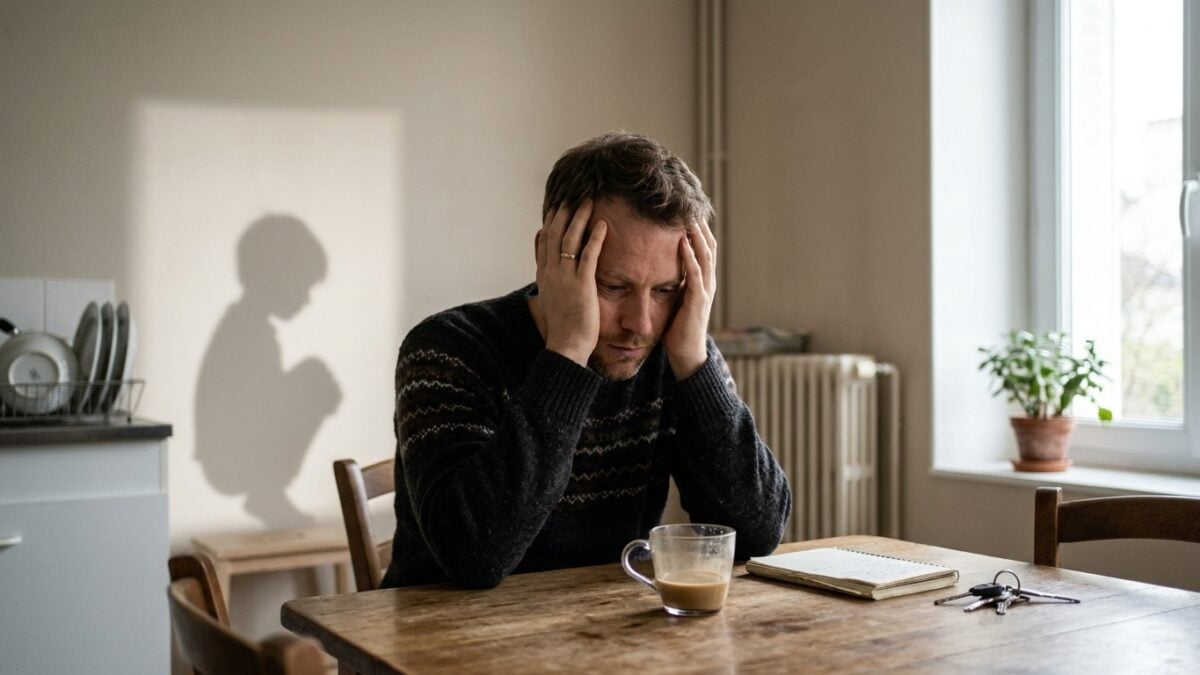
A wrong word at the family meal, a harmless email at work, and your whole body tenses up. Heart racing, anger or sadness that seems out of proportion. Many adults experience this feeling of being torn apart from the inside without understanding why. Often the origin is found in childhood experiences that no one has named as childhood trauma.
In the novel SleepHonor Jones follows 10-year-old Margaret as she thinks about the shoe store: “She definitely wasn’t going to wear light-up Disney sneakers, but she wasn’t going to wear purple velvet stilettos either,”
writes Honor Jones, cited by the New York Times. An event that no child should experience then occurs, and we find her at 35, a divorced mother, still haunted. Why does this past refuse to pass?
When the past invites itself into the present as an adult
For many adults, trauma doesn’t just come back in the form of memories. It infiltrates the most ordinary scenes: a meeting, a birthday, a weekend with parents. In
SleepMargaret goes to pick up her daughters from her ex’s house, one draws her grandmother’s house, the other plays with the medicine cabinet. Nothing spectacular, but everything is charged with anxiety, as if danger still looms.
This discrepancy often comes from an insecure attachment acquired as a child: to survive violent, humiliating or unpredictable parents, the child learns to overadapt. In adulthood, this leads to emotional hypervigilance, complicated romantic relationships, and a feeling of “damaged self”. When we become a parent, the child we were wakes up, with the fear of repeating what we suffered.
What trauma does to the brain and body
Large studies on adverse childhood experiences, carried out on more than 90,000 adults, show that psychological trauma in childhood triples the risk of mental disorder later, and that the accumulation of several acts of violence can increase the risk of attempted suicide by up to thirty. Chronic stress modifies areas like the amygdala and the prefrontal cortex: the brain remains tuned to “high alert”.
This is often called traumatic memory: the body and nervous system react as if the past were still present. Flashes, nightmares, memory lapses, dissociation are not whims but biological traces of the shock. In
SleepMargaret is immersed in #MeToo stories and thinks: “by speaking out, by telling our stories, we will never again”, then she wonders:
“How did we manage to be part of it, to speak in its name, this plural voice so sure of itself?” She can’t find a story that fits her own story.
Why Healing Takes Time…and What Can Help
Healing from childhood trauma comes up against several walls: shame (“it wasn’t that serious”), the guilt of a child who believes he or she is responsible, loyalty to parents who are sometimes still present. The brain remains programmed to survive, not to be happy: avoidance, denial, hyper-control once protected, so they resist change. Even injunctions to “talk” can be violent if the surroundings are not really reassuring.
The good news is that the brain remains plastic throughout life. Trauma-focused therapies (EMDR, cognitive-behavioral approaches, schema therapy, attachment work) can help reconfigure these circuits, especially when they rely on a reliable therapeutic connection. Secure daily relationships, a stable partner or friend, and a support group are also powerful factors for repair. The road is often long, with setbacks, but the current suffering is not an inevitability engraved for life.