
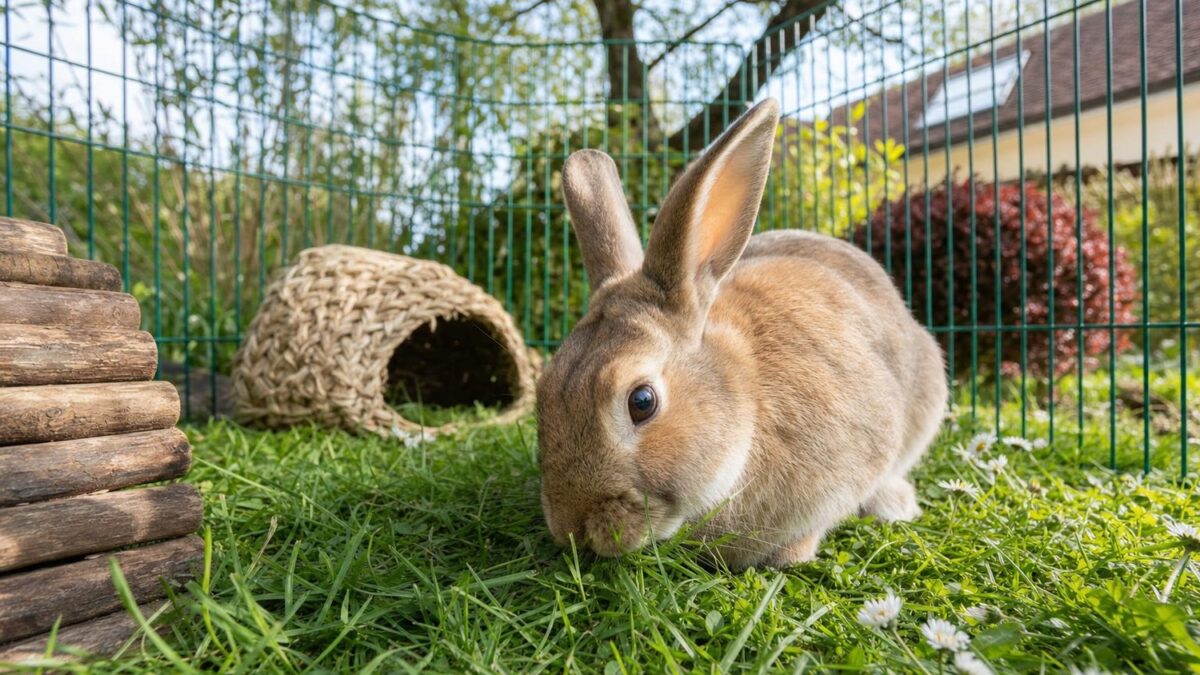
In spring, the lawn greens up, the grass becomes soft, and the pet rabbit stuck to the bay window seems to dream of this open-air buffet. For an animal fed mostly on hay and a few vegetables, this green carpet looks like paradise. Many owners are tempted to open the door and let him graze at his own pace. Behind this charming scene, however, lie real issues: digestive disorders, toxic plants scattered around, chemicals still active, not to mention the risks of running away and predators.
In reality, leave your rabbit in the garden
is neither a good nor a bad idea in itself. It all depends on the preparation of the animal, the grass and the terrain. Well introduced, the outing on spring grass provides fiber, hydration and a real pleasure of exploration for the rabbit. Poorly managed, the same freedom can cause diarrhea, poisoning or the disappearance of the animal behind a hedge. The challenge is therefore to transform this spontaneous false good plan into secure and progressive pasture.
Leaving your rabbit in the garden: the real benefits of spring grass
In an untreated garden, spring grass provides the rabbit with fresh fibers which complement the hay and stimulate fragile transit. The water contained in these shoots helps it better withstand the first heat. Grazing, choosing plants, digging and running offer more natural behavior, difficult to reproduce indoors, which reduces boredom and various disorders.
To take advantage of these benefits without damage, Le Mag des Animaux, a Ouest-France magazine, recommends getting the digestive system used in stages. The first outings last between 10 and 15 minutes per day, with hay available, then the duration increases over one to two weeks. Compact, dry droppings indicate that things are going well, while loose or more frequent stools require reducing or interrupting access to grass.
Leaving your rabbit in the garden: fragile digestive system, toxic plants and running away
The rabbit’s digestive system relies on very specialized intestinal flora housed in the caecum. A massive arrival of young grass, rich in water, soluble sugars and proteins, causes excessive fermentation which upsets this balance. Diarrhea, gas and slowing of transit can then appear very quickly. In this herbivore, a blocked intestine or sudden dehydration represents a veterinary emergency.
Beyond the belly, the garden hides other traps: narcissus, tulip, oleander, foxglove and ivy are among the plants toxic to rabbits. Pesticides, fertilizers and weedkillers that are still active also contaminate the grass. To limit escapes and predators, Maison et Travaux magazine recommends a fine mesh fence of approximately 2.5 cm, 60 to 75 cm high and buried 15 to 25 cm around the accessible part.
Leaving your rabbit in the garden: secure enclosure and tips to put into perspective
A mobile mesh enclosure placed on the grass offers a good compromise: the rabbit grazes in safety and can neither dig nor escape. Pleine Vie magazine points out that repellents based on human hair or dog hair only last a few days and never replace a fence or the presence of the owner.
Sources
- Full Life
“Human hair and dog hair: the tip of French gardeners in 2026 to keep rabbits and deer out of the vegetable garden”
- Home & Work
“If you make this mistake again in the garden, you are inviting rabbits to nest: 8 actions to change quickly”